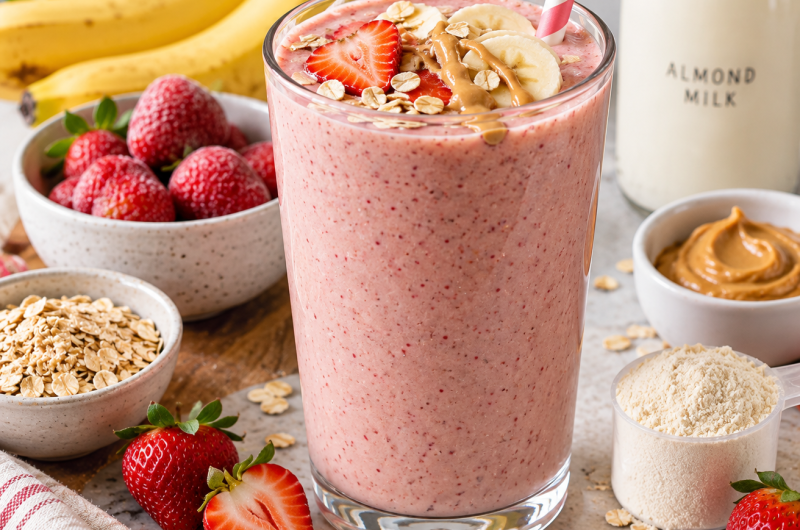
The Best Protein Breakfast Smoothie is a quick and creamy morning drink made with frozen banana, frozen strawberries, rolled oatmeal, vanilla protein powder, natural peanut butter, and unsweetened almond milk. It takes only five minutes to prepare and requires no cooking, making it a practical choice when you want a filling breakfast without spending much time in the kitchen. Each serving provides approximately 12 grams of protein and 6 grams of fiber based on the supplied nutrition information.
This easy breakfast smoothie combines fruit, whole-grain oats, protein powder, and peanut butter in one convenient drink. Frozen fruit creates a cold, thick texture without requiring ice, while vanilla protein powder adds protein and flavor. Rolled oatmeal gives the smoothie more body, and creamy peanut butter contributes richness. Everything is blended with plain unsweetened almond milk until the mixture becomes smooth and easy to drink.
Why This Protein Breakfast Smoothie Works
A useful breakfast recipe needs to be simple enough for busy mornings while still having enough substance to feel satisfying. This protein breakfast smoothie meets both needs because all six ingredients go directly into a blender. There is no chopping when the fruit has already been frozen, no pan to clean, and no separate cooking stages. Blend until smooth, pour into glasses, and breakfast is ready.
The combination of strawberry, banana, peanut butter, and vanilla also gives this smoothie a naturally appealing flavor. Banana contributes sweetness and creaminess, strawberries provide a fresh berry flavor, and peanut butter adds a nutty richness that works especially well with vanilla protein powder. The result has some of the characteristics of a fruit milkshake while remaining firmly based on the original breakfast ingredients.
A Simple High-Protein Breakfast Idea
Protein powder is one of the key ingredients in this smoothie. The recipe uses one-quarter cup of vanilla protein powder, which combines with the other ingredients to provide approximately 12 grams of protein in each serving according to the supplied nutrition figures. The exact protein amount can vary because nutritional values differ among protein powder and almond milk brands.
This makes the smoothie particularly convenient when you want to include more protein at breakfast without preparing eggs, meat, or another cooked meal. It can also work as a quick post-workout smoothie when a cold blended drink is appealing. Because the complete recipe makes two servings, it can be shared or divided according to the stated serving size.
Frozen Banana Creates a Creamy Texture
One medium frozen banana plays an important role in both the taste and consistency of this breakfast smoothie. Freezing banana changes the way it behaves when blended, helping create a thicker and colder drink. This means the recipe does not need ice cubes to achieve a refreshing texture, avoiding the dilution that can occur when a large amount of ice melts into a smoothie.
Banana also provides natural sweetness that complements both strawberries and peanut butter. For convenient morning preparation, banana can be peeled, portioned, and frozen ahead of time. Smaller frozen pieces are generally easier for a blender to process than one completely solid whole banana, particularly if the blender is not extremely powerful. The ingredient quantity itself should remain one medium frozen banana.
Frozen Strawberries Add Fresh Berry Flavor
The recipe uses one cup of frozen strawberries alongside the frozen banana. Strawberries bring their familiar sweet-tart berry flavor while also helping keep the smoothie cold. Because both fruits are frozen, they work together to create the thick consistency associated with a creamy breakfast smoothie without requiring a separate chilling step.
Frozen strawberries are also convenient because they can be stored for much longer than fresh berries and used directly from the freezer. Measure one cup before blending so the fruit-to-liquid balance stays consistent with the original recipe. Combined with the banana and vanilla protein powder, strawberries give the finished smoothie a flavor that pairs especially well with the tablespoon of creamy peanut butter.
Why Rolled Oatmeal Is Added
Two tablespoons of rolled oatmeal distinguish this breakfast smoothie from a basic fruit-and-protein shake. Oats absorb some of the liquid while blending and help give the drink a fuller texture. They also contribute carbohydrates and fiber, making the smoothie more substantial than a drink made only with fruit, protein powder, and almond milk.
The recipe provides approximately 6 grams of fiber per serving according to the supplied nutritional information, although exact values depend on the individual products used. Blend the rolled oatmeal thoroughly with the other ingredients rather than adding it afterward. Proper blending breaks down the oats and distributes them throughout the smoothie so the texture remains pleasant instead of noticeably grainy.
Vanilla Protein Powder for Flavor and Protein
Vanilla protein powder works particularly well with the fruit and peanut butter in this recipe because it provides flavor without overwhelming the strawberries or banana. The recipe specifically calls for one-quarter cup of vanilla protein powder. Since protein powders vary significantly between brands in sweetness, protein concentration, ingredients, and texture, the finished smoothie may differ slightly depending on the product selected.
Protein powder can also influence thickness. Some formulas absorb more liquid than others, which means one smoothie may turn out slightly thicker even when all the listed quantities are followed precisely. Start with the original one cup of almond milk and blend completely. The finished texture should be smooth and creamy rather than containing visible pockets of dry protein powder.
Peanut Butter Adds Richness
One tablespoon of all-natural creamy peanut butter gives the smoothie a richer taste and complements both banana and strawberry. Peanut butter also helps create the dessert-like quality of the drink without changing it into an overly complicated breakfast recipe. The small amount is enough to introduce a recognizable peanut flavor while allowing the fruit and vanilla notes to remain noticeable.
Using creamy peanut butter is helpful because it blends smoothly into the liquid ingredients. Add the full tablespoon directly to the blender with everything else. Since natural peanut butter can sometimes separate in its container, stir it before measuring if necessary so the oil and peanut solids are evenly combined. This keeps the tablespoon used in the smoothie consistent in both flavor and texture.
Unsweetened Almond Milk Brings Everything Together
One cup of plain unsweetened almond milk supplies the liquid required to blend the frozen fruit, oatmeal, protein powder, and peanut butter. Its mild flavor allows the strawberry, banana, vanilla, and peanut butter combination to remain the focus. Using unsweetened almond milk also avoids introducing additional sweetness beyond what is already provided by the fruit and protein powder.
The original source mentions that other milks can work, but plain unsweetened almond milk remains the ingredient specified in the recipe and is therefore preserved in the recipe card. Because the instructions are designed around one cup, begin with that exact amount. Blend thoroughly and check the consistency only after all ingredients have been fully processed.
How to Make a Protein Breakfast Smoothie
Preparing this smoothie is intentionally straightforward. Place the medium frozen banana, one cup frozen strawberries, two tablespoons rolled oatmeal, one-quarter cup vanilla protein powder, one tablespoon all-natural creamy peanut butter, and one cup plain unsweetened almond milk into a high-speed blender. Adding everything together keeps the preparation quick and avoids unnecessary separate steps.
Blend the ingredients on high until the smoothie becomes completely smooth. Stop and scrape down the sides of the blender if ingredients collect above the blades or stick to the container. Continue blending until the oats, fruit, peanut butter, and protein powder have been evenly incorporated. Pour into serving glasses and enjoy immediately for the freshest texture and coldest temperature.
How to Get a Smooth, Creamy Consistency
Frozen fruit is the main secret behind the thick consistency of this breakfast protein smoothie. Because both the banana and strawberries enter the blender frozen, they cool and thicken the drink naturally. This avoids adding ice, which can make smoothies watery as it melts and can sometimes weaken the fruit flavor.
A high-speed blender makes processing the frozen ingredients and rolled oatmeal easier, but the most important step is simply blending long enough for everything to become uniform. If ingredients collect around the sides, stop the machine safely and scrape them downward before blending again. The finished drink should be creamy enough to feel substantial while remaining smooth enough to pour and drink comfortably.
Preparing Frozen Fruit Ahead of Time
Preparing fruit in advance can make this five-minute breakfast even faster. Peel and portion bananas before freezing, and keep measured or easily portioned frozen strawberries available. When breakfast time arrives, the fruit can go directly from the freezer into the blender with the remaining ingredients.
Freezing fruit ahead is particularly useful if ripe bananas would otherwise go unused. Rather than waiting until the morning to prepare fresh fruit, the main smoothie ingredients can already be ready for blending. This approach does not change the recipe or ingredient quantities; it simply moves a small part of the preparation to an earlier time so the final smoothie can be made quickly.
A Convenient Smoothie for Busy Mornings
One reason breakfast smoothies remain popular is that they require relatively little active preparation. This recipe has a recorded preparation time of five minutes and a cooking time of zero minutes. Once the ingredients are measured, the blender performs most of the work. Cleanup is also limited mainly to the blender, measuring utensils, and serving glasses.
The smoothie can be particularly useful on mornings when sitting down for a more elaborate breakfast is difficult. Because the recipe combines fruit, oats, protein powder, peanut butter, and almond milk, several different types of breakfast ingredients are brought together in one serving. It can be poured into an appropriate container if needed, although it has its best texture immediately after blending.
A Practical Post-Workout Smoothie
This recipe can also work as a post-workout smoothie because it includes protein powder and provides approximately 12 grams of protein per serving according to the supplied nutrition information. Banana, strawberries, oatmeal, peanut butter, and almond milk contribute additional nutrients and make the drink more substantial than a protein powder mixed only with water.
Individual nutrition and protein requirements differ, so whether 12 grams is appropriate after a particular workout depends on the person’s overall diet and needs. From a recipe perspective, however, the advantage is convenience. Everything can be measured into the blender and processed in approximately five minutes, which makes the smoothie simple to prepare soon after exercise.
Can You Make This Breakfast Smoothie Ahead?
The smoothie has its best texture immediately after blending because the frozen fruit keeps it cold and thick. However, the original recipe notes that it can be stored briefly in the refrigerator if necessary. A sealed jar or suitable airtight container helps protect the smoothie while refrigerated and makes advance preparation more convenient for busy mornings.
Some separation may occur as the smoothie sits, particularly because it contains fruit, oats, protein powder, peanut butter, and almond milk. This does not necessarily mean the smoothie has gone wrong. Stir or shake it thoroughly before serving so the ingredients are combined again. For the freshest consistency, however, blending immediately before drinking remains the preferred method.
Can Other Milk Be Used?
The exact recipe calls for plain unsweetened almond milk, and that ingredient remains unchanged in the recipe card. The source notes that dairy milk, oat milk, soy milk, and other milk options can also blend successfully. Changing the milk, however, can alter the flavor, thickness, calories, carbohydrates, protein, and other nutritional values.
For anyone following the recipe exactly, one cup of plain unsweetened almond milk is the appropriate choice. If experimenting with a different milk later, maintain awareness that the nutrition information supplied with the original recipe may no longer accurately represent the finished drink. Different milks can vary substantially, particularly in protein, carbohydrate, sugar, and fat content.
Optional Flavor Variations
The source provides several ideas for changing the smoothie, including using different berries, alternative nut or seed butters, leafy greens, seeds, different protein powder flavors, and optional sweeteners. These can be useful ideas for future versions, but they are not part of the original six-ingredient recipe and therefore are not added to the recipe card below.
Keeping the main recipe unchanged is also useful for consistency. The strawberry-banana-peanut butter combination has a clear flavor profile, while vanilla protein powder supports the fruit rather than overpowering it. Anyone experimenting with substitutions should remember that changing ingredients can affect both texture and nutritional values, especially when altering the protein powder, milk, peanut butter, or fruit.
Notes for the Best Breakfast Smoothie
Use the banana and strawberries while they are fully frozen for the thickest, coldest result. Frozen fruit creates a naturally creamy consistency without relying on ice cubes. Blend the rolled oatmeal thoroughly so it disappears into the smoothie rather than leaving an obvious grainy texture. Scrape down the blender container if necessary and continue blending until completely smooth.
Measure the peanut butter and protein powder accurately because both can noticeably influence consistency. The smoothie is best served immediately, but it may be stored briefly in the refrigerator when needed. If separation occurs during storage, stir or shake it before drinking. Keep in mind that different brands of protein powder and almond milk can change both texture and nutritional values.
Understanding the Nutritional Information
Based on the supplied nutritional calculation, each serving contains approximately 204 calories, 29 grams of carbohydrates, 12 grams of protein, 6 grams of fat, 6 grams of fiber, and 13 grams of sugar. The complete recipe makes two servings. These values make it easier to understand the approximate nutritional profile of one portion rather than the entire blender.
Nutritional information should still be treated as an estimate. The size of a medium banana can vary, as can the nutritional composition of frozen strawberries, peanut butter, protein powder, oats, and almond milk. Protein powders in particular differ considerably between brands. For precise dietary tracking, calculate the nutrition using the labels and exact products actually used to prepare the smoothie.
Why This Protein Breakfast Smoothie Is Easy to Repeat
A good everyday smoothie should not require a long ingredient list or complicated preparation. This recipe uses six straightforward ingredients and follows one main process: place everything into the blender and blend until smooth. That simplicity makes the recipe easy to remember and practical enough to prepare regularly without extensive planning.
The combination also provides variety within one glass. Frozen strawberries contribute berry flavor, banana creates natural sweetness and creaminess, rolled oatmeal adds body, vanilla protein powder boosts the protein content, peanut butter supplies richness, and almond milk provides the liquid needed for blending. Together, these ingredients create a balanced-tasting smoothie that is thicker and more filling than a basic fruit drink.
Why This Protein Breakfast Smoothie Recipe Stands Out
People searching for an easy protein breakfast smoothie, strawberry banana protein smoothie, peanut butter breakfast smoothie, oatmeal protein smoothie, high-protein breakfast drink, or quick post-workout smoothie often want something that is both practical and enjoyable. This recipe meets that goal with ingredients that require almost no preparation and a total recorded time of only five minutes.
The finished smoothie has a creamy texture, naturally fruity flavor, noticeable peanut butter richness, and vanilla notes from the protein powder. It also provides approximately 12 grams of protein and 6 grams of fiber per serving according to the supplied nutritional data. Whether served as a quick breakfast, morning snack, or post-workout drink, it offers a straightforward way to turn six ingredients into a satisfying homemade smoothie.
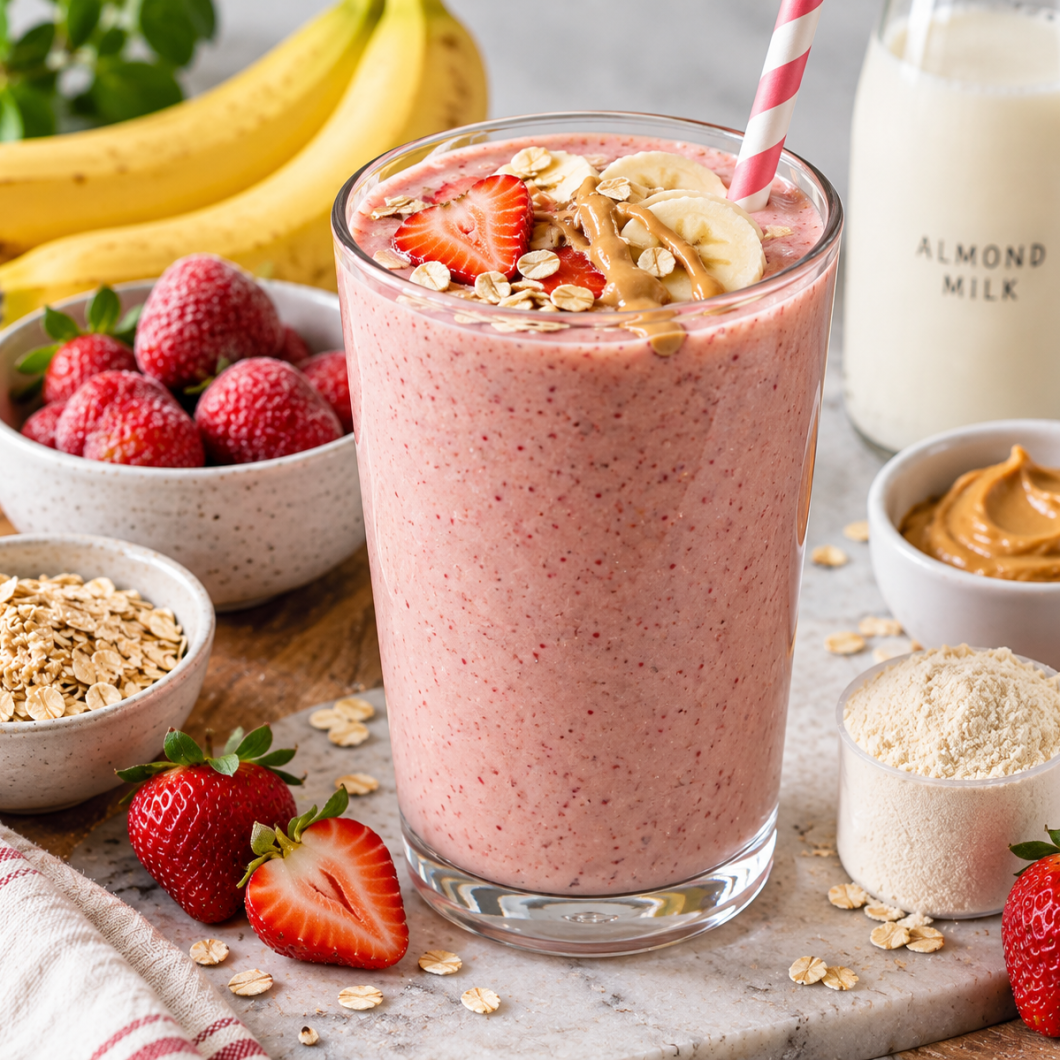
Protein Breakfast Smoothie
A thick and creamy protein breakfast smoothie made with frozen banana, strawberries, rolled oatmeal, vanilla protein powder, peanut butter, and almond milk. Ready in only five minutes, this easy breakfast smoothie provides approximately 12 grams of protein and 6 grams of fiber per serving.
2
servings5
minutes0
minutes204
kcal5
minutesIngredients
1 medium frozen banana
1 cup frozen strawberries
2 tablespoons rolled oatmeal
¼ cup vanilla protein powder
1 tablespoon all-natural creamy peanut butter
1 cup plain unsweetened almond milk
Directions
- Place all ingredients into a high-speed blender.
- Blend on high until completely smooth.
- Stop and scrape down the sides as needed.
- Blend again until creamy and evenly combined.
- Pour into glasses and serve immediately.
Nutrition Facts
2 servings per container
- Amount Per ServingCalories204
- % Daily Value *
- Total Fat
6g
8%
- Total Carbohydrate
29g
11%
- Protein 12g 24%
* The % Daily Value tells you how much a nutrient in a serving of food contributes to a daily diet. 2,000 calories a day is used for general nutrition advice.