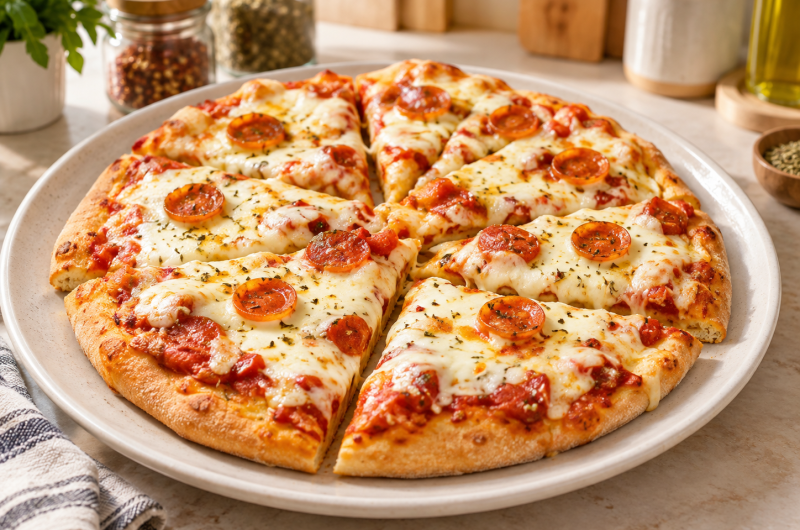
High protein pizza is a delicious way to enjoy classic pizza flavors while adding more protein to your meal. Made with a cottage cheese pizza crust, thick pizza sauce, shredded mozzarella, and pepperoni, this homemade pizza is satisfying, simple to prepare, and perfect for family dinners. It combines familiar ingredients with a protein-rich base, making it a practical choice when you want something different from traditional takeout or frozen pizza.
This easy high protein pizza recipe is especially useful for busy weeknights because the toppings require very little preparation. Once your cottage cheese pizza crust is ready, you only need to spread the sauce, add the cheese and pepperoni, and bake until everything is hot and bubbly. With approximately 25 minutes of preparation and cooking time listed, it is a convenient option for lunch, dinner, or a relaxed homemade pizza night.
This High Protein Pizza
A protein-rich alternative to traditional pizza
One of the main reasons to try this cottage cheese pizza recipe is its protein-packed crust. Cottage cheese provides additional protein compared with a conventional crust made primarily from flour. Combined with mozzarella and pepperoni, it creates a satisfying meal with several sources of protein. The supplied nutritional information lists 20 grams of protein per serving, making this recipe an appealing option for people who want to include more protein in their meals.
Classic pizza flavor in every bite
Although the crust is different, the toppings keep the taste familiar. Tomato-based pizza sauce, melted mozzarella, and savory pepperoni create the traditional combination many pizza lovers enjoy. The cheese becomes soft and bubbly in the oven, while the pepperoni adds a rich, slightly salty flavor. These simple ingredients work together without needing complicated seasonings or additional preparation, making the recipe suitable for anyone who enjoys straightforward homemade food.
Quick and easy to prepare
Making pizza at home can be simple when the crust is already prepared. This recipe doesn’t require you to spend extra time preparing a complicated dough immediately before dinner. Instead, you can concentrate on assembling the toppings and baking the pizza. Preparing cottage cheese crusts ahead of time can make the process even quicker, allowing you to enjoy homemade pizza on days when you have limited time for cooking.
Easy to customize for the family
Homemade pizza is convenient because everyone can choose the toppings they enjoy. The original pepperoni and mozzarella combination is a familiar option for children and adults, but you can also add vegetables, cooked chicken, or different cheeses. If your family has different preferences, prepare the basic pizza first and offer extra toppings separately. This makes it easier to serve a meal that suits different tastes without preparing several completely different dishes.
Ingredients for High Protein Pizza
Simple ingredients for a flavorful pizza
This recipe uses cottage cheese pizza crust as its base, with four simple components in the topping list. You’ll need the prepared crust, pizza sauce, shredded mozzarella cheese, and pepperoni. The combination keeps the preparation manageable while providing the familiar appearance and taste of a classic pepperoni pizza. Before starting, measure the toppings and make sure the crust is ready for assembly.
The crust is listed as a separate recipe, so its ingredients and preparation instructions should be followed independently. This is important because the crust forms the foundation of the pizza and determines much of its texture. Once it is prepared, the remaining steps are quick and straightforward, making the complete recipe easier to organize.
Choosing thick pizza sauce
A thick pizza sauce is recommended because it spreads easily and stays on the crust without adding excessive moisture. A thinner pasta sauce or marinara may make the base soggy, particularly if the crust is delicate. Choose a sauce specifically intended for pizza or another thick tomato sauce with a similar consistency. Spread it evenly across the crust, using a moderate amount so the flavor is balanced with the cheese.
Using mozzarella and pepperoni
Shredded mozzarella gives this pizza its familiar cheesy topping. It melts during baking and combines naturally with the tomato sauce and pepperoni. You can shred mozzarella yourself or use packaged shredded cheese for convenience. Pepperoni adds a savory flavor and makes the pizza feel like a traditional pizzeria-style meal. Arrange the pieces evenly over the cheese so each slice has a balanced amount of topping.
How to Make High Protein Pizza
Step 1: Preheat the oven
Preheat your oven to 425°F before assembling the pizza. Allow the oven to reach the correct temperature so the toppings can heat quickly and the mozzarella can melt properly. Preparing the oven first also makes the process more efficient because you can place the assembled pizza inside as soon as you’re finished adding the toppings. While the oven heats, prepare your crust and measure the sauce, cheese, and pepperoni.
Step 2: Prepare the cottage cheese pizza crust
Make the cottage cheese pizza crust according to its separate recipe instructions. Follow the original method for preparing the base rather than changing its ingredients or baking process. If you’ve prepared the crust in advance, make sure it is ready for topping. Having the crust available before you begin assembling the pizza is a useful way to save time, especially when preparing dinner after a busy day.
Step 3: Spread the pizza sauce
Place the prepared crust on an appropriate baking surface and spread the pizza sauce evenly over the top. Use enough sauce to cover the main surface without creating a thick, wet layer. Keeping the amount moderate helps the crust retain its texture during baking. Distribute the sauce carefully so the flavor reaches each portion, and leave a little space around the edge if you want a visible crust border.
Step 4: Add mozzarella and pepperoni
Sprinkle the shredded mozzarella evenly over the sauce. Arrange the pepperoni pieces across the cheese, spreading them out rather than piling them into the center. An even layer makes the pizza easier to divide and helps every slice receive a similar amount of toppings. Avoid adding too many extra ingredients at this stage because a heavy topping layer can make the crust difficult to support and may affect the finished texture.
Step 5: Bake until the cheese is bubbly
Place the topped pizza in the preheated oven and bake for 8–10 minutes. The cheese should melt and become bubbly, while the toppings warm through. Check the pizza as it approaches the recommended cooking time because ovens and crust thicknesses can vary. Once the cheese has melted and the pizza is heated through, carefully remove it from the oven and prepare it for serving.
Step 6: Slice and serve warm
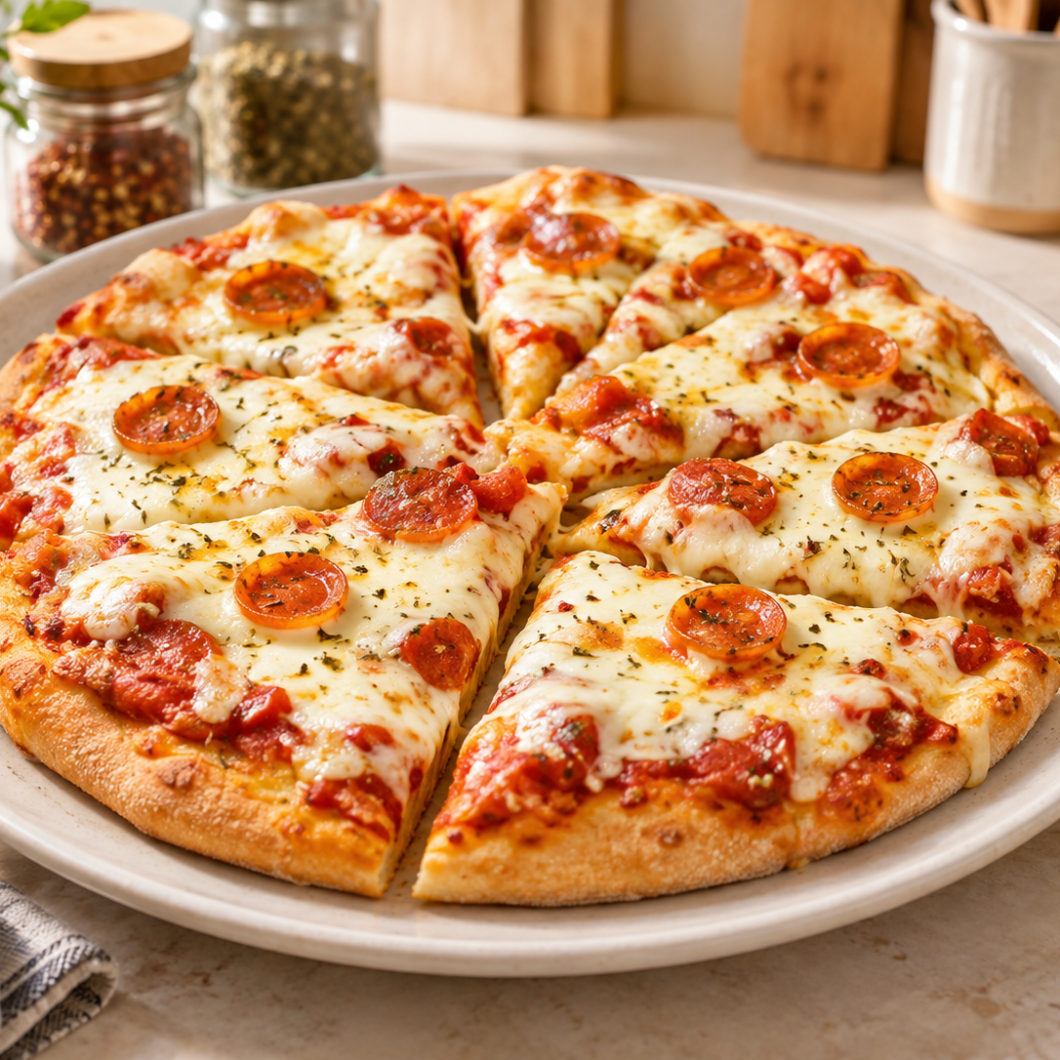
Let the pizza rest briefly after removing it from the oven. This gives the melted cheese a moment to settle and makes slicing easier. Cut the pizza into portions and serve while warm. The finished pizza works well as a simple main course, particularly when paired with a crisp salad or fresh vegetables. Serve it immediately for the best combination of warm cheese, savory toppings, and a freshly heated crust.
Delicious Ways to Customize Your Pizza
Add different protein toppings
You can change the flavor of this pizza by replacing or combining pepperoni with other cooked proteins. Cooked chicken, crumbled sausage, ham, and bacon are all suitable options. Chicken works well with tomato sauce and mozzarella, while sausage and bacon provide a richer, savory taste. Make sure any meat is fully cooked before adding it, since the short baking time is mainly intended to melt the cheese and heat the assembled pizza.
Include fresh vegetables
Vegetables are a simple way to add different textures and flavors to homemade pizza. Sliced mushrooms, onions, green onions, olives, and spinach are all options that complement mozzarella and tomato sauce. Use a moderate amount so the toppings don’t become too heavy. Vegetables that release moisture can soften the crust, so consider preparing them first or using smaller quantities when assembling the pizza.
Experiment with different cheeses
Mozzarella is a classic pizza cheese, but other varieties can provide a different flavor. Fresh mozzarella creates a soft, creamy topping, while ricotta can be added in small dollops for richness. Asiago offers a stronger cheese flavor if you prefer something more pronounced. You can experiment with these alternatives while keeping the same basic assembly method, adjusting the quantity according to the cheese’s moisture and melting characteristics.
Try alternative sauces
Traditional pizza sauce is ideal for the original recipe, but other sauces can create interesting variations. Basil pesto gives the pizza a fresh herbal flavor, while cauliflower Alfredo sauce provides a creamy alternative. Barbecue sauce is another option, especially if you’re using cooked chicken. Choose a sauce with a suitable consistency and avoid spreading it too thickly, so the crust doesn’t become overly moist during baking.
What to Serve with High Protein Pizza
Fresh salads
A fresh salad is an easy side dish for this homemade pizza because its crisp texture contrasts with the warm cheese and savory pepperoni. Arugula salad is one option, while a Mediterranean salad provides a variety of fresh ingredients. If you need something especially quick, combine mixed salad greens with balsamic vinaigrette. These simple sides add variety to dinner without requiring much additional cooking or preparation.
Simple vegetable sides
Fresh cucumbers, sliced tomatoes, and roasted vegetables can also accompany this pizza. Choose vegetables that are easy to prepare and complement the richness of the toppings. A simple vegetable platter is especially convenient when serving several people because everyone can choose what they want. Pairing pizza with a fresh side dish also makes it easier to create a more varied meal without changing the main recipe.
Storage and Reheating Instructions
Refrigerating leftover pizza
Store leftover pizza in an airtight container in the refrigerator for up to three days. Allow the pizza to cool appropriately before storing it, and avoid leaving it at room temperature for extended periods. Keeping the slices covered helps maintain their quality and prevents the cheese and crust from drying out. Individual portions can be stored separately if you want convenient servings for lunch or another quick meal.
Freezing for later
The original recipe allows for freezing individually wrapped slices or whole unbaked pizzas for up to two months. Use freezer-safe packaging and wrap the portions securely to help protect their texture. If you regularly prepare homemade pizza, freezing extra portions can make future meals more convenient. Label each package with the date so you can keep track of storage time and use the pizza while it is still in good condition.
Reheating in the oven or air fryer
For reheating, use a 375°F oven or air fryer until the pizza is warm and the cheese has heated through. These methods are useful when you want to maintain more texture in the crust. The microwave is also an option for a quick meal, but it will generally make the crust softer. Choose the method that best suits your available time and preferred texture.
Notes for the Best Results
Avoid overloading the crust
Keep the toppings balanced to help the pizza bake evenly. Too much sauce can add moisture, while excessive cheese, meat, or vegetables can make the crust difficult to support. Start with the quantities in the recipe and make small changes if you want to experiment. A moderate layer of toppings helps each slice hold together and allows the flavors of the crust, sauce, cheese, and pepperoni to come through.
Prepare the crust in advance
Making the cottage cheese crust ahead of time is a useful meal-preparation strategy. When the crust is ready, you can assemble the toppings and bake the pizza without completing every preparation step at dinner time. Follow the separate crust recipe’s storage instructions to maintain its quality. This approach is particularly helpful for people who enjoy homemade pizza but want a shorter cooking routine during the week.
Check the pizza before removing it
The suggested baking time is 8–10 minutes, but the exact time can vary with the oven and crust. Look for melted, bubbly mozzarella and toppings that are heated through. Avoid baking the pizza longer than necessary because the cheese may dry out and the crust may become less pleasant. Use the recommended timing as a guide and check the pizza’s appearance near the end of cooking.
Frequently Asked Questions
How much protein does this pizza contain?
The supplied nutritional information lists 20 grams of protein per serving, with a serving size of two slices. The final amount can vary depending on the cottage cheese crust, mozzarella, pepperoni, and sauce you use. If you need an exact nutritional value, calculate it using the specific ingredients and quantities in your own preparation.
Can I use turkey pepperoni?
Yes. Turkey pepperoni is a suggested alternative to traditional pepperoni. It provides a different option while keeping the familiar pizza flavor and preparation method. Arrange it evenly over the mozzarella and bake the pizza until the cheese is melted and bubbly.
Can I prepare the pizza ahead of time?
You can prepare the crust in advance and store it according to its own recipe instructions. When you’re ready to make the pizza, spread on the sauce, add the mozzarella and pepperoni, and bake. This makes dinner assembly faster and helps reduce preparation work on busy evenings.
Why use thick pizza sauce?
Thick pizza sauce is easier to spread in a controlled layer and adds less excess moisture than many thinner sauces. This helps prevent the crust from becoming soggy and allows the finished pizza to hold together more easily when sliced.
What is the total preparation time?
The supplied recipe lists 15 minutes of preparation time and 10 minutes of cooking time, for a total of 25 minutes. This timing assumes the cottage cheese pizza crust is ready to use or included in the stated preparation workflow. If the crust requires separate preparation, allow additional time
High Protein Pizza
 Recipe by admin
Cottage cheese pizza crust topped with pizza sauce, mozzarella, and pepperoni for an easy, protein-packed homemade dinner.
4
servings15
minutes10
minutes360
kcal25
minutesIngredients
Cottage Cheese Pizza Crust
3/4 cup pizza sauce (I like Rao’s brand)
3/4 cup pizza sauce (I like Rao’s brand)
1 cup shredded mozzarella cheese
1/3 cup pepperoni
Directions
- Preheat your oven to 425°F.
- Make the Cottage Cheese Pizza Crust according to its recipe directions.
- Spread the pizza sauce evenly over the prepared crust.
- Sprinkle the shredded mozzarella over the sauce and arrange the pepperoni on top.
- Bake for 8–10 minutes, until the cheese is melted and bubbly.
- Remove from the oven, slice, and serve warm.
Nutrition Facts
- Calories: 360kcal
- Fat: 18g
- Carbohydrates: 31g
- Fiber: 2g
- Sugar: 5g
- Protein: 20g