A Colorful Homemade Juice Packed with Fruity Flavor
If you enjoy fresh fruit juice with a refreshing taste, beautiful ruby-red color, and a naturally sweet flavor, this apple beetroot pomegranate juice is a wonderful recipe to try. Made with apples, beetroot, tomatoes, strawberries, pomegranate, blueberries, and fresh lime, this homemade juice combines a variety of fruits and vegetables in one vibrant drink.
The best part is that you do not need complicated ingredients, added sugar, or artificial flavorings to prepare this recipe. The natural sweetness of apples and strawberries balances the earthy taste of beetroot, while pomegranate and blueberries contribute a rich berry flavor. Lime adds a bright citrus note that brings all the ingredients together.
This fresh fruit and vegetable juice is ideal for breakfast, a midday refreshment, or whenever you want to enjoy a homemade drink made from fresh produce. It takes approximately 20 minutes to prepare and produces two portions of around 500 ml each, depending on the juicer and the amount of juice extracted.
Using a slow juicer makes the preparation straightforward. Simply wash and prepare the ingredients, feed them through the machine, strain the juice if desired, and chill it before serving.
Whether you are exploring homemade juice recipes, looking for new ways to enjoy beetroot, or searching for an appealing apple and pomegranate juice combination, this recipe offers a delicious way to bring different flavors together.
What Makes This Apple and Beetroot Juice Special?
Many homemade juice recipes rely on just two or three ingredients. This version uses seven different fruits and vegetables, creating a more complex taste with a balance of sweetness, earthy notes, tartness, and berry freshness.
Apples provide a familiar, mellow sweetness. Beetroot adds a distinctive earthy flavor and an intense red-purple color. Tomatoes contribute a mild savory quality, while strawberries and blueberries introduce fruity aromas. Pomegranate adds a pleasantly tangy taste, and lime helps keep the overall flavor bright.
The ingredients work together without needing additional sweeteners. This makes the recipe a useful option for people who prefer to prepare drinks at home and control exactly what goes into them.
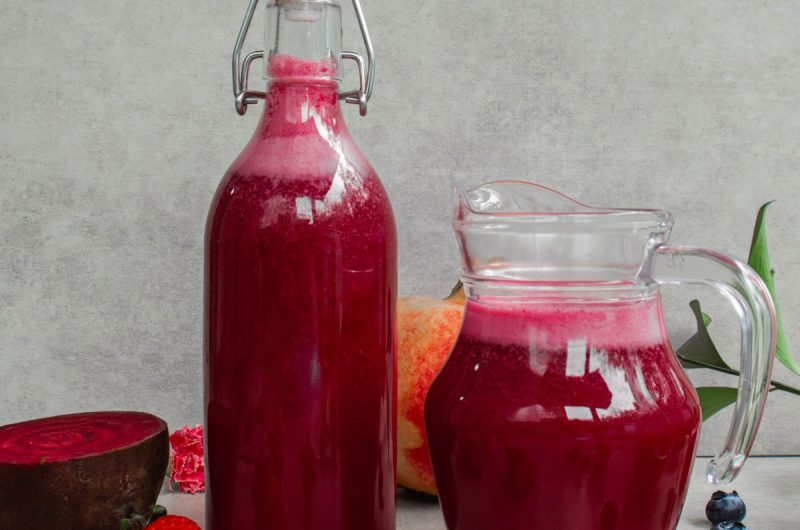
The combination also makes the juice visually appealing. Once the ingredients pass through the juicer, their naturally colored juices blend into a rich, jewel-toned drink that looks attractive in clear glass bottles or serving glasses.
Ingredients for This Fresh Fruit and Vegetable Juice
The recipe uses the following seven ingredients in their specified quantities. For the best flavor, choose fresh produce that is ripe, clean, and free from spoiled or damaged areas.
Apples — 600 g
Apples form the fruity base of this recipe. Their natural sweetness helps balance beetroot’s earthy flavor and the tartness of lime and pomegranate. You can use a sweet or mildly tart apple variety, depending on the flavor you prefer.
Wash the apples thoroughly before cutting them into pieces that fit your juicer. Remove any damaged sections before processing.
Beetroot — 300 g
Beetroot gives the juice its striking color and distinctive earthy taste. Fresh, firm beetroot is a good choice for this recipe. Peel the roots and cut them into small pieces to make feeding them into the juicer easier.
Beetroot has a strong flavor, but the apples, strawberries, and other fruits help create a more balanced drink.
Tomatoes — 250 g
Tomatoes might seem unusual in a fruit juice recipe, but they complement the other ingredients with their mild, slightly savory flavor. They also help create a more rounded taste instead of making the drink overwhelmingly sweet.
Choose ripe tomatoes without soft, spoiled areas. Wash them and cut them into manageable pieces before juicing.
Strawberries — 250 g
Strawberries add a fragrant, sweet-tart berry flavor. They pair particularly well with apples and blueberries, helping the finished juice taste fruity and refreshing.
Fresh, ripe strawberries are ideal. Remove any damaged portions and wash them carefully before adding them to the juicer.
Pomegranate — 150 g
Pomegranate contributes a tangy, fruity flavor that works beautifully with beetroot and berries. Its deep red color also complements the other ingredients.
Remove the seeds from the pomegranate before juicing. Take care to remove the unwanted peel and as much of the bitter white membrane as practical.
Blueberries — 125 g
Blueberries bring a mild sweetness and a delicate berry taste to the mixture. Their flavor blends naturally with strawberries and pomegranate, making the juice more interesting than a simple apple and beetroot combination.
Rinse the blueberries under clean running water and remove any damaged berries before use.
Lime — 2 peeled limes
Lime provides the citrusy finish that brings the recipe together. Its acidity balances the natural sweetness of the fruit and helps prevent the flavor from becoming too heavy.
Peel both limes and remove the green outer skin and the white pith as instructed. The white pith can add bitterness, so removing it helps produce a cleaner citrus flavor.
No additional ingredients are required. The recipe contains no added sugar, syrup, milk, or artificial flavoring.
Kitchen Tools to Prepare Before You Start
Gathering your equipment before washing and cutting the produce makes the process faster and more convenient.
You will need:
- A weighing scale to measure the ingredients accurately.
- A slow juicer to extract the juice from the fruits and vegetables.
- A chopping board for preparing the produce.
- A sharp knife for cutting the ingredients.
- A peeler for removing the beetroot skin and lime peel.
- Clean glass bottles for storing the finished juice.
A fine-mesh strainer can also be useful if you prefer a smoother drink with fewer particles. This is an optional convenience rather than an additional recipe ingredient.
Wash the juicer parts and all preparation tools before use. Clean equipment and properly washed produce are important when preparing fresh, uncooked juice.
How to Prepare the Ingredients Properly
Good preparation helps your juicer work efficiently and gives the finished drink a consistent texture.
Start by washing all the apples, beetroot, tomatoes, strawberries, blueberries, and whole pomegranate as appropriate under clean running water. Wash your hands before handling the ingredients, and use a clean chopping board.
Next, peel the beetroot and cut it into small dice. Beetroot can stain hands, clothing, and kitchen surfaces, so handle it carefully and clean any splashes promptly.
Peel the limes and remove the green outer peel along with the white pith. Cut the peeled limes into pieces if necessary to suit your juicer.
Open the pomegranate and remove the seeds. Discard the tough outer peel and unwanted white membrane. Measure the 150 g portion required for the recipe.
Cut the apples and tomatoes into pieces small enough to fit comfortably through the juicer’s feeding chute. Follow your machine’s instructions regarding the size of the pieces and whether any additional preparation is necessary.
Finally, remove the strawberry tops if needed and check the blueberries for damaged fruit. Once everything is prepared, arrange the ingredients near the juicer so you can process them without interruption.
Step-by-Step Instructions for Making the Juice
Step 1: Set up the slow juicer
Place the juicer on a stable kitchen surface and assemble it according to the manufacturer’s instructions. Position the juice container beneath the outlet and keep a separate bowl nearby for collecting pulp if your machine requires one.
Step 2: Prepare the apples and tomatoes
Feed the prepared apple and tomato pieces into the juicer gradually. Avoid overloading the machine. Allow each portion to process before adding more.
Step 3: Add the beetroot
Introduce the diced beetroot in manageable batches. Its earthy juice will begin to contribute the characteristic deep color of the finished drink.
Step 4: Process the berries
Add the strawberries and blueberries, alternating them with some of the firmer ingredients if this helps your juicer process the mixture smoothly. Follow the equipment manufacturer’s guidance for soft fruits.
Step 5: Juice the pomegranate and lime
Add the pomegranate seeds and peeled lime pieces. Process the remaining ingredients until all the prepared produce has passed through the juicer.
Step 6: Strain if desired
Check the consistency of the collected juice. If you prefer a smoother texture, pour it through a clean fine-mesh strainer into a suitable container. You can skip this step if your juicer already produces a texture you enjoy.
Step 7: Bottle and chill
Pour the finished juice into clean glass bottles with secure lids. Refrigerate promptly and aim to consume the juice within 24 hours, as specified in this recipe.
Step 8: Serve cold
Shake the bottle gently before serving if natural settling has occurred. Pour approximately 500 ml into each serving glass, depending on the final yield.
Tips for the Best-Tasting Homemade Juice
Choose ripe, fresh produce. The quality of the ingredients has a noticeable effect on the final flavor. Ripe apples and strawberries generally offer a pleasant sweetness, while fresh beetroot gives the drink its characteristic earthy note.
Measure the ingredients. Using the quantities provided helps maintain the intended balance between fruit, vegetables, berries, and citrus.
Prepare everything before juicing. Cutting the harder ingredients into suitable pieces helps prevent interruptions and makes the process easier.
Use a clean slow juicer. Clean equipment helps prevent unwanted flavors and makes preparation more hygienic.
Adjust the serving temperature rather than the ingredients. Chilling the juice can make its fruity and citrus notes especially refreshing. You do not need to add extra sugar or other ingredients.
Drink it soon after preparation. Fresh juice can change in flavor and quality during storage. Keeping it covered and refrigerated helps preserve its freshness.
Why Use a Slow Juicer?
A slow juicer processes produce using a slower extraction mechanism than many conventional high-speed centrifugal juicers. Depending on the machine, this can make it convenient to process a variety of fruits and vegetables, including apples, beetroot, and berries.
The right preparation still matters. Cut ingredients to the size recommended by your machine, alternate soft and firm produce when appropriate, and never force pieces into the feeding chute.
If you do not own a slow juicer, this exact recipe may require adjustments to the equipment and method. A blender generally retains more pulp and produces a thicker drink, so it will not necessarily give you the same result as a strained, slow-juiced beverage.
Flavor Profile: Sweet, Earthy, Tangy, and Fruity
One of the appealing features of this recipe is the contrast between its ingredients.
The apples create a sweet foundation, while strawberries and blueberries supply familiar berry flavors. Pomegranate adds a tart edge, and lime gives the juice a fresh citrus finish.
Beetroot adds depth and an earthy character, while tomato introduces a gentle savory note. Rather than tasting like a single fruit, the finished drink has several layers of flavor.
If you enjoy bold-colored homemade drinks, beetroot juice, pomegranate juice, and mixed berry juice, this combination is worth trying. It is particularly suitable for anyone who enjoys experimenting with fruit and vegetable combinations rather than relying on packaged drinks.
Nutritional Information and Everyday Enjoyment
The recipe’s listed nutrition information provides an estimate of its energy, carbohydrates, protein, fat, minerals, and vitamins. According to the supplied figures, a 500 ml serving contains approximately 381 calories and 93 g of carbohydrates.
The ingredients naturally contribute nutrients such as vitamin C, potassium, folate, and other vitamins and minerals. However, the actual nutritional composition will depend on the produce used, how efficiently the juicer extracts the juice, and whether the liquid is strained.
One important consideration is fiber. Juicing removes some or much of the fruit and vegetable pulp, depending on the equipment and straining method. Therefore, the supplied fiber figure should not be treated as a verified value for strained juice. The listed nutrition figures are best regarded as estimates rather than laboratory-tested results.
Although this recipe contains only fruit and vegetables, natural sugars from the ingredients still contribute to its total carbohydrate content. If you monitor carbohydrate intake or blood glucose, consider the serving size and how the juice fits into your individual dietary needs.
This drink can be enjoyed as part of a varied diet, but it should not be considered a detox treatment, a cure for illness, or a replacement for whole fruits and vegetables.
Storage and Freshness Guidelines
Freshly prepared juice is best enjoyed soon after making it. Transfer the finished drink to clean, covered glass bottles and refrigerate promptly at 4°C (40°F) or below.
For this recipe, use the juice within 24 hours. Keep it refrigerated rather than leaving it on the kitchen counter, and discard it if you notice signs of spoilage.
Because homemade juice is generally unpasteurized, washing produce and using clean equipment are especially important. Fresh juice can carry harmful bacteria even when it looks and smells normal. People who are pregnant, very young children, older adults, and individuals with weakened immune systems should take particular care with unpasteurized juice and follow appropriate food-safety advice.
For additional guidance, consult the U.S. Food and Drug Administration’s juice safety recommendations.
Frequently Asked Questions
1. What does apple beetroot pomegranate juice taste like?
It has a mixture of sweet apple, earthy beetroot, fruity berries, tangy pomegranate, mild tomato, and fresh lime. The result is a colorful drink with a balanced sweet-and-tart flavor.
2. How long does this homemade juice take to make?
Allow approximately 20 minutes for preparation and juicing. The exact time depends on your chopping speed, juicer design, and how much cleaning and bottling you do.
3. Can I prepare this juice in advance?
You can prepare it ahead for convenience, but it is best made fresh. Store it in clean, covered bottles in the refrigerator and consume it within 24 hours.
4. Do I have to strain the juice?
No. Straining is optional and depends on your preferred texture and the output of your juicer. Straining can remove additional pulp, so the final fiber content may be lower.
5. Can I leave out the lime?
The lime is part of the original recipe and provides an important citrus flavor. Leaving it out will change the balance of the finished drink.
6. Is this juice suitable for a vegan diet?
Yes. The listed ingredients are all plant-based, and the recipe contains no dairy, eggs, or other animal-derived ingredients.
7. Can I add sugar or honey?
The recipe does not require any additional sweetener. The apples and berries already contribute natural sweetness, so try the drink as written first.
8. Does this recipe make two servings?
The recipe is designed for two portions of approximately 500 ml each. The actual amount will vary according to the juicer, produce quality, and amount of liquid retained in the pulp.
This apple beetroot pomegranate juice is a colorful way to combine apples, beetroot, tomatoes, strawberries, pomegranate, blueberries, and lime in one homemade drink. Its combination of natural sweetness, earthy depth, berry flavor, and citrus freshness makes it an appealing alternative to ordinary single-fruit juice.
With only 20 minutes of preparation, a slow juicer, and a few simple kitchen tools, you can make two generous portions for breakfast or a refreshing break during the day. Prepare it fresh, refrigerate it promptly, and enjoy the flavor of this vibrant fruit and vegetable juice.
Recipe source: Adapted and rewritten in original wording from Holistic Chef Academy — Beetroot Pomegranate Juice. Ingredient quantities and the supplied nutrition figures have been retained. The preparation notes and explanatory text have been rewritten for this article.
SEO title: Apple Beetroot Pomegranate Juice Recipe with Strawberries and Blueberries
Suggested URL slug: apple-beetroot-pomegranate-juice
Meta description: Make fresh apple beetroot pomegranate juice with strawberries, blueberries, tomatoes, and lime. This colorful homemade slow-juicer recipe is ready in 20 minutes.
Suggested focus keywords: apple beetroot juice recipe, beetroot pomegranate juice, homemade fruit and vegetable juice, strawberry blueberry juice, fresh apple juice recipe, slow juicer recipes, healthy homemade juice.
Suggested related keywords: beetroot and apple juice, fresh pomegranate juice, mixed berry juice recipe, homemade red juice, fruit and vegetable juice combinations.
Apple Beetroot Pomegranate Juice
Prep Time: 20 minutes
Total Time: 20 minutes
Servings: 2 portions (approximately 500 ml each)
Course: Juice
Cuisine: International
Ingredients
- 600 g apples
- 300 g beetroot
- 250 g tomatoes
- 250 g strawberries
- 150 g pomegranate
- 125 g blueberries
- 2 limes, peeled
Equipment
- Weighing scales
- Slow juicer
- Chopping board
- Knife
- Peeler
- Glass bottles
- Fine-mesh strainer (optional)
Instructions
- Wash all the fruits and vegetables thoroughly under clean running water.
- Peel the limes, removing the green outer peel and white pith.
- Open the pomegranate and remove the seeds.
- Cut the apples and tomatoes into pieces small enough to fit through your juicer.
- Peel the beetroot and cut it into small dice.
- Prepare the strawberries and blueberries, removing any damaged portions.
- Feed all the prepared ingredients through the slow juicer, following the manufacturer’s instructions.
- Strain the juice if you prefer a smoother consistency.
- Pour into clean glass bottles, seal, and refrigerate promptly.
- Serve chilled and consume within 24 hours.
Nutrition Information
Estimated per 500 ml serving, as supplied:
- Calories: 381 kcal
- Carbohydrates: 93 g
- Protein: 7 g
- Fat: 2 g
- Sodium: 130 mg
- Potassium: 1,522 mg
- Fiber: 20 g
- Sugar: 67 g
- Vitamin A: 1,302 IU
- Vitamin B1: 0.2 mg
- Vitamin B2: 0.3 mg
- Vitamin B3: 2 mg
- Vitamin B5: 1 mg
- Vitamin B6: 0.5 mg
- Vitamin C: 126 mg
- Vitamin E: 2 mg
- Vitamin K: 44 µg
- Calcium: 86 mg
- Copper: 0.5 mg
- Folate: 254 µg
- Iron: 3 mg
- Manganese: 2 mg
- Magnesium: 92 mg
- Phosphorus: 188 mg
- Selenium: 2 µg
- Zinc: 1 mg