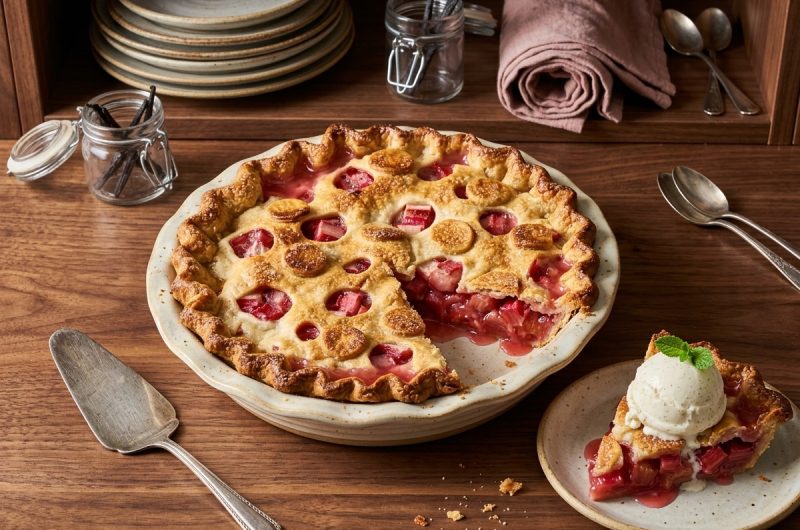
Rhubarb pie is one of those classic desserts that proves a simple filling can create an unforgettable homemade pie. Fresh rhubarb brings a naturally tart flavor, while granulated sugar balances its sharpness and cornstarch helps create a thick, spoonable filling.
Baked between two golden pie crusts and finished with coarse sugar, this easy rhubarb pie has a beautiful contrast of textures. The filling becomes tender and jammy while the crust stays flaky and crisp around the edges.
Why This Rhubarb Pie Works So Well
The beauty of this rhubarb pie recipe is that it does not require a long list of ingredients or complicated techniques. The main filling is made with chopped rhubarb, sugar, cornstarch, cinnamon, and salt. These ingredients work together to create a flavorful fruit filling without overpowering the distinctive taste of rhubarb.
Prepared pie crusts make the process even easier, although homemade crust can also be used if you prefer baking from scratch.
One especially useful technique is preheating a rimmed baking sheet along with the oven. When the assembled pie is placed directly on the hot baking sheet, the bottom crust receives an immediate burst of heat. This helps the pastry begin cooking quickly instead of sitting against a cool surface while the filling heats. The baking sheet also provides practical protection by catching any juices that bubble over during baking, making cleanup easier.
What Makes Rhubarb Special in Pie
Rhubarb is instantly recognizable by its long, firm stalks and pink to deep red color. Its flavor is naturally very tart, which is why it is usually paired with sugar in desserts. Once baked, rhubarb softens considerably and develops a pleasantly fruity taste while retaining some of its characteristic tang. That contrast is one of the main reasons rhubarb pie remains such a popular spring and summer dessert.
Fresh rhubarb is an excellent choice when it is available, but frozen rhubarb can also be used for this recipe. If using frozen rhubarb, it should be thawed before adding it to the filling. Rhubarb releases quite a bit of moisture as it sits with sugar, so it is important to use the cornstarch and vent the top crust properly. These small details help the finished filling reach the right consistency.
Ingredients That Build the Filling
The pie crust provides the buttery, flaky structure surrounding the filling. This recipe uses a package of prepared pie crusts, making it convenient for anyone who wants a homemade-style pie without preparing pastry dough from scratch. The crusts should be thawed if frozen and handled gently so they fit into the pie plate without tearing or developing thin spots.
The rhubarb is the star ingredient, with one and a half pounds providing plenty of tart fruit flavor for an eight-serving pie. Granulated sugar softens the sharpness of the rhubarb while allowing its natural character to remain noticeable. Cornstarch is especially important because rhubarb releases moisture as it bakes. It thickens the juices into a cohesive filling instead of leaving the pie watery.
Ground cinnamon is optional, but even a small amount adds warmth to the fruit filling. Salt is also included in a modest quantity to balance the sweetness and bring the other flavors into focus. Finally, coarse sugar is sprinkled over the egg-washed top crust. It adds a light crunch and gives the baked pie a sparkling, golden finish.
Preparing the Pie Crust
Start by arranging a rack in the middle of the oven and heating it to 375°F. Place a rimmed baking sheet inside the oven while it preheats. This step may seem unusual, but it is one of the most useful techniques in this recipe. A hot baking sheet helps the base of the pie crust cook efficiently, which can make a noticeable difference in the final texture.
Unroll one pie crust and carefully place it inside a 9-inch pie plate. Press it gently against the bottom and sides, making sure there are no accidental punctures. The crust should sit comfortably in the dish without being stretched too tightly. A well-fitted bottom crust provides a sturdy base for the juicy rhubarb filling and helps the finished slices hold their shape.
Using Egg Wash for a Better Crust
An egg wash is made by whisking the large egg with one teaspoon of water. This simple mixture serves more than one purpose in the recipe. Brushing the inside of the bottom crust before adding the filling creates a light barrier that can help protect the pastry from excessive moisture. This is particularly useful for fruit pies because rhubarb releases liquid as it cooks.
The same egg wash is brushed over the assembled top crust before baking. It encourages the pastry to develop a rich golden-brown appearance and gives the surface a subtle shine. After the egg wash is applied, coarse sugar is sprinkled over the top. The sugar adds texture and creates an attractive finish that makes the pie look especially inviting when served.
Making the Rhubarb Pie Filling
To prepare the filling, combine the chopped rhubarb, granulated sugar, cornstarch, optional cinnamon, and salt in a large bowl. Toss everything thoroughly so the cornstarch and sugar are distributed evenly throughout the fruit. This is important because concentrated pockets of cornstarch may not thicken properly, while areas without enough thickener can remain overly watery.
Once the ingredients are combined, transfer the entire mixture into the prepared pie crust. Include any liquid that has collected in the bowl. It may seem tempting to leave the liquid behind, but the recipe is designed to accommodate it. During baking, the cornstarch works with the released rhubarb juices to create the thick, glossy filling that makes a good fruit pie so satisfying.
Preparing the Top Crust
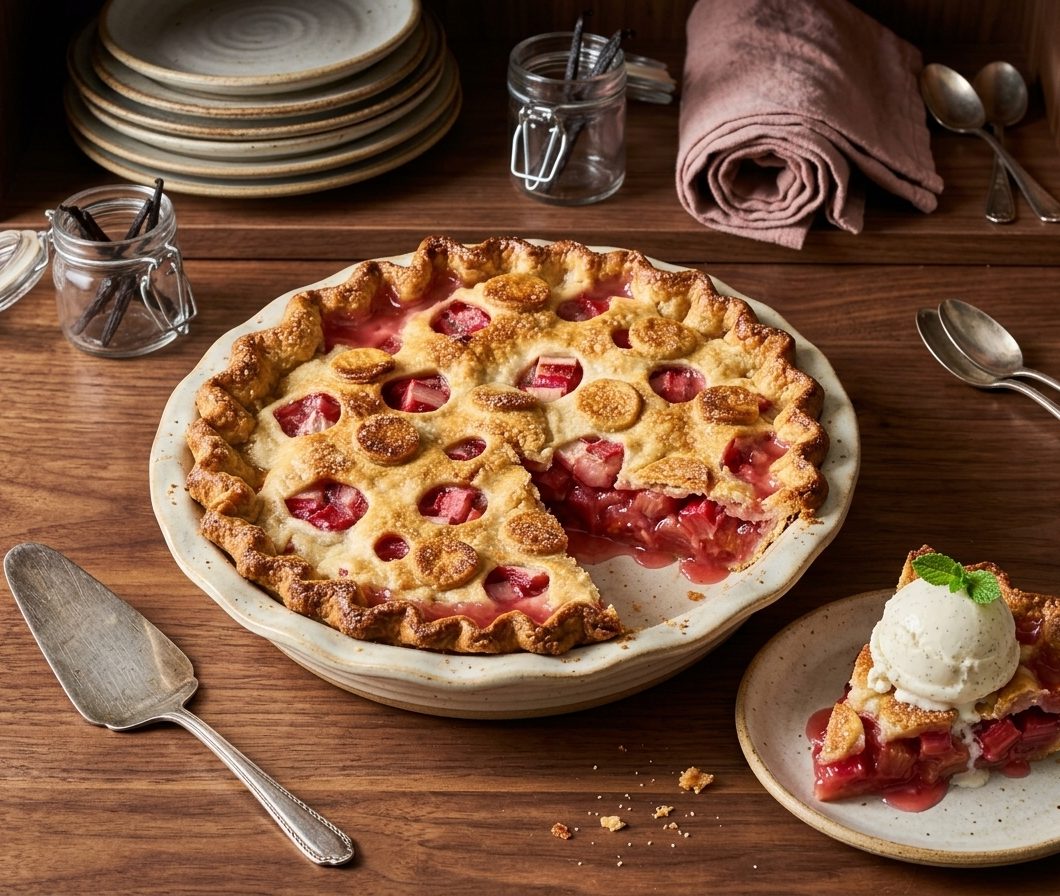
The top crust needs openings so steam can escape while the pie bakes. Use a one-inch round cutter or a paring knife to make approximately eight to ten vent holes. These openings allow moisture to escape from the filling instead of becoming trapped beneath the pastry. Proper venting is particularly important for rhubarb because of its naturally high moisture content.
If you prefer a different appearance, a straw can be used to make smaller vent holes, or the top crust can be arranged as a lattice. Whichever design you choose, do not skip the venting step. Without enough openings, steam can remain trapped inside the pie, potentially affecting both the texture of the filling and the crispness of the crust.
Sealing and Finishing the Pie
Carefully transfer the prepared top crust over the rhubarb filling. Align it with the edges of the bottom crust, then crimp the edges together firmly to create a seal. This gives the pie a finished appearance while helping contain the filling as it bubbles in the oven. If the crust feels delicate, handle it gently to avoid tearing it as you position it.
Brush the top and edges with the remaining egg wash, then sprinkle generously with coarse sugar. You may not need the entire two tablespoons, so use enough to provide an even coating without creating a thick layer. The sugar will toast during baking, adding a lightly crisp texture that complements the tender rhubarb and flaky pastry.
Baking Rhubarb Pie
Place the assembled pie on the preheated baking sheet and bake until the filling is visibly bubbling. This generally takes between 40 and 45 minutes. Begin checking the pie around the 30-minute mark because oven temperatures and crust color can vary. If the top or edges are becoming too dark before the filling is fully cooked, loosely cover those areas with aluminum foil.
The pie is ready when the crust is golden and the filling has reached a strong bubbling stage. The bubbling is an important visual cue because it indicates that the filling has heated sufficiently for the cornstarch to thicken the juices. Once baked, resist the temptation to slice the pie immediately. The filling needs time to settle and firm as the pie cools.
Why Cooling Time Matters
Allow the finished rhubarb pie to cool on a wire rack for at least four hours before serving. This waiting period is essential for getting clean, attractive slices. The filling continues to thicken as it cools, and cutting into the pie too soon can cause the warm juices to spread across the plate instead of staying within the slice.
Although four hours may feel like a long wait after the pie comes out of the oven, it makes a substantial difference in texture. Once properly cooled, the filling becomes thick enough to sit neatly between the crusts. The crust also has time to settle, making the pie easier to cut and serve without collapsing.
What to Serve with Rhubarb Pie
Rhubarb pie is delicious on its own, but a creamy accompaniment can make the tart fruit flavor even more enjoyable. Vanilla ice cream is a classic choice because its cool, creamy sweetness balances the warm, tangy rhubarb. A scoop slowly melting over a slice of pie creates a combination of temperatures and textures that works especially well.
Whipped cream, crème anglaise, or Chantilly cream can also be served alongside the pie. For a stronger fruit-forward combination, strawberry ice cream is another excellent option. Strawberry and rhubarb are natural partners, and the sweetness of the ice cream complements the tart filling without hiding its distinctive flavor.
Notes for the Best Results
One of the most important details is protecting the bottom crust from excess moisture. Brushing the pastry with egg wash before adding the filling provides an extra layer of protection. Preheating the baking sheet also helps the bottom crust begin baking immediately. Together, these techniques improve the chances of getting a crisp base rather than a soft or soggy one.
Venting should receive just as much attention. Rhubarb contains a significant amount of moisture, and sugar draws additional liquid from the fruit. The steam needs somewhere to escape during baking. Eight to ten vent holes provide the necessary openings, while a lattice crust can offer even more ventilation. Proper venting helps the filling thicken and supports a better pastry texture.
Make-Ahead and Storage
This rhubarb pie can be prepared one day ahead, which makes it a convenient dessert for gatherings and family meals. Preparing it in advance also gives the filling plenty of time to cool and set. Once the pie has cooled completely, cover it and keep it at room temperature for up to three days.
The pie can also be frozen either before or after baking for up to three months. If freezing an unbaked pie, protect it carefully against freezer exposure and allow appropriate time for baking when needed. A baked pie should also be wrapped securely to maintain its quality. Proper storage helps preserve the crust and keeps the rhubarb filling flavorful.
A Simple Dessert for Rhubarb Season
This easy rhubarb pie brings together a short ingredient list, straightforward preparation, and a few smart baking techniques. The tart rhubarb filling becomes sweet and thick as it cooks, while the prepared pie crust develops a crisp, golden exterior. The preheated baking sheet, egg wash, and generous venting are simple steps, but each one contributes to the finished texture.
Whether served for a weekend dessert, a spring gathering, or a family dinner, homemade rhubarb pie is an excellent way to showcase this distinctive seasonal ingredient. Give the pie enough time to cool before slicing, then pair it with vanilla ice cream or your favorite creamy topping. The result is a classic fruit dessert with a crisp crust, tender filling, and balanced sweet-tart flavor.
Homemade Rhubarb Pie Jam Filling Dessert
 Recipe by admin
A classic homemade rhubarb pie featuring a sweet-tart rhubarb filling thickened with cornstarch and baked inside a golden, flaky crust.
8
servings25
minutes45
minutes359
kcal1
hour10
minutesIngredients
1 (14 to 16 ounce) package prepared pie crusts, thawed if frozen
1 large egg
1 teaspoon water
1 1/2 pounds chopped rhubarb (about 6 cups or 6 stalks), thawed if frozen
3/4 cup granulated sugar
1/4 cup cornstarch
1/2 teaspoon ground cinnamon (optional)
1/4 teaspoon salt
2 tablespoons coarse sugar, such as demerara
Directions
- Position a rack in the middle of the oven and preheat the oven to 375°F. Place a rimmed baking sheet inside the oven while it heats.
- Unroll one pie crust and place it in a 9-inch pie plate. Gently press the dough across the bottom and up the sides, taking care not to puncture it.
- Whisk the egg and water together in a small bowl to make the egg wash. Brush an even layer over the prepared bottom crust. Refrigerate the pie dish and remaining crust while preparing the filling.
- Add the chopped rhubarb, granulated sugar, cornstarch, cinnamon if using, and salt to a large bowl. Toss thoroughly until the ingredients are evenly combined.
- Transfer the entire rhubarb mixture, including any liquid released in the bowl, into the prepared pie crust.
- Unroll the second pie crust. Make 8 to 10 vent holes using a one-inch round cutter or paring knife. A straw may also be used for smaller openings.
- Place the second crust over the rhubarb filling. Crimp the edges firmly to seal the top and bottom crusts together.
- Brush the top and edges of the crust with the remaining egg wash. Sprinkle the coarse sugar over the surface.
- Place the pie on the preheated baking sheet and bake for 40 to 45 minutes, or until the filling is bubbling and the crust is golden brown.
- Check the pie after about 30 minutes. If the crust is becoming too dark, loosely cover the top or edges with aluminum foil.
- Transfer the baked pie to a wire rack and allow it to cool for at least 4 hours before slicing and serving.
Notes
- The preheated baking sheet helps the bottom crust start cooking quickly and also catches any filling that bubbles over.
- Egg wash on the bottom crust helps protect it from excess moisture, while egg wash on top creates a golden finish.
- Do not skip the vent holes because rhubarb releases considerable moisture during baking.
- The pie can be made 1 day ahead.
- Cover and store the pie at room temperature for up to 3 days.
- The pie can be frozen either baked or unbaked for up to 3 months.
- Allow the pie to cool completely before slicing so the filling has enough time to thicken and set.
Nutrition Facts
- Calories: 359kcal
- Fat: 14.3g
- Carbohydrates: 55.6g
- Fiber: 2.6g
- Sugar: 21.7g
- Protein: 3.1g