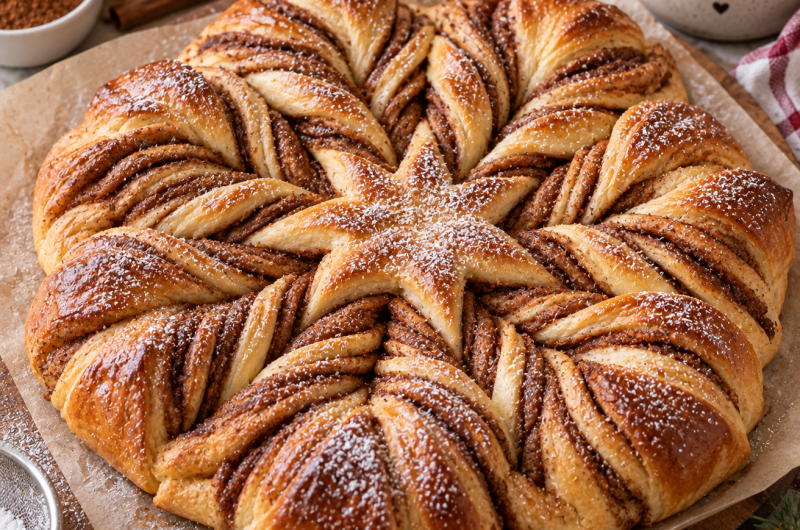
Cinnamon Star Bread is a soft, pull-apart yeast bread made with layers of tender dough and a buttery cinnamon-brown sugar filling. The dough is rolled into four circles, layered with the cinnamon mixture, cut into strips, and twisted into a beautiful star shape. After baking, the bread develops a golden exterior while staying soft inside, with sweet cinnamon filling throughout each section.
Although homemade cinnamon star bread looks impressive, the shaping technique is easier than it appears. The recipe uses simple ingredients such as all-purpose flour, active dry yeast, warm milk, butter, egg, sugar, and salt. Once the dough rises, the layered star is assembled, allowed to rise again, brushed with egg wash, and baked until golden. Powdered sugar or an icing drizzle can be added as an optional finishing touch.
Understanding the Cinnamon Star Bread Dough
The soft yeast dough provides the foundation for this cinnamon bread recipe. All-purpose flour gives the dough structure, while active dry yeast helps it rise. Warm milk adds moisture and richness, sugar provides sweetness, melted butter creates tenderness, and the egg helps give the bread a soft texture and stable structure.
Salt is also important because it balances the sweetness and enhances the flavor of the bread. After the ingredients are combined, the dough should be kneaded until smooth and elastic. Proper kneading develops the gluten structure, allowing the dough to hold the gases produced by the yeast and resulting in a lighter, softer finished bread.
How to Activate the Yeast
The recipe uses three-quarters cup of warm milk at approximately 110°F. The temperature should be warm but not excessively hot. Very cold milk can slow yeast activity, while overly hot liquid can damage the yeast.
Combine the warm milk with the granulated sugar and active dry yeast. Let the mixture stand for approximately five to ten minutes. A foamy appearance indicates that the yeast has become active. Once ready, combine it with the flour, salt, melted butter, and egg to form the dough.
How to Make the Yeast Dough
Place the all-purpose flour and salt in a large mixing bowl. Add the melted unsalted butter, egg, and prepared yeast mixture. Stir until the ingredients come together and form a soft dough.
Transfer the dough to a lightly floured surface and knead for approximately eight to ten minutes. You can also use a stand mixer with a dough attachment. Continue kneading until the dough becomes smooth and elastic. Properly kneaded dough should feel soft and flexible rather than rough or excessively sticky.
The First Rise
Place the kneaded dough in a greased bowl and cover it. Let it rise in a warm place for approximately one hour, or until it has doubled in size. The actual rising time can vary depending on room temperature, so the dough’s appearance is more important than the exact time.
The first rise allows the yeast to create air pockets throughout the dough, helping produce a soft and airy bread. Once the dough has doubled, gently punch it down and divide it into four equal pieces.
Making the Cinnamon Brown Sugar Filling
The classic filling combines softened unsalted butter, packed brown sugar, and ground cinnamon. The butter creates a rich base, the brown sugar adds sweetness and a caramel-like flavor, and cinnamon provides the warm spice associated with traditional cinnamon bread.
Mix the softened butter, brown sugar, and cinnamon until well combined. The butter should be soft enough to spread easily without tearing the dough. Keep the filling ready while the risen dough is divided and rolled.
How to Assemble Cinnamon Star Bread
Divide the risen dough into four equal pieces. Roll the first piece into a circle approximately 10 inches in diameter and place it on a parchment-lined baking sheet. Spread a thin, even layer of cinnamon filling over the dough.
Roll the second dough piece to the same size and place it over the first. Spread it with another layer of filling. Repeat with the third piece. Roll out the fourth piece and place it on top, but do not add filling to the uppermost layer.
Building the star directly on the baking sheet makes it easier to handle because the completed shape can be difficult to move without disturbing the layers.
How to Cut the Star Bread
Place a small glass or round cookie cutter gently in the center of the stacked dough to create a guide. Do not cut through the dough with the guide. The center should remain intact while the surrounding dough is divided.
Cut from the outer edge toward the center guide until you have 16 strips. The process is similar to dividing a pizza, except the cuts stop at the central circle. Keeping this center section intact helps hold all of the twisted pieces together.
Creating the Star Shape
Take two neighboring strips and twist them away from each other twice. Bring their outside ends together and pinch them firmly to form one pointed section. Repeat the process with the remaining strips until eight points are created.
Try to make each pair of strips similar in size and use the same number of twists. The finished star does not need to be perfectly symmetrical. Small variations are normal and can give homemade bread a natural, handcrafted appearance.
The Second Rise
After shaping the star, cover it and let it rise again for approximately 20 to 30 minutes in a warm place. This second rise is important because rolling, cutting, and twisting the dough can remove some of the air developed during the first rise.
Allowing the shaped bread to rise again helps create a lighter texture and gives the star a fuller appearance. The individual twisted sections should look slightly puffy before the bread goes into the oven.
Preparing the Egg Wash
The egg wash is made with one egg yolk and one tablespoon of milk. Whisk them together and gently brush the mixture over the surface of the risen star bread.
A light coating helps the bread develop an attractive golden-brown finish during baking. Use a pastry brush and avoid pressing too hard on the risen dough, especially around the delicate twisted sections.
How to Bake Cinnamon Star Bread
Preheat the oven to 350°F (175°C). Once the shaped bread has completed its second rise and has been brushed with egg wash, bake it for approximately 20 to 25 minutes.
The finished bread should have a golden-brown exterior, while the cinnamon filling becomes warm and fragrant between the layers. Begin checking the bread toward the lower end of the baking time because ovens can vary. The pointed sections may brown faster than the center.
Allow the bread to cool slightly after removing it from the oven. A light dusting of powdered sugar or an optional icing drizzle can then be added.
Serving Cinnamon Star Bread
Cinnamon star bread is naturally suited for sharing. Each twisted point can be pulled away from the center, revealing soft bread and sweet cinnamon layers. It can be served slightly warm for a soft texture and stronger cinnamon aroma or allowed to cool before serving.
Powdered sugar is a simple finishing option that highlights the star pattern. An icing made with powdered sugar and milk can provide additional sweetness and a decorative drizzle. Add either topping after the bread has cooled slightly so it does not immediately melt into the surface.
Making Cinnamon Star Bread Ahead
This cinnamon star bread can be prepared ahead for breakfast or brunch. One option is to shape the bread the night before, cover it, and refrigerate it. The next morning, allow the dough to come closer to room temperature and complete its rise before applying the egg wash and baking.
Refrigeration slows yeast activity, so the shaped bread may need additional time to become slightly puffy before baking. Avoid placing the cold bread directly into the oven unless it has reached the appropriate stage of rising.
Optional Filling Variations
The classic cinnamon-brown sugar filling is ideal for this recipe, but the same star bread technique can inspire other versions. Possible variations include chocolate-hazelnut spread, apple butter, raspberry jam, maple sugar, or pumpkin-spice butter.
These alternatives are not included in the original recipe card because changing the filling also changes the ingredients and nutritional information. If experimenting, choose a filling that is thick enough to stay between the dough layers. Very wet fillings may leak during baking.
Storage and Freezing
Store leftover Cinnamon Star Bread tightly wrapped or in an airtight container at room temperature. Properly covered bread can remain soft for approximately two to three days. Keeping it protected from air helps prevent the bread from drying out.
For reheating, individual portions can be warmed briefly in the microwave, while larger portions can be placed in a 300°F oven for approximately five to ten minutes. Only reheat the amount you plan to serve.
The bread can also be frozen for longer storage. Wrap the whole loaf or individual portions securely and freeze for up to three months. Thaw at room temperature and warm gently before serving if desired.
Notes for Better Cinnamon Star Bread
Use milk warmed to approximately 110°F when activating the yeast, and allow the yeast mixture to become foamy before proceeding. Let the first rise continue until the dough has approximately doubled rather than relying only on the clock.
For easier shaping, roll all four dough portions to similar 10-inch circles. Spread the cinnamon filling evenly and keep the center guide intact when cutting the 16 strips. Twist each pair twice in opposite directions and pinch the ends securely.
Do not skip the second rise. The 20-to-30-minute rise after shaping helps the bread become lighter and fuller. Finally, apply a light egg wash and bake at 350°F until the exterior is beautifully golden.
Why This Cinnamon Star Bread Recipe Works
This homemade Cinnamon Star Bread combines the familiar flavors of cinnamon rolls with the impressive appearance of a pull-apart star. The enriched yeast dough becomes soft and tender from milk, butter, egg, and sugar, while brown sugar, cinnamon, and butter create sweet layers throughout the bread.
The four-layer construction and simple twisting technique transform basic dough into an attractive centerpiece for breakfast, brunch, holidays, or special gatherings. With careful rising, even rolling, balanced filling, and gentle shaping, this homemade star bread delivers a soft interior, golden crust, and delicious cinnamon flavor in every pull-apart section.
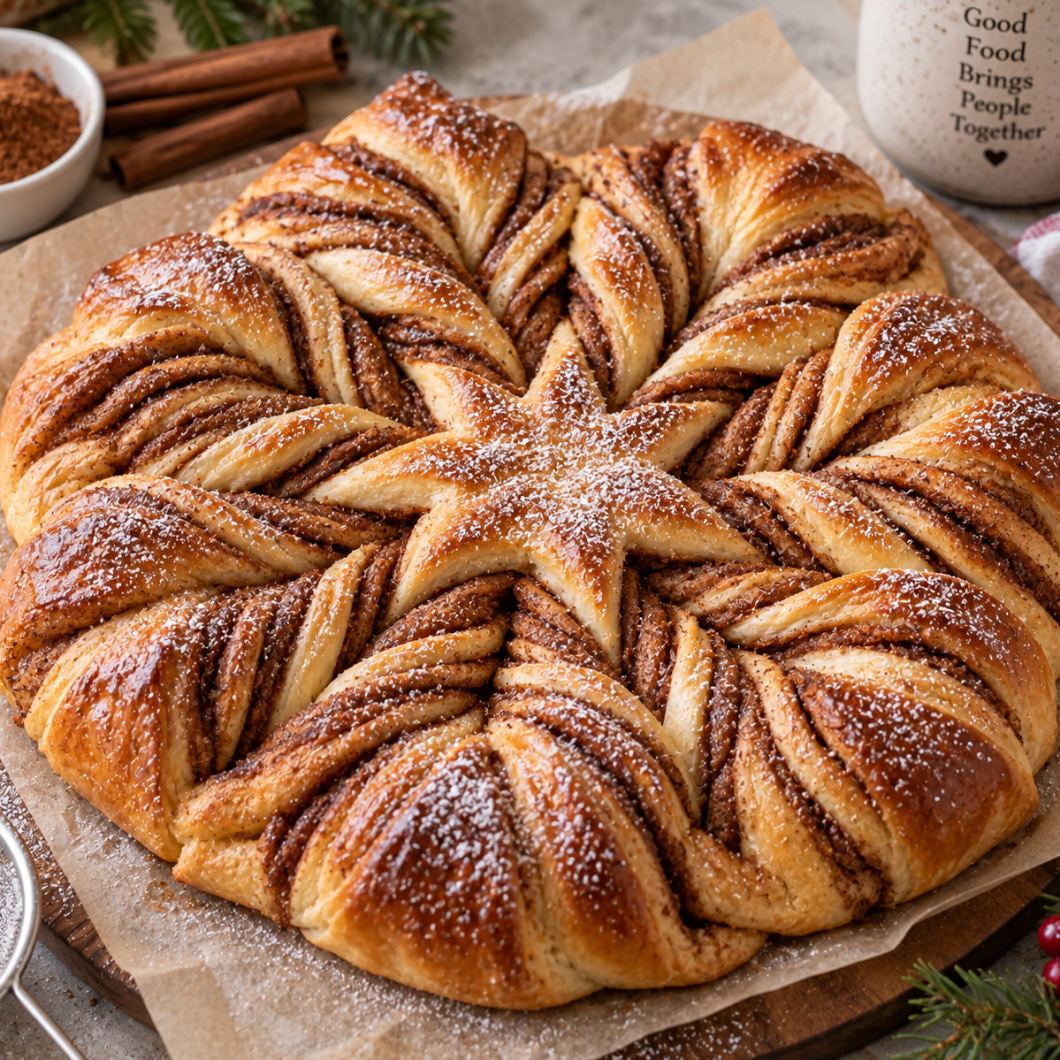
Homemade Cinnamon Star Bread
Soft and buttery Cinnamon Star Bread made with layers of homemade yeast dough and a sweet cinnamon-brown sugar filling.
8
servings25
minutes25
minutes352
kcal60
minutes30
minutes2
hours20
minutesIngredients
- Dough
3 cups all-purpose flour, plus more for dusting
2¼ teaspoons active dry yeast (1 packet)
¼ cup granulated sugar
¾ cup warm milk, about 110°F
¼ cup unsalted butter, melted
1 large egg
½ teaspoon salt
- Cinnamon Filling
3 tablespoons unsalted butter, softened
⅓ cup brown sugar, packed
2 teaspoons ground cinnamon
- Egg Wash
1 egg yolk
1 tablespoon milk
- Optional Toppings
Powdered sugar for dusting
Icing drizzle (powdered sugar + milk)
Directions
- Mix warm milk, sugar, and yeast. Rest for 5–10 minutes until foamy.
- Combine flour and salt. Add melted butter, egg, and yeast mixture.
- Knead for 8–10 minutes until smooth and elastic.
- Cover in a greased bowl and rise for 1 hour, or until doubled.
- Mix softened butter, brown sugar, and cinnamon.
- Punch down dough and divide into four equal portions.
- Roll each portion into a 10-inch circle.
- Stack the circles, spreading filling between the first three layers. Leave the top plain.
- Mark the center with a small glass and cut the surrounding dough into 16 strips.
- Twist each pair of strips away from each other twice and pinch the ends together.
- Cover and rise for another 20–30 minutes.
- Preheat oven to 350°F (175°C).
- Combine egg yolk and milk, then brush over the bread.
- Bake for 20–25 minutes until golden brown.
- Cool slightly and add optional powdered sugar or icing before serving.
Nutrition Facts
- Calories: 352kcal
- Fat: 13g
- Carbohydrates: 51g
- Protein: 8g