A Complete Guide to Making Homemade Quick Pickled Vegetables
Introduction: A Fresh and Flavorful Way to Enjoy Vegetables
If you enjoy crunchy vegetables with a tangy, slightly sweet flavor, these homemade quick pickled vegetables are a wonderful recipe to add to your kitchen collection. Made with simple everyday ingredients, this easy refrigerator pickle recipe combines carrots, radishes, and cucumber with a lightly sweetened vinegar brine seasoned with dill weed.
Unlike traditional fermented pickles that require several days or weeks to develop their flavor, quick pickled vegetables are ready to enjoy in a much shorter time. Once the vegetables are sliced, arranged in a jar, and covered with the prepared pickling liquid, all you need to do is refrigerate them for at least 20–30 minutes.
The result is a colorful mixture of crisp vegetables with a refreshing balance of sweetness and acidity. Every bite offers a satisfying crunch, making these refrigerator pickles an excellent addition to sandwiches, salads, wraps, burgers, and many other meals.
One of the best things about this quick pickled vegetable recipe is its simplicity. You do not need special canning equipment, complicated cooking techniques, or hard-to-find ingredients. A jar, a mixing bowl, and a few fresh vegetables are all you need to prepare this delicious homemade side dish.
Whether you are looking for an easy way to use fresh vegetables, prepare a flavorful meal accompaniment, or add something colorful to your lunch, these quick refrigerator pickles are worth trying.
What Makes This Quick Pickle Recipe So Special?
Homemade pickled vegetables are popular because they transform ordinary fresh produce into something much more flavorful. The vinegar mixture adds tanginess, the sugar provides a gentle sweetness, and dill weed contributes a pleasant herbal aroma.
This recipe is particularly convenient because it does not require a traditional canning process. Instead, it uses a simple refrigerator pickling method that allows the vegetables to absorb the flavors of the brine.
Here are some reasons to love this easy recipe:
- Quick preparation: The vegetables can be prepared in just a few minutes.
- Simple ingredients: Carrots, radishes, cucumber, vinegar, water, sugar, and dill are all you need.
- Beautiful colors: The combination of orange carrots, red-and-white radishes, and green cucumber creates an attractive presentation.
- Crisp texture: Cutting the vegetables into matchsticks helps them remain crunchy.
- Versatile serving options: These pickles work well with sandwiches, salads, rice dishes, and grilled meals.
- No complicated equipment: A clean glass jar and a mixing bowl are sufficient.
Another advantage is that you can prepare them ahead of mealtime. Keeping a jar of quick pickled vegetables in the refrigerator makes it easy to add a little extra flavor to everyday meals.
Understanding the Fresh Vegetables Used in This Recipe
The combination of three vegetables creates a delicious contrast of textures and flavors. Each vegetable brings something different to the finished pickles.
Carrots: Naturally Sweet and Wonderfully Crunchy
Carrots provide a mild natural sweetness that balances the sharpness of white vinegar. Their firm texture also makes them ideal for quick pickling.
For this recipe, you will need half a cup of carrots cut into matchsticks. Try to choose fresh, firm carrots without soft spots or signs of drying.
Peeling the carrots is optional, depending on their condition and personal preference. Wash them thoroughly before slicing.
Cutting carrots into thin sticks allows the pickling liquid to reach more of their surface area. This helps the vegetables absorb the sweet-and-sour flavor while maintaining their characteristic crunch.
Carrots also contribute an appealing orange color that makes the finished jar look bright and inviting.
Radishes: A Peppery and Refreshing Addition
Radishes are another important ingredient in this quick pickled vegetable recipe. They have a naturally crisp texture and a slightly peppery flavor that becomes pleasantly balanced when combined with vinegar and sugar.
You will need half a cup of radishes, cut into matchsticks.
Choose radishes that feel firm and fresh. Remove their leaves and roots, wash them carefully, and slice them into thin strips.
Their red outer skin and pale interior add attractive color to the mixture. Radishes also provide a refreshing contrast to the sweetness of carrots and the mild flavor of cucumber.
If you enjoy vegetables with a little natural sharpness, radishes make an excellent choice for homemade refrigerator pickles.
Cucumber: A Cool and Refreshing Vegetable
Cucumber brings a mild, refreshing taste to the recipe. Its high water content and crisp texture make it a natural companion for the stronger flavors of vinegar and radishes.
Use half a cup of cucumber cut into matchsticks.
Fresh, firm cucumbers work best because they are less likely to become overly soft during pickling. Wash the cucumber thoroughly and remove any damaged sections before cutting.
You can leave the peel on for extra color and texture.
Cutting cucumber into evenly sized matchsticks helps it fit neatly into the jar and allows the pickling brine to surround each piece.
Together, carrots, radishes, and cucumber create a colorful vegetable combination that looks beautiful and tastes refreshing.
The Simple Sweet-and-Tangy Pickling Liquid
The pickling brine is what gives these vegetables their distinctive flavor. It combines water, white vinegar, granulated sugar, and dill weed into a simple mixture that is easy to prepare.
Although the ingredients are basic, each one has an important purpose.
Water for a Balanced Flavor
One cup of water forms the base of the pickling liquid.
Water balances the acidity of the vinegar, creating a milder flavor that allows the vegetables to remain enjoyable rather than overwhelmingly sour.
It also helps distribute the sugar and dill throughout the mixture.
White Vinegar for Classic Pickle Flavor
White vinegar provides the characteristic tanginess associated with traditional pickles.
The recipe uses one cup of white vinegar. Its clean, sharp flavor works especially well with the natural sweetness of carrots and the refreshing taste of cucumber.
Combining equal amounts of water and vinegar creates a straightforward refrigerator pickle brine.
Granulated Sugar for Gentle Sweetness
Two and a half tablespoons of granulated sugar are used to balance the acidity of the vinegar.
The sugar does not make the vegetables taste like dessert. Instead, it adds a mild sweetness that rounds out the sharp vinegar flavor.
This sweet-and-sour balance is what makes these homemade pickled vegetables so enjoyable.
Dill Weed for an Aromatic Finish
One teaspoon of dill weed adds a pleasant herbal flavor to the brine.
Dill is commonly used in pickle recipes because its distinctive aroma pairs beautifully with vinegar and fresh vegetables.
It gives the vegetables a familiar pickle-inspired taste without requiring a long ingredient list.
Why Cutting Vegetables into Matchsticks Matters
The way you prepare your vegetables can make a noticeable difference in the final result.
Matchstick cutting means slicing vegetables into long, thin strips that resemble small sticks. This shape is particularly useful for quick pickling.
First, thinner pieces have more exposed surface area, allowing the vinegar mixture to come into contact with more of the vegetable.
Second, matchsticks are easy to arrange inside a glass jar. They can be layered together without taking up too much space.
Third, this shape makes the finished pickles convenient to serve. You can easily place them inside sandwiches, wraps, or salads without needing to cut them again.
For the most attractive results, try to cut all three vegetables into relatively similar lengths and thicknesses.
Uniform pieces also help the vegetables pickle more evenly.
Preparing Your Vegetables Before Pickling
Good preparation is essential for making delicious refrigerator pickles.
Start by washing the carrots, radishes, and cucumber under clean running water. Remove any dirt or unwanted parts before cutting.
Peel the carrots if desired, then slice them into thin matchsticks.
Trim the ends of the radishes and cut them into similarly sized strips.
Wash the cucumber and slice it into matchsticks as well.
Once everything is prepared, place the vegetables in a clean glass jar.
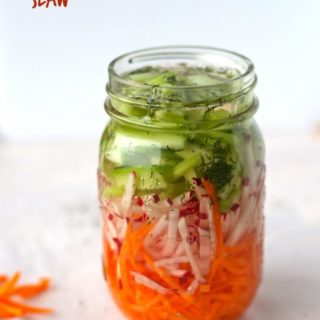
Layering the different vegetables together creates a colorful appearance. You can alternate the vegetables or distribute them throughout the jar to create an attractive mixture.
Avoid packing them so tightly that the pickling liquid cannot move between the pieces.
How to Prepare the Homemade Pickling Brine
Preparing the brine is one of the easiest parts of this recipe.
Take a clean mixing bowl and add one cup of water, one cup of white vinegar, two and a half tablespoons of granulated sugar, and one teaspoon of dill weed.
Stir the ingredients until the sugar is dissolved and the dill is evenly distributed.
The mixture should have a balanced sweet, sour, and herbal aroma.
There is no need for complicated cooking techniques. The original recipe uses a simple mixing method, making it convenient when you want to prepare quick pickles without heating a saucepan.
Once the brine is ready, it is time to combine it with the vegetables.
Combining the Vegetables and Pickling Liquid
Carefully pour the prepared vinegar mixture over the vegetables in the jar.
Make sure the brine reaches the vegetables throughout the container. The pieces should be surrounded by the liquid so they can absorb its flavor.
If necessary, gently move the vegetables with a clean utensil to help the pickling liquid settle between the layers.
Close the jar with a suitable lid and prepare to refrigerate it.
The vegetables will gradually develop a tangy flavor as they sit in the brine.
Because this is a quick refrigerator pickle recipe rather than a shelf-stable canning recipe, the jar should remain refrigerated.
How Long Should Quick Pickled Vegetables Rest?
One of the biggest advantages of this recipe is how quickly it can be enjoyed.
Refrigerate the jar for at least 20–30 minutes before serving.
This short resting period gives the vinegar mixture time to begin flavoring the vegetables.
However, if you have more time, allowing the vegetables to rest longer generally produces a more developed pickle flavor.
For a stronger taste, you can prepare them ahead of your meal and leave them refrigerated for several hours.
The exact flavor and texture will depend on the thickness of the vegetable pieces and how long they remain in the brine.
Remember that these are quick pickles, so they do not need the extended fermentation period associated with traditional fermented vegetables.
Helpful Advice for Making the Best Refrigerator Pickles
A few simple preparation techniques can help you achieve better results.
1. Choose fresh vegetables
Fresh, firm vegetables are important for maintaining a pleasant crunchy texture. Avoid produce that feels soft, damaged, or wilted.
2. Keep the vegetable pieces consistent
Cutting the vegetables into similar-sized matchsticks encourages more even flavor absorption.
3. Use a clean glass jar
A clean glass container is convenient for storing refrigerator pickles and allows you to see the colorful vegetables inside.
4. Dissolve the sugar properly
Stir the pickling brine until the granulated sugar dissolves. This helps create a more evenly flavored liquid.
5. Make sure the vegetables are covered
Pour enough of the prepared brine over the vegetables to surround them completely. Proper coverage helps distribute the flavor.
6. Allow enough chilling time
Although the pickles can be tasted after 20–30 minutes, giving them additional refrigeration time helps the flavors develop.
7. Keep them refrigerated
This recipe is designed for refrigerator storage, not room-temperature pantry storage. Do not treat it as a shelf-stable canned pickle recipe.
Delicious Ways to Serve Quick Pickled Vegetables
These colorful homemade pickles are surprisingly versatile. Their sweet-and-sour flavor complements many different foods.
Here are some easy serving ideas.
Add Them to Sandwiches
Place a small handful of pickled carrots, radishes, and cucumber inside your favorite sandwich.
They add crunch and acidity, making sandwiches more flavorful and interesting.
Serve with Burgers
These refrigerator pickles are a delicious accompaniment to homemade burgers.
Their tangy flavor provides a refreshing contrast to savory burger fillings.
Include Them in Fresh Salads
Add a few pieces to green salads, grain bowls, or chopped vegetable salads.
The vinegar flavor works as a simple way to bring additional brightness to a meal.
Use Them in Wraps and Tacos
Add the vegetables to wraps, tacos, or flatbreads for an extra layer of crunch.
They pair especially well with savory fillings and creamy sauces.
Enjoy Them as a Side Dish
Serve a small portion alongside rice, roasted vegetables, grilled foods, or everyday lunch and dinner dishes.
Their refreshing taste makes them a useful accompaniment to many meals.
Storing Your Homemade Pickled Vegetables
Proper storage is important for maintaining the quality and safety of refrigerator pickles.
Transfer the prepared vegetables and brine into a clean, food-safe, covered glass jar and keep it refrigerated.
Always use a clean utensil when removing vegetables from the container.
Because this recipe has not been tested as a shelf-stable canning formula, do not store it at room temperature or assume that the vinegar makes it safe for long-term pantry storage.
The original recipe does not specify a validated storage period, so prepare a quantity you can enjoy promptly and discard it if you notice mold, unusual odors, or other signs of spoilage.
Common Questions About Quick Pickled Vegetables
Can I Eat These Pickles After 20 Minutes?
Yes. The recipe recommends refrigerating the vegetables for at least 20–30 minutes before serving.
They will begin absorbing the flavor during this time. However, waiting longer can give the vinegar, sugar, and dill more time to develop their flavor throughout the vegetables.
Do I Need to Cook the Pickling Liquid?
No. This particular recipe uses a simple mixing method. Combine the water, vinegar, sugar, and dill weed in a bowl and stir until blended.
Can I Use a Plastic Container Instead of a Glass Jar?
A clean, food-safe container suitable for acidic foods can be used. However, a glass jar is a convenient option because it does not retain odors as easily and makes the colorful vegetables easy to see.
Why Are My Pickled Vegetables Not Very Sour?
The flavor can depend on how long the vegetables remain in the brine and how thickly they are cut.
Allowing them to refrigerate for additional time can help them develop a stronger flavor.
Will the Vegetables Stay Crunchy?
Using fresh, firm vegetables and cutting them into matchsticks helps maintain a satisfying texture.
Overly soft or old vegetables may not produce the same crunchy result.
Are These Traditional Fermented Pickles?
No. These are quick vinegar pickles. They develop flavor through refrigeration in an acidic brine rather than through a traditional fermentation process.
A Simple Homemade Recipe Worth Keeping
These quick pickled carrots, radishes, and cucumber are a wonderful example of how a few everyday ingredients can create something delicious.
The recipe is easy enough for beginners, requires very little preparation, and offers plenty of serving possibilities. The natural sweetness of carrots, peppery radishes, and refreshing cucumber combine beautifully with a simple vinegar, sugar, and dill mixture.
Whether you serve them with sandwiches, add them to salads, or enjoy them alongside your favorite meals, these homemade refrigerator pickles bring color, crunch, and tangy flavor to the table.
If you enjoy easy vegetable recipes that do not require complicated preparation, this quick pickled vegetable recipe deserves a place in your collection.
Easy Quick Pickled Vegetables
Easy Recipe
Vegetarian
Refrigerator Pickles
Prep Time: 10 minutes
Refrigeration Time: 20–30 minutes (or longer)
Total Time: Approximately 30–40 minutes
Servings: Approximately 4
Ingredients
Vegetables:
- 1/2 cup carrots, cut into matchsticks
- 1/2 cup radishes, cut into matchsticks
- 1/2 cup cucumber, cut into matchsticks
Pickling Brine:
- 1 cup water
- 1 cup white vinegar
- 2 1/2 tablespoons granulated sugar
- 1 teaspoon dill weed
Directions
- Wash and prepare the carrots, radishes, and cucumber. Cut all vegetables into thin matchsticks.
- Layer the prepared vegetables in a clean glass jar.
- In a separate bowl, combine the water, white vinegar, granulated sugar, and dill weed.
- Stir the pickling mixture until the sugar dissolves.
- Pour the prepared brine over the vegetables, making sure they are covered.
- Close the jar and refrigerate for at least 20–30 minutes.
- For a more developed flavor, allow the vegetables to chill longer before serving.
- Serve cold with sandwiches, burgers, salads, wraps, or your favorite meals.
Nutrition Information
Approximate values per serving, based on the supplied recipe information.
| Nutrient | Amount |
|---|---|
| Calories | 51 kcal |
| Carbohydrates | 10 g |
| Sodium | 21 mg |
| Potassium | 109 mg |
| Fiber | 1 g |
| Sugar | 9 g |
| Vitamin A | 2,688 IU |
| Vitamin C | 4 mg |
| Calcium | 17 mg |
.