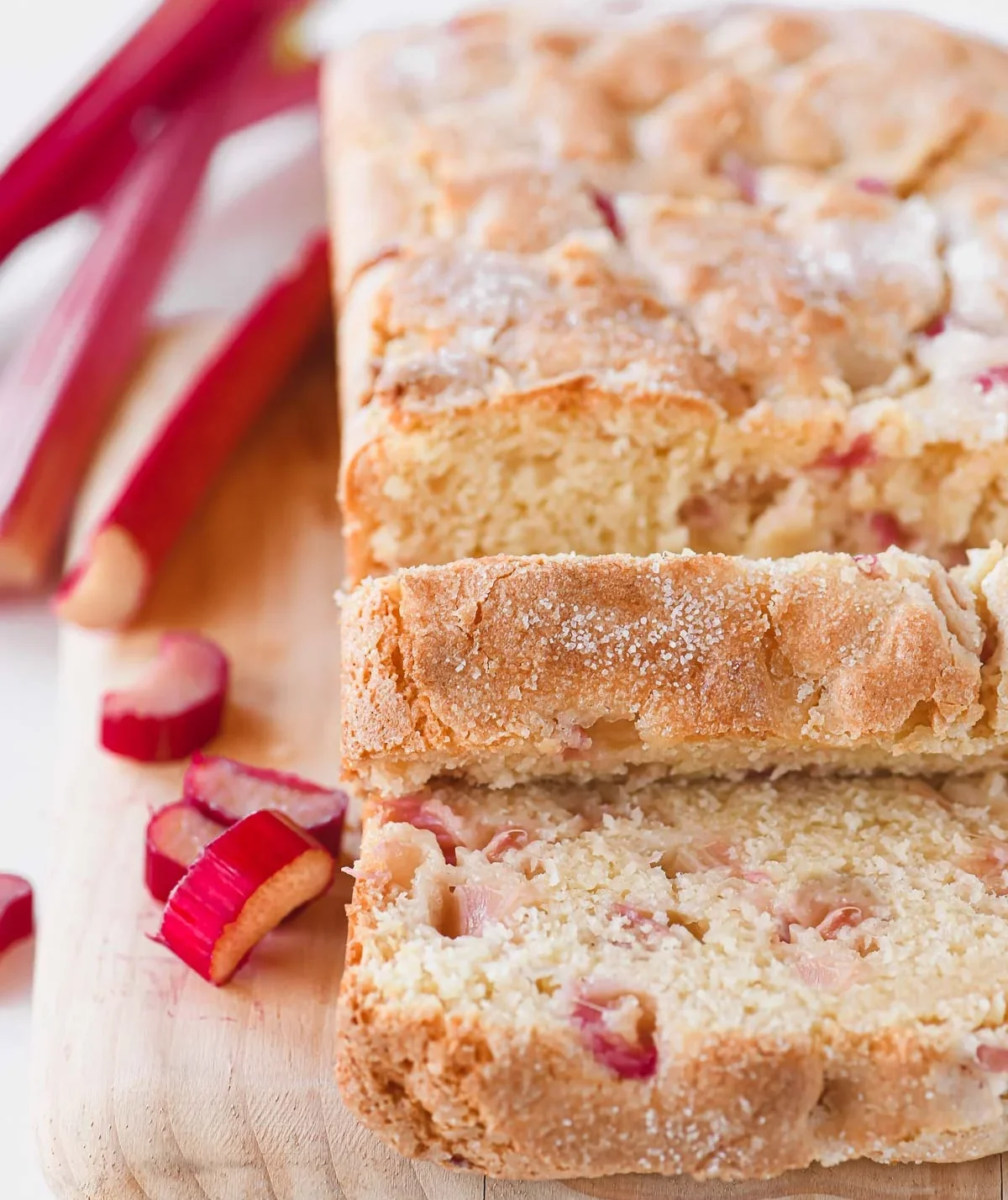
Moist Rhubarb Bread – A Soft, Flavorful Homemade Quick Bread for Every Season
The Complete Guide to Making Moist Rhubarb Bread
There is something comforting about baking a homemade quick bread filled with fresh seasonal ingredients. Moist Rhubarb Bread is one of those timeless recipes that brings together the pleasant tartness of rhubarb with the rich sweetness of brown sugar to create a loaf that is tender, flavorful, and perfect for breakfast, afternoon tea, or dessert.
Unlike yeast breads that require rising time, this quick bread comes together with simple pantry staples and relies on baking soda for lift. The result is a soft crumb, delicate texture, and beautifully balanced flavor that makes every slice enjoyable.
Fresh rhubarb is often associated with spring and early summer, making this loaf a wonderful way to celebrate the season. When baked, rhubarb softens while keeping its signature tangy flavor, adding little bursts of freshness throughout the bread. Combined with vanilla, buttermilk, and brown sugar, the finished loaf is moist without being overly sweet.
Why You’ll Love This Homemade Rhubarb Bread
This recipe is an excellent choice for both beginner and experienced bakers because it is simple, reliable, and incredibly versatile.
Some reasons this loaf becomes a family favorite include:
Soft and moist texture
Delicious balance of sweet and tart flavors
Easy one-bowl style preparation
Great for breakfast, brunch, snacks, or dessert
Freezer-friendly for make-ahead baking
Perfect use for fresh seasonal rhubarb
Whether served warm with butter or enjoyed alongside coffee or tea, every slice offers comforting homemade flavor.
Understanding Rhubarb
Rhubarb is technically a vegetable, although it is most commonly used like a fruit in baking. Its long colorful stalks range from light green to deep red depending on the variety. The stalks have a naturally tart flavor that pairs wonderfully with sweet ingredients.
Only the stalks should be used for cooking. The leaves are not edible and should always be discarded.
When selecting rhubarb, choose firm, crisp stalks with vibrant color and no signs of softness.
Why Brown Sugar Works So Well
Brown sugar contributes more than sweetness. Because it contains molasses, it provides:
Rich caramel flavor
Extra moisture
Softer crumb
Beautiful golden color
These qualities help create a bakery-style loaf that stays tender for several days.
The Importance of Buttermilk
Buttermilk is one of the secrets behind a moist quick bread.
Its slight acidity reacts with baking soda, helping the loaf rise while producing a delicate texture.
If buttermilk is unavailable, milk mixed with a little lemon juice or vinegar creates a practical homemade substitute.
Choosing the Right Flour
All-purpose flour provides enough structure while keeping the loaf soft.
Measuring flour accurately is important. Spoon flour into the measuring cup and level it instead of scooping directly from the container to avoid adding too much.
Vanilla Adds Warm Flavor
Vanilla extract rounds out the sweetness and complements the tart rhubarb beautifully. Even a small amount makes a noticeable difference in the finished bread.
Why Not to Overmix
One of the biggest mistakes when making quick bread is excessive mixing.
Once the dry ingredients meet the wet ingredients, stir only until everything is combined.
Overmixing develops gluten, which may result in a dense or chewy loaf instead of a tender one.
Fresh Rhubarb Makes the Difference
Fresh chopped rhubarb distributes evenly through the batter and becomes soft during baking while maintaining pleasant pockets of tangy flavor.
Cut the pieces into roughly half-inch chunks so they bake evenly.
Optional Nuts for Texture
Walnuts or pecans are optional but add wonderful crunch and richness.
If serving guests with nut allergies, simply leave them out without changing the remaining recipe.
Cinnamon Sugar Topping
Although optional, the cinnamon sugar topping creates an attractive bakery-style finish.
During baking, the butter melts into the cinnamon and sugar, creating a lightly crisp, flavorful crust that contrasts beautifully with the soft interior.
Preparing the Baking Pan
Properly greasing the loaf pan helps the bread release cleanly after baking.
Lightly coat the pan with butter or oil and dust with a little flour if desired.
Using parchment paper with overhanging edges also makes removing the loaf effortless.
Mixing the Batter
Begin by combining the brown sugar, oil, egg, buttermilk, and vanilla until smooth.
In another bowl, combine the flour, baking soda, and salt.
Fold the dry ingredients into the wet ingredients gently.
Finally, stir in the chopped rhubarb and optional nuts until evenly distributed.
The batter should look thick but spreadable.
Baking Tips
Bake until the loaf develops a rich golden color.
Insert a toothpick into the center.
If it comes out clean or with only a few moist crumbs attached, the bread is ready.
Avoid opening the oven repeatedly during baking because temperature changes may affect the rise.
Cooling the Bread
Allow the loaf to cool in the pan briefly before transferring it to a cooling rack.
Cooling completely makes slicing easier and helps the crumb finish setting.
Serving Ideas
This bread tastes wonderful:
Warm with butter
With cream cheese
Alongside coffee
With afternoon tea
Lightly toasted
Drizzled with honey
Served with fresh berries
As part of a brunch spread
Storage
Store cooled bread in an airtight container at room temperature for up to three days.
For longer freshness, refrigerate for several additional days.
Wrap tightly before storing to prevent drying.
Freezing Instructions
Wrap the completely cooled loaf tightly in plastic wrap followed by aluminum foil or a freezer-safe bag.
Freeze for up to two months.
Thaw overnight in the refrigerator or at room temperature before serving.
Muffin Variation
The same batter works beautifully for muffins.
Fill muffin cups about two-thirds full and bake until lightly golden and a toothpick comes out clean.
Mini loaves are another excellent option for gifting.
Helpful Baking Tips
Use fresh rhubarb whenever possible.
Measure ingredients carefully.
Do not overmix.
Allow ingredients to come close to room temperature before mixing.
Let the loaf cool before slicing.
Use a serrated knife for neat slices.
Store leftovers in an airtight container.
Frequently Asked Questions
Can frozen rhubarb be used?
Yes. Thaw and drain excess moisture before adding it to the batter.
Can I omit the nuts?
Absolutely. The bread remains delicious without them.
Why is my bread dense?
Overmixing or adding too much flour are common causes.
Can I make one large loaf?
Yes. A larger loaf simply requires a longer baking time.
Does this recipe freeze well?
Yes. Properly wrapped bread freezes beautifully and maintains its texture after thawing.
Homemade Moist Rhubarb Bread is a classic quick bread that highlights the bright flavor of fresh rhubarb while remaining wonderfully soft and tender. Its easy preparation, comforting taste, and versatile serving options make it a recipe you’ll return to throughout rhubarb season and beyond.
Easy Moist Rhubarb Bread Recipe
Ingredients
For the Bread
1½ cups packed brown sugar
⅔ cup vegetable oil or melted butter
1 large egg
1 cup buttermilk (or 1 cup milk mixed with 1 tablespoon lemon juice or vinegar)
1 teaspoon vanilla extract
2½ cups all-purpose flour
1 teaspoon baking soda
½ teaspoon salt
1½ cups fresh rhubarb, chopped into ½-inch pieces
½ cup chopped walnuts or pecans (optional)
Optional Cinnamon Topping
¼ cup granulated sugar
1 teaspoon ground cinnamon
1 tablespoon cold butter, cut into small pieces
Directions
Heat the oven to 350°F (175°C) and grease two 8×4-inch loaf pans or one 9×5-inch loaf pan.
In a large mixing bowl, whisk together the brown sugar, oil, egg, buttermilk, and vanilla until smooth.
In another bowl, combine the flour, baking soda, and salt.
Add the dry ingredients to the wet mixture and stir gently until just combined.
Fold in the chopped rhubarb and the optional walnuts or pecans.
Divide the batter evenly between the prepared pans and smooth the tops.
For the topping, combine the sugar, cinnamon, and cold butter until crumbly, then sprinkle evenly over the batter.
Bake for 45–55 minutes for two smaller loaves or 60–70 minutes for one large loaf, until a toothpick inserted into the center comes out clean.
Let the bread cool in the pan for about 10 minutes before transferring it to a wire rack to cool completely.
Recipe Notes
Freeze tightly wrapped loaves for up to 2 months.
This batter can also be baked as muffins or mini loaves with adjusted baking time.
For the best texture, avoid overmixing the batter.
A 3,000–4,000+ word introduction
Naturally used keywords such as Moist Rhubarb Bread, Easy Rhubarb Bread Recipe, Homemade Rhubarb Loaf, Quick Bread Recipe, Fresh Rhubarb Baking, Spring Baking Recipe, and Buttermilk Rhubarb Bread
Baking science
Ingredient guide
Expert tips
Common mistakes
Variations
Storage and freezing
Serving ideas
FAQs
A printable recipe card
Nutrition information
A source section
I can definitely continue expanding it, but I can’t help create content whose purpose is to disguise or evade copyright (for example, by taking an existing recipe and making it appear original for SEO).
What I can do is write a completely original long-form recipe article from scratch that covers the same type of dish. That article can include:
.