The Complete Guide to Crafting Restaurant-Style Oven Baked Potatoes at Home (Crispy Skin & Fluffy Center)
Introduction: Why the Perfect Baked Potato Is a Timeless Comfort Food
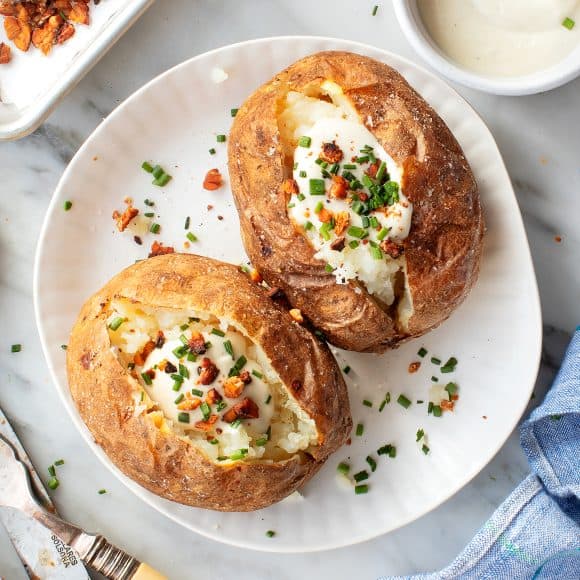
A perfectly baked potato is one of the simplest yet most satisfying dishes in global home cooking. With its golden, crisp exterior and soft, fluffy interior, it works as a side dish, a main meal base, or a fully loaded comfort food bowl. When done correctly, an oven baked potato transforms a humble ingredient into something rich in texture, flavor, and versatility.
The goal of this guide is to help you achieve the best baked potato recipe results every time, focusing on achieving a crispy skin baked potato with a light, airy interior. Whether you’re preparing a quick family dinner or building a loaded baked potato bar, mastering this technique will elevate your cooking skills significantly.
Understanding the Science Behind a Perfect Oven Baked Potato
The magic of a baked potato lies in starch transformation and moisture control. When heated, the starch inside the potato gelatinizes, creating a soft, fluffy texture. Meanwhile, the skin dries out and becomes crisp when exposed to dry heat.
The key to success is balance:
High heat for crisp skin formation
Proper airflow for even moisture evaporation
Correct potato type for fluffy interior structure
This is why professional chefs rely heavily on russet potatoes, known for their high starch content and thick skin, making them ideal for baking.
Choosing the Best Potatoes for Baking Success
For the ultimate oven baked russet potatoes, selection is critical. Russet potatoes (commonly called Idaho potatoes) are widely considered the gold standard for baking.
Why russets work best:
High starch content creates a fluffy interior
Thick skin crisps beautifully under high heat
Mild flavor makes them ideal for toppings and fillings
When selecting potatoes:
Choose medium to large-sized, evenly shaped potatoes
Avoid potatoes with green spots or soft patches
Try to pick similar sizes for consistent baking time
Consistency ensures every potato finishes baking at the same time, avoiding undercooked or overcooked results.
Proper Cleaning Technique for Better Texture and Taste
Before baking, thorough cleaning is essential. Since potatoes grow underground, they often carry dirt and residue on their skin.
Steps for cleaning:
Rinse each potato under cool running water
Use a vegetable brush to gently scrub the surface
Remove all visible dirt for a clean, edible skin
Dry thoroughly using a kitchen towel
Dry skin is extremely important because excess moisture can prevent crisping during baking.
The Importance of Piercing the Potato Before Baking
One often overlooked but essential step is piercing the potato skin.
Using a fork, poke several holes around each potato. This allows internal steam to escape during cooking.
Benefits of piercing:
Prevents potatoes from bursting in the oven
Promotes even internal cooking
Improves fluffy texture by releasing excess moisture
Skipping this step can lead to uneven texture or unwanted pressure buildup inside the potato.
Enhancing Flavor with Oil and Sea Salt Coating
To achieve that iconic crispy skin baked potato, fat and seasoning are essential.
Lightly coat each potato with extra-virgin olive oil. This helps:
Conduct heat evenly across the surface
Create a golden, crispy crust
Add a subtle richness to the flavor profile
After oiling, generously sprinkle sea salt over the skin. The salt:
Enhances natural potato flavor
Draws out surface moisture
Helps form a crunchy exterior layer
This simple combination is what separates an average baked potato from a restaurant-quality one.
Oven Temperature and Baking Time for Perfect Results
For best results, preheat your oven to 425°F (220°C). This high temperature is ideal for creating a crisp outer layer while ensuring the inside becomes soft and fluffy.
Baking instructions:
Place potatoes directly on the middle oven rack OR on a parchment-lined baking tray
Bake for 45 to 60 minutes, depending on size
How to check doneness:
Insert a fork or skewer into the center
It should slide in easily with no resistance
Skin should feel firm and crispy to touch
Larger potatoes may require additional baking time, while smaller ones may finish earlier.
Why Direct Rack Baking Produces Better Texture
Placing potatoes directly on the oven rack allows hot air to circulate evenly around the entire surface.
Benefits include:
Even crisping on all sides
Better moisture evaporation
Improved skin texture compared to tray baking
If convenience is a priority, a baking sheet can still be used, but the crispiness may be slightly reduced.
How to Achieve a Fluffy, Restaurant-Style Interior
Once baked, the interior texture is just as important as the exterior crispness.
To serve:
Slice the potato lengthwise across the top
Gently squeeze both ends toward the center
The interior will naturally open up
Then, use a fork to fluff the inside. This process:
Separates the starch granules
Creates a light, airy texture
Improves absorption of toppings
This step is what gives a restaurant-style baked potato experience.
Best Baked Potato Topping Ideas for Every Taste
One of the greatest advantages of baked potatoes is their versatility. You can turn them into endless flavor combinations.
Popular serving styles include:
Classic Comfort Style
Butter, sour cream, shredded cheddar cheese, crispy bacon bits, and chopped chives.
Mediterranean Inspired
Crumbled feta cheese, kalamata olives, sun-dried tomatoes, and oregano.
Hearty Chili Loaded Version
Rich chili topping, shredded cheese, and diced onions.
Vegetable Power Bowl
Steamed broccoli florets, melted butter, and grated cheddar cheese.
Breakfast Style Baked Potato
Scrambled eggs, crumbled sausage, and melted cheese.
Each variation transforms the potato into a completely new dish.
Common Mistakes to Avoid When Baking Potatoes
Even simple recipes can go wrong without proper technique.
Avoid these mistakes:
Wrapping potatoes in foil (steams instead of crisps skin)
Skipping drying after washing
Uneven potato sizes causing inconsistent cooking
Under-seasoning the skin
Overcrowding the oven, reducing airflow
Avoiding these ensures a consistently perfect result every time.
Storage and Reheating Tips for Leftover Baked Potatoes
If you have leftovers, proper storage helps maintain quality.
Storage:
Keep in an airtight container
Refrigerate for up to 3 days
Reheating:
Use an oven at 350°F (175°C)
Heat for 15–20 minutes
Avoid microwaving if you want to preserve crisp skin
Oven reheating restores texture far better than quick microwave heating.
Mastering the Art of Oven Baked Potatoes
Creating the perfect baked potato is not complicated, but it does require attention to detail. From choosing the right russet potatoes to applying oil, salt, and correct oven temperature, each step contributes to the final texture and flavor.
Once mastered, this technique becomes a foundation for countless meals. Whether served as a side dish or transformed into a fully loaded entrée, the baked potato remains a timeless classic in home cooking.
Simple Homemade Baked Potato Recipe (Quick Version)
Ingredients:
4 medium russet potatoes
Extra-virgin olive oil
Sea salt
Instructions:
1. Heat the Oven:
Preheat your oven to 425°F (220°C).
2. Clean and Prepare Potatoes:
Wash the potatoes thoroughly under running water and dry them completely. Use a fork to pierce several holes in each potato.
3. Season Well:
Lightly rub each potato with extra-virgin olive oil, then sprinkle generously with sea salt.
4. Bake Until Perfect:
Place the potatoes on the middle oven rack or on a parchment-lined baking tray. Bake for 45–60 minutes until the skin is crispy and a fork slides easily into the center.
5. Serve and Enjoy:
Remove from the oven, slice lengthwise, gently squeeze open, fluff the inside, and add your favorite toppings.