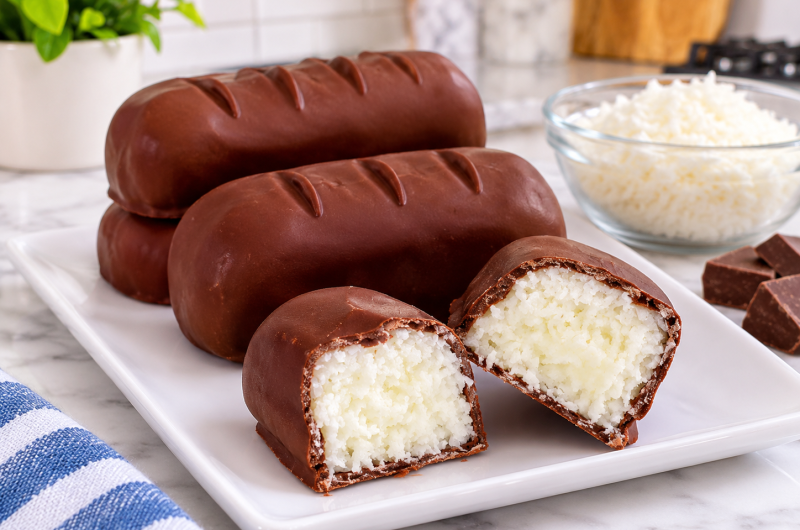
If you love the combination of creamy coconut and rich chocolate, these homemade Keto Bounty Bars are a dessert worth adding to your recipe collection. Inspired by the popular chocolate-covered coconut candy bars, this low-carb version delivers the same delicious contrast of a soft, sweet coconut filling and a smooth chocolate coating without the usual added sugar. They are ideal for anyone following a ketogenic lifestyle or simply looking for a homemade alternative to traditional chocolate treats.
These sugar-free coconut chocolate bars are made with a handful of simple ingredients, including coconut cream, coconut oil, unsweetened desiccated coconut, monk fruit sweetener, and sugar-free chocolate chips.
Each ingredient contributes to the familiar texture and flavor that make coconut-filled chocolate bars so enjoyable. The coconut mixture creates a moist and chewy center, while the melted chocolate forms a firm outer shell once chilled.
One of the best things about this keto coconut dessert is how little preparation it requires. You do not need an oven, complicated kitchen equipment, or advanced baking skills. Simply mix the filling ingredients, shape the coconut mixture into small bars, chill until firm, and coat each piece in melted chocolate. After another short chilling period, your homemade low-carb Bounty Bars are ready to enjoy.
Whether you need a quick afternoon snack, a sweet after-dinner treat, or a dessert to prepare ahead of time, these homemade keto chocolate bars are a convenient option. They can be stored in the refrigerator or freezer, making it easy to keep a batch available whenever a chocolate craving strikes.
What Makes These Homemade Keto Bounty Bars Special?
Traditional coconut chocolate bars are known for their sweet coconut filling covered in a layer of milk or dark chocolate. While delicious, many commercial versions contain considerable amounts of added sugar. Making a homemade keto version gives you more control over the ingredients while allowing you to enjoy a similar combination of flavors.
These keto-friendly Bounty Bars use unsweetened desiccated coconut and monk fruit sweetener to create a naturally coconut-rich filling without relying on regular granulated sugar. Coconut cream adds moisture and helps bring the ingredients together, while coconut oil contributes richness and helps the filling become firm when chilled.
Another advantage is that this recipe is naturally free from complicated preparation steps. Everything comes together in a mixing bowl, and the freezer does most of the work when it comes to setting the coconut centers. You can shape the mixture by hand or use a silicone mould or ice tray if you prefer evenly sized bars.
The chocolate coating is equally simple. Sugar-free chocolate chips or chocolate with a high cocoa content can be melted until smooth and used to cover each coconut bar. Once chilled, the chocolate creates a satisfying outer layer that complements the soft coconut center.
Why You Will Love This Keto Coconut Chocolate Dessert
There are plenty of reasons to make these easy homemade Keto Bounty Bars. First, they offer a delicious way to enjoy coconut and chocolate together without preparing a traditional baked dessert. The recipe is especially useful when you want something sweet but do not have the time to make a cake, brownies, or cookies.
The ingredient list is also relatively short, which makes preparation straightforward. You only need five main ingredients, and most are easy to find in supermarkets or online grocery stores. Since the recipe does not require flour, eggs, or regular sugar, it is also a convenient option for people who want a simple flourless chocolate coconut dessert.
Portioning is another benefit. Instead of preparing one large dessert that needs slicing, you can make approximately 20 small bars. Individual portions are easy to serve, pack, and store. They are also useful for controlling serving sizes when enjoying a sweet treat as part of a low-carb eating plan.
Finally, these homemade coconut bars are easy to customize. You can experiment with different sugar-free chocolate varieties, add a little extract for extra flavor, or place an almond on top of the coconut filling before dipping to create a variation inspired by almond and coconut chocolate candies.
How to Make Keto Bounty Bars at Home
Preparing these low-carb coconut chocolate bars is straightforward. The process involves making the coconut filling, shaping and chilling the bars, melting the chocolate, and coating each piece. Giving the coconut mixture enough time to firm up is important because it makes dipping much easier and helps the bars retain their shape.
Step 1: Prepare the Baking Tin or Mould
Begin by preparing your preferred mould. Line an 8-inch square baking tin with parchment paper if you plan to press the coconut mixture into one large layer before shaping it. Alternatively, use a silicone mould or ice tray to create individual portions.
Using parchment paper helps prevent the mixture from sticking to the surface and makes removal easier. If you are using silicone moulds, make sure they are clean and completely dry before adding the filling.
Step 2: Combine the Coconut Filling Ingredients
Add the coconut cream, melted coconut oil, unsweetened desiccated coconut, and monk fruit sweetener to a mixing bowl. Stir everything together until the ingredients are evenly combined.
Continue mixing until a sticky, dough-like consistency forms. The mixture should be moist enough to hold together when pressed but thick enough to maintain its shape. Make sure the sweetener and coconut oil are distributed throughout the mixture for consistent flavor in every bar.
Step 3: Shape the Coconut Bars
Scoop portions of the coconut mixture and shape them into small rectangles or mini bars. Aim for pieces approximately 2–3 inches long so they are easy to dip and serve.
If you prefer a more uniform appearance, press the mixture into individual silicone moulds or an ice tray. Gently press down to remove large air pockets and create an even surface.
Transfer the shaped coconut bars to a parchment-lined baking sheet if you are not using a mould. Arrange them with a little space between each piece so they are easier to handle later.
Step 4: Chill Until Firm
Place the baking sheet or mould in the freezer for approximately 20–30 minutes. This chilling time allows the coconut oil to firm up and helps the bars hold their shape.
Do not skip this step. If the coconut centers are too soft, they may break apart or become difficult to handle when dipped in melted chocolate. The bars should feel firm enough to lift without losing their shape.
Step 5: Melt the Chocolate
While the coconut bars are chilling, prepare the chocolate coating. Add the sugar-free chocolate chips to a heat-safe bowl and melt them using a double boiler or microwave.
For microwave melting, heat the chocolate in 20-second intervals, stirring between each interval. Continue until the chocolate is completely smooth and free of unmelted pieces.
If using a double boiler, place the chocolate in a heat-safe bowl over gently simmering water. Stir regularly until melted. Avoid allowing water or steam to enter the chocolate, as this can affect its texture.
Step 6: Dip the Coconut Bars in Chocolate
Remove the firm coconut bars from the freezer. Using a fork, carefully dip each bar into the melted chocolate until all sides are covered.
Lift each piece with the fork and allow the excess chocolate to drip back into the bowl. This helps create a more even coating without leaving a thick layer of chocolate underneath.
Place the coated bars on a parchment-lined baking sheet. Work carefully because the coconut centers can soften as they sit at room temperature. If necessary, return the remaining bars to the freezer while coating the others.
Step 7: Allow the Chocolate to Set
Once all the coconut bars have been coated, return the baking sheet to the freezer or refrigerator. Chill for another 10–15 minutes, or until the chocolate coating has completely hardened.
The chocolate should form a firm outer shell that holds the coconut filling together. Once set, carefully lift the bars from the parchment paper and transfer them to a serving plate or airtight storage container.
Step 8: Serve and Enjoy
Your homemade Keto Bounty Bars are now ready to enjoy. Serve them chilled for the best texture, especially if you prefer a firm chocolate coating and a cool, chewy coconut center.
These bars make a lovely small dessert after lunch or dinner. They can also be enjoyed as an occasional sweet snack alongside coffee or tea. Since the recipe makes approximately 20 small bars, you can serve some immediately and keep the rest refrigerated for later.
Tips for Making Perfect Sugar-Free Bounty Bars
A few simple preparation techniques can make a noticeable difference in the final texture and appearance of your homemade keto coconut bars. The most important detail is achieving the right consistency in the filling before shaping it. If the mixture is too loose, the bars may not hold together during dipping. If it is too dry, the coconut center may become crumbly instead of soft and chewy.
For additional flavor, consider adding a drop of vanilla or almond extract to the coconut mixture. These extracts complement the natural coconut flavor and give the filling a slightly different taste without changing the overall preparation method.
The temperature of the chocolate also matters. Melt it gently and stir regularly to achieve a smooth consistency. Overheating chocolate can make it thick or difficult to work with. If the melted chocolate is too thick for dipping, add a teaspoon of coconut oil to help create a smoother coating.
Another useful tip is to work in small batches when dipping the bars. Keep the remaining coconut pieces chilled while coating a few at a time. This prevents them from becoming too soft before the chocolate has been applied.
If you want neatly shaped bars, use a silicone mould or ice tray instead of shaping each piece by hand. This approach can save time and produce more consistent portions, especially when preparing a larger batch.
Delicious Variations to Try
Almond Joy-Inspired Keto Bars
If you enjoy the combination of almonds, coconut, and chocolate, you can turn this recipe into an almond-inspired treat. Before dipping the coconut mixture in chocolate, place an almond on top of each coconut piece and gently press it into the filling.
The almond adds a pleasant crunch that contrasts with the soft coconut center. Once covered in chocolate, the bars have a flavor combination similar to popular almond and coconut candy bars.
Mounds-Inspired Chocolate Coconut Bars
For a simple variation inspired by traditional chocolate-covered coconut candies, keep the filling plain and use a darker chocolate coating. The contrast between the sweet coconut center and rich chocolate creates a delicious dessert with a familiar candy-bar flavor.
Vegan Keto Bounty Bars
You can make a vegan-friendly variation by choosing suitable vegan chocolate. Check the ingredient label to ensure the chocolate does not contain milk or other animal-derived ingredients.
The coconut-based filling already provides a rich texture without requiring dairy-based ingredients. Using vegan chocolate allows you to prepare a plant-based version while keeping the same basic method.
Vanilla Coconut Chocolate Bars
For a slightly different flavor, add a drop of vanilla extract to the coconut filling before shaping the bars. Vanilla pairs naturally with coconut and chocolate, creating a familiar dessert flavor that works well for everyday snacking.
Frequently Asked Questions
Are Keto Bounty Bars Sugar-Free?
This recipe uses monk fruit sweetener in the coconut filling and sugar-free chocolate chips or high-cocoa chocolate for the coating. Choosing products specifically labelled sugar-free helps keep the added sugar low. However, always check the nutrition label because chocolate varieties and sweetener blends can have different carbohydrate and sugar contents.
Are Homemade Bounty Bars Suitable for a Keto Diet?
These bars are designed as a low-carb dessert using coconut cream, coconut oil, unsweetened desiccated coconut, monk fruit sweetener, and suitable chocolate. However, the exact carbohydrate content depends on the brands and quantities used. If you follow a strict ketogenic diet, calculate the net carbohydrates using the nutrition information on your ingredients.
Can I Make These Coconut Bars Without a Silicone Mould?
Yes. An 8-inch square baking tin lined with parchment paper works well. You can press the coconut mixture into the tin, chill it until firm, and then cut it into individual rectangles. This method is particularly helpful if you do not have individual moulds available.
Keto Bounty Bars
 Recipe by admin
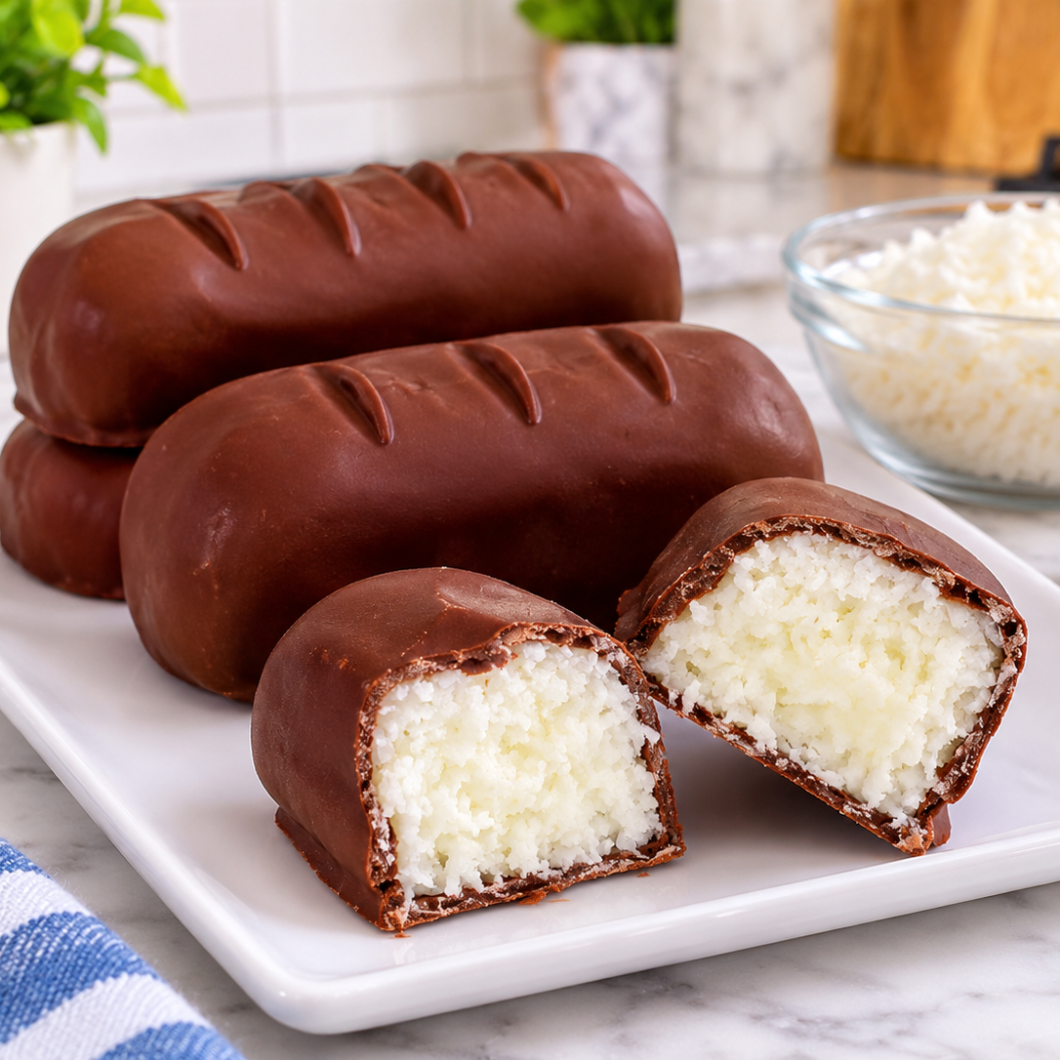
These homemade Keto Bounty Bars feature a soft, chewy coconut filling covered in a smooth chocolate coating. Made with coconut cream, unsweetened desiccated coconut, monk fruit sweetener, and sugar-free chocolate, they are an easy no-bake, low-carb dessert.
20
servings15
minutes126
kcal1gm
15
minutesIngredients
½ can coconut cream tinned
¼ cup coconut oil
2 cups desiccated coconut unsweetened
2 tablespoons monkfruit
7 oz chocolate chips sugar free or high cocoa solids
Directions
- Line an 8-inch square baking tin with parchment paper, or prepare a silicone mould or ice tray.
- In a mixing bowl, combine the coconut cream, melted coconut oil, desiccated coconut, and monkfruit sweetener. Mix thoroughly until the ingredients form a sticky, dough-like mixture.
- Scoop out portions of the coconut mixture and shape them into small bars or rectangles approximately 2–3 inches long. Alternatively, press the mixture into silicone moulds or an ice tray.
- Arrange the shaped bars on a parchment-lined baking sheet.
- Place the baking sheet or mould in the freezer for approximately 20–30 minutes, or until the bars become firm and hold their shape.
- Meanwhile, melt the chocolate chips using a double boiler or microwave. If using a microwave, heat in 20-second intervals, stirring between each interval until smooth.
- Remove the chilled coconut bars from the freezer. Dip each bar into the melted chocolate, making sure all sides are completely covered.
- Use a fork to lift each coated bar from the chocolate and allow the excess chocolate to drip away.
- Place the chocolate-covered bars back onto the parchment-lined baking sheet.
- Return the bars to the freezer or refrigerator for another 10–15 minutes, or until the chocolate coating has hardened.
- Once the chocolate has completely set, serve and enjoy your homemade Keto Bounty Bars.
- Store any remaining bars in an airtight container in the refrigerator for up to one week. Freeze for longer storage.
Notes
- Makes approximately 20 small bars.
- Store in an airtight container in the refrigerator for up to one week.
- Freeze the bars for longer storage.
- Add a drop of vanilla or almond extract to the coconut mixture for extra flavor.
- If the melted chocolate is too thick, add a teaspoon of coconut oil for smoother dipping.
- Use vegan chocolate for a vegan-friendly variation.
- For an almond-inspired version, place an almond on top of each coconut bar before dipping it into chocolate.
- Keep the coconut bars chilled while dipping to help them maintain their shape.
Nutrition Facts
- Total number of serves: 20
- Calories: 126kcal
- Fat: 12g
- Carbohydrates: 7g
- Net Carbs: 2g
- Fiber: 5g
- Protein: 1g