Rhubarb custard is a wonderful way to turn fresh rhubarb into a creamy homemade dessert with a pleasant balance of tart and sweet flavors. The rhubarb softens as it bakes, while the egg and cream mixture develops into a smooth custard that is rich without needing a complicated preparation method.
For extra texture, this recipe also includes an almond flour and pecan-style crisp topping that adds a buttery, nutty finish to every spoonful. The dessert can be prepared in individual ramekins or baked in a larger shallow dish, making it flexible enough for both everyday desserts and special occasions.
Why This Rhubarb Custard Is Worth Making
Fresh rhubarb has a naturally sharp flavor that becomes much more enjoyable when paired with sugar, cream, vanilla, and citrus zest. Instead of relying on a traditional pie crust, this recipe allows the rhubarb and custard to remain the focus.
The result is softer and creamier than a typical fruit crisp, while the optional topping provides a crunchy contrast. If you prefer a simpler dessert, the custard can be served without the topping. If you enjoy a crisp dessert with more texture, the almond flour, chopped nuts, cinnamon, and buttery crumble make a delicious addition.
Choosing Fresh Rhubarb
When buying rhubarb, look for stalks that are firm, straight, and well colored. The stalks should feel crisp rather than soft or limp, and you should avoid pieces with obvious cuts, blemishes, or signs of deterioration. Rhubarb is available during different parts of the year depending on whether it is field grown or grown under controlled conditions, so availability can vary. Most importantly, remember that only the stalks are used for cooking. Rhubarb leaves should always be removed and discarded.
Preparing Rhubarb for Baking
Before preparing the custard, trim away the ends and remove all leaves from the rhubarb. Wash the stalks under cold running water and remove any rough or damaged portions. For this dessert, cutting the rhubarb into approximately half-inch pieces helps distribute it evenly through the custard. Rhubarb naturally becomes tender during baking, so there is no need to cut it into extremely small pieces. Keeping the pieces fairly consistent also helps them cook at a similar rate throughout the dish.
How to Store Rhubarb
Fresh rhubarb should be refrigerated if you are not using it immediately. Keep unwashed stalks in a plastic bag and use them within several days for the best quality. Rhubarb can also be cut and frozen for later use. Frozen rhubarb is particularly useful when fresh rhubarb is unavailable, and it can be used in this custard without necessarily thawing it first. Because frozen rhubarb can release additional moisture, the dessert may need a little extra baking time before the custard is fully set.
Making the Rhubarb Custard
Step 1: Prepare the Rhubarb
Begin by cutting the prepared rhubarb into small pieces. Place the pieces in a large bowl and combine them with the specified sugar. Allow the rhubarb to sit while you prepare the custard mixture. This short step helps the tart rhubarb begin to combine with the sweetness before everything goes into the baking dish.
Step 2: Prepare the Creamy Custard
The custard mixture combines eggs, sugar, water, heavy whipping cream, butter, cornstarch, salt, vanilla, and orange zest. Beat these ingredients together until they are well incorporated and the mixture is smooth. The cornstarch helps the custard develop a thicker consistency as it heats, while the eggs and cream create the characteristic creamy texture. Orange zest adds a subtle citrus note that works particularly well with the tartness of rhubarb.
Step 3: Choose the Baking Dish
The depth of the baking dish has a direct effect on the cooking time. Individual ramekins create a shallower portion and generally require less time in the oven. A wider, shallow baking dish can also work well. If you choose a deeper dish, expect the custard to require more time to set. This is one of the most important details when making baked custard because the center should be properly cooked while still retaining a slight jiggle.
Step 4: Combine Rhubarb and Custard
Distribute the prepared rhubarb evenly between your chosen ramekins or baking dish. Pour the egg and cream mixture over the rhubarb, making sure the fruit is covered evenly. If you are making the crisp version, prepare the topping before baking and spread it over the custard mixture. Keeping the rhubarb evenly distributed helps each serving contain a good balance of fruit and creamy custard.
Understanding When the Custard Is Done
Look for a Gentle Jiggle
Baked custard does not need to become completely firm while it is still in the oven. A slight jiggle in the center is desirable because the custard continues to settle as it cools. The recipe indicates an internal temperature of at least 175°F as another way to judge doneness. Avoid judging the dessert only by its appearance, especially when using a deeper baking dish, because the center can take considerably longer to cook than the surface.
Why Cooling Matters
Once the custard is removed from the oven, allow it to cool completely before refrigerating. Placing a warm custard directly into the refrigerator can contribute to a softer or runnier texture. Once cooled, cover the dessert and refrigerate it. Proper cooling allows the custard to finish setting and makes it easier to serve neatly.
Making the Almond Flour Crisp Topping
A Buttery Nutty Finish
The optional crisp topping gives the dessert a completely different texture. Almond flour creates the base of the crumble, while brown sugar contributes sweetness and chopped nuts provide crunch. Cinnamon adds warmth, and chilled butter brings everything together. Fresh tarragon can also be included as an optional ingredient according to the original recipe. The finished mixture should resemble a coarse, crumbly meal rather than a smooth dough.
How to Prepare the Topping
Add the almond flour, brown sugar, chopped nuts, cinnamon, salt, and optional fresh tarragon to a food processor. Pulse until the ingredients are combined. Add the chilled butter in small pieces and pulse again until the mixture becomes crumbly and well blended. Avoid processing it into a completely smooth paste. The uneven crumbs are what create the pleasant texture once baked.
Baking the Crisp
Spread the prepared topping over the rhubarb custard before placing the dish in the oven. Bake at the specified temperature and begin checking the crisp at around 30 minutes. The topping should develop a browned appearance while the custard underneath reaches the required level of doneness. Because different dishes have different depths, the topping may look finished before the custard is fully set, so checking the center is important.
Custard Without a Water Bath
Why a Water Bath Is Not Required
Some baked custards are traditionally cooked in a water bath to provide gentle, even heat. This rhubarb custard can instead be baked directly in the oven when the baking dish and cooking time are matched properly. The key is understanding that a shallow dish will cook more quickly than a deeper one. Individual ramekins or a shallow baking dish can therefore be useful when you want the custard to set in less time.
Shallow Versus Deep Baking Dishes
A shallow baking dish allows heat to reach the custard more quickly, while a deeper dish takes longer for the center to reach the desired temperature. The recipe gives approximately 35 minutes for a shallow dish and up to about one hour for a deeper 9-inch pie plate. These times are guidelines rather than guarantees, because ovens and baking dishes vary. The slight jiggle and internal temperature are better indicators of doneness.
Flour or Cornstarch as a Thickener
How the Two Ingredients Differ
The recipe can use cornstarch or flour as the thickener. They do not behave exactly the same way, so the quantities should not simply be exchanged equally. The original recipe notes that flour generally requires a larger quantity than cornstarch. Cornstarch can produce a somewhat smoother, slightly glossy appearance, while flour tends to create a more opaque finish.
Choosing the Thickener
Cornstarch is used in the recipe card, with flour offered as an alternative. If using flour, the source recommends a larger amount than the cornstarch quantity. Either option can help the custard reach a pleasing consistency when cooked properly. Since the thickener is only one part of the custard, it works together with the eggs, cream, and heat to create the final texture.
Making This Dessert Lower in Carbohydrates
Almond Flour and Sugar Alternatives
The recipe can be adapted toward a lower-carbohydrate style by changing certain ingredients, particularly in the crisp topping. Almond flour can be used in place of traditional wheat flour, while a suitable sugar substitute can replace regular sugar. Nuts also contribute crunch without relying on oats. However, rhubarb itself has a naturally tart flavor, so some sweetness is still necessary to create a balanced dessert.
The Custard Base
The custard already contains eggs and cream, but the sugar contributes a significant portion of its sweetness and carbohydrate content. A sugar substitute can be used when desired. The original recipe specifically discusses monkfruit blends as one option. Depending on the sweetener, the finished flavor and texture can vary, so it is important to choose a substitute that works well in baked desserts.
Serving Rhubarb Custard
Serve It Simply
The easiest way to enjoy this dessert is to serve the cooled custard on its own. Without the crisp topping, the dessert has a soft, creamy texture that allows the sweet-tart rhubarb flavor to stand out. This version is particularly suitable when you want a lighter-looking dessert or when you prefer a smooth custard rather than a fruit crisp.
Serve It as a Rhubarb Crisp
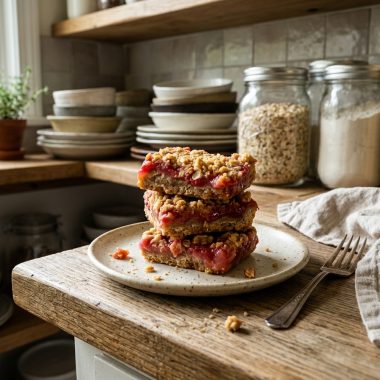
For more texture, the almond flour topping turns the custard into a rhubarb crisp. The contrast between soft baked rhubarb, creamy custard, and crisp buttery crumbs makes each bite more interesting. The nuts contribute additional crunch, while cinnamon adds warmth. This version works especially well when served as a family-style dessert from a larger baking dish.
What to Do With Leftover Rhubarb Custard
An Easy Dessert Variation
If leftover custard becomes softer after refrigeration or sitting for a while, it does not have to go to waste. The original recipe suggests turning the leftovers into an Eton Mess-inspired dessert. Scoop the softened rhubarb custard into serving dishes and combine it with whipped cream. The crumble topping acts as a crunchy element similar to the baked meringue traditionally associated with Eton Mess.
A Simple Way to Repurpose Leftovers
This leftover idea works because the flavors of rhubarb, cream, sweetness, and crunchy topping already complement one another. Instead of worrying about maintaining the original shape of the custard, embrace the softer texture and serve it as a casual layered or mixed dessert. It is an especially useful option when the custard has become too soft to portion neatly.
Notes for Reliable Results
Keep the Baking Depth in Mind
The depth of the custard is one of the most important factors in this recipe. A shallow dish can finish much sooner than a deeper one. If you change the baking dish, do not automatically keep the same cooking time. Watch for the slight jiggle in the center and check the internal temperature when possible.
Cool Before Refrigerating
Allow the finished custard to cool completely before covering and refrigerating it. This helps prevent excess moisture and keeps the custard from becoming unnecessarily runny. Once chilled, it can be served as a smooth custard or enjoyed with the crisp topping.
Frozen Rhubarb Can Be Used
Frozen rhubarb is an option when fresh stalks are not available. According to the original recipe, it does not need to be thawed first. Because frozen rhubarb may affect the moisture level and temperature of the dish, allow for the possibility of a few additional minutes in the oven.
The Topping Is Optional
The almond flour crisp topping is not required for the custard itself. If you prefer a smooth, creamy rhubarb dessert, simply bake the custard without the crumble. If you want additional crunch and a more traditional crisp-style presentation, prepare the topping and add it before baking.

Crustless Rhubarb Custard Desserts
 Recipe by admin
A creamy sweet-tart rhubarb custard made with fresh rhubarb, eggs, heavy cream, vanilla, orange zest, and a simple thickener.
9
servings10
minutes30
minutes269
kcal40
minutesIngredients
- For the Custard
1 ½ lb rhubarb (cut off ends before weighing), cut into 1/2-inch pieces (about 5–6 cups)
1/2 cup sugar, plus a couple of tablespoons to sprinkle over the top
4 medium eggs
½ cup sugar
½ cup water
1 cup fluid heavy whipping cream
¼ cup cold butter
1 tablespoon cornstarch, alternatively use 2–3 tablespoons flour
¼ teaspoon salt
1 teaspoon vanilla
1 tablespoon zest from 1 orange
- For the Crisp Topping
1 cup almond flour
1 cup brown sugar, or brown sugar substitute
½ cup chopped nuts, such as pecans
½ teaspoon cinnamon
¼ teaspoon salt
4 oz unsalted butter, chilled and cut into small pieces
1–2 tablespoons fresh tarragon, chopped, optional
Directions
- Preheat the oven to 350°F. Trim and prepare the rhubarb, then cut it into approximately 1/2-inch pieces. Place the rhubarb in a large bowl and mix it with 1/2 cup sugar. Set it aside while preparing the custard.
- In a mixer, beat together the eggs, remaining 1/2 cup sugar, water, heavy whipping cream, cold butter, cornstarch, salt, vanilla, and orange zest. Continue mixing until the ingredients are well combined and the custard mixture is smooth.
- Distribute the prepared rhubarb evenly among 6–8 ramekins, filling them to approximately three-quarters full. Alternatively, place the rhubarb in a shallow 10-inch baking dish. Pour the custard mixture evenly over the rhubarb.
- If making the crisp version, combine the almond flour, brown sugar, chopped nuts, cinnamon, salt, and optional fresh tarragon in a food processor. Pulse until blended. Add the chilled butter in small pieces and pulse until the mixture becomes crumbly and resembles coarse meal.
- For a shallow baking dish, bake at 350°F for approximately 35 minutes. The custard should have a slight jiggle and reach an internal temperature of at least 175°F.
- If using the topping, sprinkle it evenly over the rhubarb custard before baking. Begin checking the crisp after approximately 30 minutes. Continue baking until the topping is browned to your preference and the custard underneath has reached the required temperature.
- Remove the finished custard from the oven and allow it to cool completely. Once cooled, cover it with plastic wrap, aluminum foil, or a plate and place it in the refrigerator. Cooling fully before refrigeration helps prevent the custard from becoming runny.
Notes
- The cooking time depends heavily on the depth of the baking dish.
- A shallow 10-inch dish may take approximately 35 minutes, while a deeper 9-inch pie plate may require about 1 hour.
- The custard should still have a slight jiggle when finished.
- Use either 2–3 tablespoons of flour or 1 tablespoon of cornstarch as the thickener.
- The crisp topping is optional; the rhubarb custard can be enjoyed without it.
- Frozen rhubarb can be used without thawing, although the dessert may need a few extra minutes of baking.
- Allow the custard to cool completely before refrigerating to help prevent a runny texture.
- Leftover softened custard can be combined with whipped cream and the crumble topping for an Eton Mess-inspired dessert.
Nutrition Facts
- Calories: 269kcal
- Fat: 17g
- Carbohydrates: 27g
- Fiber: 1g
- Sugar: 24g
- Protein: 4g