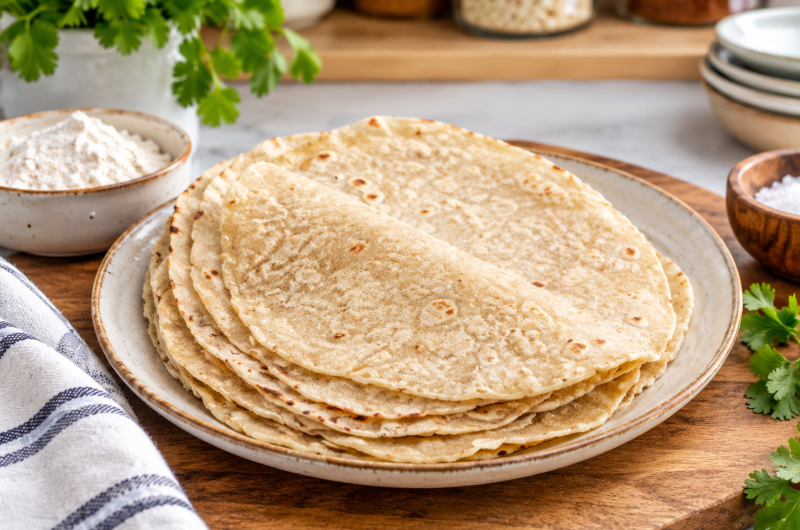
Making soft, flexible gluten-free tortillas at home is much easier than many people expect. This simple gluten-free tortilla recipe uses only five basic ingredients and takes around 15 minutes from start to finish. The result is a batch of homemade gluten-free flour tortillas that are soft enough to fold, roll, and wrap without immediately cracking. They are ideal for soft tacos, burritos, quesadillas, lunch wraps, and many other everyday meals.
One of the biggest problems with homemade gluten-free tortillas is texture. Some recipes produce tortillas that are dry, brittle, or difficult to fold as soon as they cool. These tortillas are designed to stay much more flexible by using very warm water, a suitable gluten-free flour blend, a thin rolling technique, and careful cooking.
The key is to avoid overcooking them. A tortilla that looks slightly soft when it comes off the skillet will become firmer as it cools while still retaining enough flexibility for wrapping.
Why These Gluten-Free Tortillas Stay Soft
The Importance of the Flour Blend
The gluten-free flour you choose can make a noticeable difference in the finished tortillas. This recipe uses gluten-free all-purpose flour with xanthan gum, which helps provide structure and flexibility in the absence of traditional wheat gluten. Better Batter is a preferred option for this recipe, but Better Batter, Bob’s Red Mill 1 to 1, King Arthur Measure for Measure, and Pillsbury gluten-free flour can all be used.
Different gluten-free flour blends contain different combinations of flours and starches, so the dough can behave slightly differently depending on the brand. Some may absorb water more quickly, while others may produce a softer or slightly firmer tortilla.
For that reason, the exact texture can vary even when the ingredient quantities remain the same. Choosing a gluten-free blend that already contains xanthan gum makes the dough easier to handle and helps the tortillas hold together.
Warm Water Makes a Difference
The temperature of the water is another important part of this gluten-free tortilla recipe. Very warm water helps hydrate the gluten-free flour more quickly, creating a smoother dough that is easier to shape. The water should be warm rather than boiling. Heating it for about 20 seconds in the microwave is one simple way to bring it to a useful temperature.
When the flour, warm water, and vegetable oil are combined, the mixture gradually changes from loose ingredients into a soft dough. This makes it possible to roll the tortillas thin without the dough becoming excessively crumbly. If you have struggled with gluten-free dough that falls apart while rolling, paying attention to the water temperature can make the process considerably easier.
How to Make Homemade Gluten-Free Tortillas
Start With the Dough
Begin by combining the gluten-free all-purpose flour, gluten-free baking powder, and salt in a large bowl. Mixing the dry ingredients first helps distribute the baking powder and salt throughout the flour before the liquid ingredients are introduced. This simple step also makes it easier to create an even dough.
Next, stir in the very warm water and vegetable oil. A spoon or spatula works well at the beginning because the mixture may still be quite warm. Continue mixing until the ingredients are fully combined. Once the dough starts coming together, use your hands to gently bring everything into a dough ball. The finished dough should have absorbed all of the liquid.
There is no need for complicated kneading or a long resting period. The recipe is designed to be quick and practical, making it suitable for a weeknight meal when you need fresh tortillas without spending a great deal of time in the kitchen.
Divide the Dough Evenly
Once the dough has formed, divide it into eight roughly equal portions. Rolling each portion into a small ball makes it easier to create tortillas of a similar size and thickness. A golf ball-sized portion is a useful guide for getting eight tortillas from the mixture.
Keep the remaining dough covered with a towel while you work. Gluten-free dough can dry out when exposed to air, and keeping it covered helps maintain the soft texture needed for rolling. Working with one piece at a time also makes the process more organized and prevents the dough balls from becoming unnecessarily dry.
The Best Way to Roll Gluten-Free Tortillas
Use Parchment Paper
One of the easiest ways to roll these homemade gluten-free tortillas is between pieces of parchment paper. Place one dough ball on a sheet of parchment and flatten it gently with your hand until it resembles a small disk. Cover the dough with another piece of parchment paper or plastic cling wrap.
Use a rolling pin to carefully roll the dough into a circle approximately 7 inches across. The tortilla should be thin and evenly rolled. Thickness matters because a thick tortilla can become chewy or stiff, while a thin tortilla cooks quickly and remains easier to fold.
There is no need to dust the rolling surface heavily with flour. Extra flour can burn in the skillet and may also make the surface of the tortilla dry. Parchment provides a clean, simple working surface and makes the delicate dough much easier to handle.
Aim for Even Thickness
Even thickness is one of the most important details when making gluten-free tortillas. If one side is much thicker than the other, it may require longer cooking while thinner areas become dry. Uneven tortillas can therefore have a combination of tough and soft spots.
Try to roll from the center outward with gentle, consistent pressure. The goal is not to make a perfectly shaped restaurant-style circle. A homemade tortilla can have slightly irregular edges and still work beautifully. What matters most is that it is thin enough to cook quickly and evenly.
Cooking the Tortillas
Preheat the Skillet
While the dough is being rolled, heat a greased cast-iron skillet or another heavy skillet over medium-high heat. Cast iron is particularly useful because it retains heat well and provides steady cooking temperatures. However, you do not need a cast-iron skillet to make successful gluten-free tortillas.
If you are using a lighter skillet, it may become hotter more quickly. In that case, slightly reducing the heat can help prevent the tortillas from browning too aggressively before they are cooked through. The objective is to create a few light brown spots while keeping the tortilla soft.
Cook Quickly and Carefully
Place a rolled tortilla into the greased skillet and cook it for approximately 30 seconds to 1 minute on each side. The exact cooking time can vary depending on the skillet and the heat level. Watch the surface rather than relying only on the clock.
A properly cooked tortilla should develop a few bubbles and light brown spots. When you flip it, the underside should have some gentle browning without looking dry or heavily toasted. If the tortilla becomes stiff while it is still in the skillet, it has probably been cooked too long or at too high a temperature.
This is one of the most important points in the entire recipe. Gluten-free tortillas do not need to be cooked until they feel firm. They should still have a little softness in the center when removed from the skillet. They will continue to firm slightly as they cool.
Keeping Homemade Tortillas Soft
Stack Them While Warm
As each tortilla finishes cooking, place it on a plate and stack the tortillas together. Cover the stack with a clean towel to help retain warmth and moisture. This simple step can make a significant difference in the final texture.
Because gluten-free tortillas can lose moisture as they sit, covering them while you finish cooking the batch helps keep them softer and easier to fold. It also means you can prepare all eight tortillas before serving instead of worrying about the first few becoming cold and stiff.
Once the tortillas have completely cooled, transfer them to a plastic storage bag and refrigerate them. Proper storage helps preserve the tortillas so they can be used later for lunches, tacos, wraps, and other meals.
Choosing the Right Gluten-Free Flour
Why Different Brands Behave Differently
Not all gluten-free flour blends perform exactly the same way. A blend containing xanthan gum is particularly helpful for this recipe because it contributes structure and helps the tortillas remain cohesive. Better Batter is a preferred choice, but other suitable gluten-free all-purpose blends can also work.
If you switch brands, expect the dough to feel somewhat different. One flour blend may absorb the water more quickly, while another may create a softer dough. These differences do not necessarily mean the recipe has failed. Gluten-free baking often depends on the composition of the flour blend as well as the liquid used.
Always check the flour packaging to confirm that it is gluten-free and suitable for your dietary needs. Ingredient labels can change, so checking the current packaging is a useful habit, especially when cooking for someone with a gluten-related dietary restriction.
Simple Ways to Customize the Tortillas
Add Savory Flavor
These tortillas have a mild flavor that works well with many fillings, but the dough can also be adapted with additional seasonings. Garlic powder, cumin, or chili powder can be incorporated for a more flavorful tortilla that pairs especially well with tacos and Mexican-inspired fillings.
Because the original recipe is intentionally simple, these additions are optional rather than necessary. The basic tortilla is versatile enough to use with everything from seasoned meat and beans to vegetables, cheese, eggs, or sandwich-style fillings.
Try Different Cooking Oils
Vegetable oil is used in the original recipe, with canola oil being a preferred option. If needed, avocado oil or olive oil can be substituted according to the recipe notes. Different oils may create subtle differences in flavor, but the main purpose of the oil is to contribute moisture and help produce a flexible tortilla.
The choice of oil can therefore be adjusted according to what you already have available. There is no need to purchase a specialty oil simply to make these tortillas.
Serving Ideas for Gluten-Free Tortillas
Tacos and Burritos
Soft gluten-free tortillas are especially useful for taco night. Fill them with cooked chicken, beef, beans, vegetables, cheese, salsa, or your favorite toppings. Because the tortillas are designed to remain flexible, they can be folded around fillings without immediately breaking apart.
They also work well for burritos. Add rice, beans, vegetables, meat, cheese, or other preferred fillings, then roll the tortilla around the ingredients. Keeping the tortilla soft is particularly important for burritos because a dry tortilla can split when folded.
Lunch Wraps and Quick Meals
These homemade tortillas can also replace bread for simple lunch wraps. Fill one with vegetables, protein, cheese, or other sandwich ingredients and roll it tightly. They are a practical option when you want a gluten-free alternative to traditional sandwich bread.
The tortillas can also be served alongside soups, salads, grilled meats, or cooked vegetables. Their mild taste means they can fit into a wide range of meals without overpowering the other ingredients.
Storage and Reheating
Refrigerating the Tortillas
After the tortillas have completely cooled, place them in a plastic storage bag and refrigerate them. Keeping them covered helps prevent them from drying out. When you are ready to use them, gently warm them before serving if desired.
The tortillas may feel firmer after refrigeration than when they were freshly cooked. Gentle reheating can help restore some of their softness and make them easier to fold.
Freezing for Later
These gluten-free tortillas can also be frozen for longer storage. When freezing, keeping them well protected from air is important because exposure to air can cause freezer dryness. For best texture, allow frozen tortillas to thaw overnight in the refrigerator before reheating.
This makes the recipe useful for meal preparation. You can prepare a batch when you have time and keep the tortillas available for quick meals later in the week.
Common Mistakes to Avoid
Overcooking the Tortillas
The most common mistake is leaving the tortillas in the skillet for too long. Gluten-free tortillas can become noticeably firmer when overcooked, and that stiffness becomes more apparent as they cool. Look for light brown spots and a few bubbles rather than waiting for the tortilla to become completely firm.
Rolling the Dough Too Thick
A thick tortilla is less likely to have the soft, flexible texture this recipe is designed to produce. Roll the dough into a thin 7-inch circle and try to maintain an even thickness across the surface.
Letting the Dough Dry Out
Keep the unused dough covered while you roll and cook the tortillas. Even a short period of exposure to air can cause gluten-free dough to lose moisture, making it more difficult to roll smoothly.
Notes for Better Results
Flour Selection
Better Batter gluten-free flour is the preferred flour for this recipe, although other gluten-free flour blends mentioned in the original recipe can be used. Results may vary depending on the specific blend. Flour containing xanthan gum is recommended for the intended texture.
Xanthan Gum Alternatives
The recipe has not been tested without xanthan gum. Guar gum may work as a substitute, although the texture can differ. Flax, psyllium husk, or chia may also be added in small amounts, with additional water used to compensate as needed.
Keep the Tortillas Soft
Remember that the tortillas should still feel slightly soft in the center when they come off the skillet. They will firm up as they cool. Avoid cooking them until they feel completely firm, as this usually leads to a tougher final texture.
Why Make Gluten-Free Tortillas at Home?
Homemade gluten-free tortillas are worth making because they give you greater control over texture and ingredients while requiring very little preparation. With five simple ingredients and a skillet, you can make fresh tortillas that are suitable for tacos, burritos, wraps, and everyday meals. The process is straightforward once you learn to roll the dough thinly and control the cooking time.
This gluten-free tortilla recipe is especially useful for anyone who wants a quick homemade alternative to packaged tortillas. The combination of warm water, gluten-free flour with xanthan gum, vegetable oil, baking powder, and salt creates a practical dough that can be shaped without a tortilla press. With careful cooking and proper storage, the tortillas remain versatile enough for many different meals.
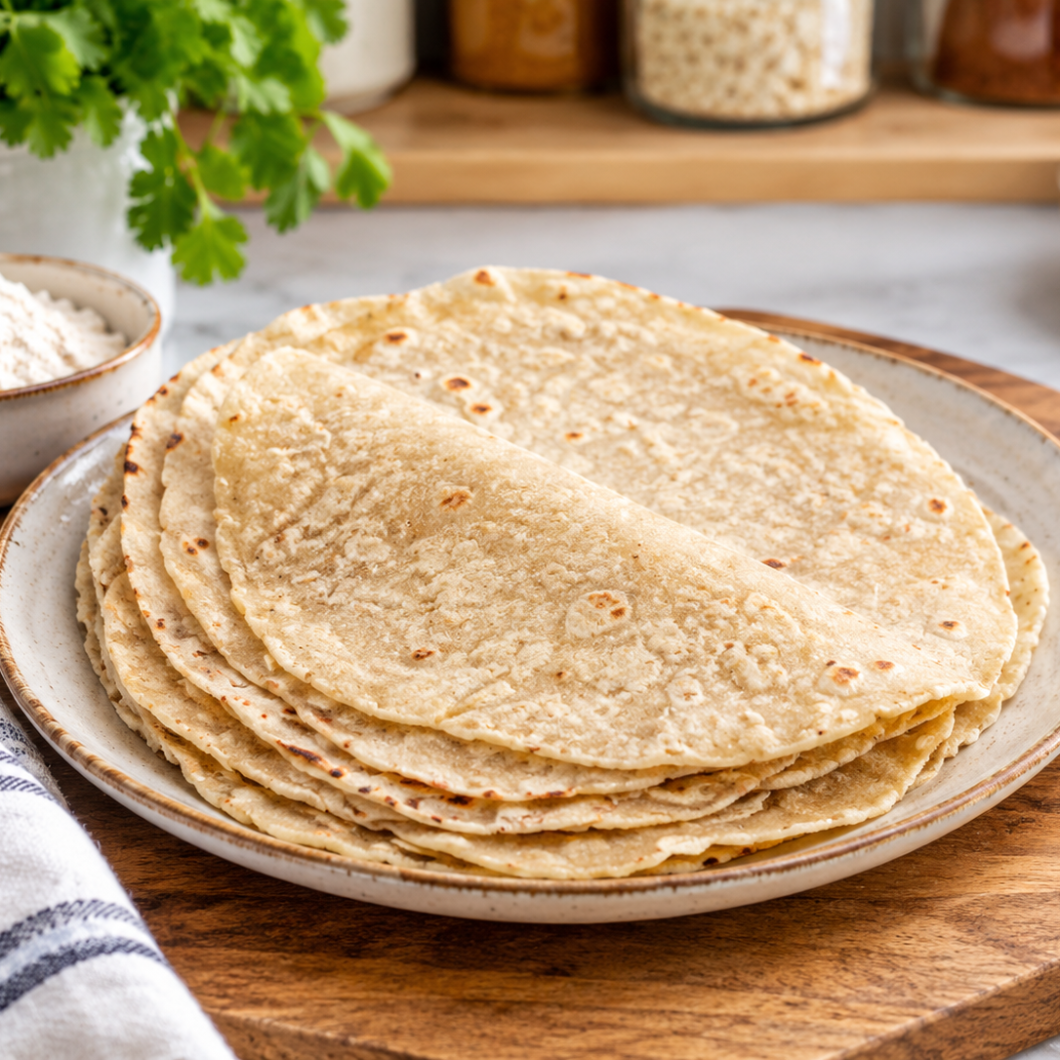
Gluten Free Flour Tortillas
 Recipe by admin
Soft and flexible homemade gluten-free tortillas made with five simple ingredients.
8
servings5
minutes8
minutes105
kcal13
minutesIngredients
1 1/2 cup (188 g) gluten-free all-purpose flour with xanthan gum
1 teaspoon (4 g) gluten-free baking powder
1/2 teaspoon (3 g) salt
3/4 cups (177 g) very warm water
2 tablespoons (27 g) vegetable oil
Directions
- Prepare the Dough
- Add the gluten-free flour, gluten-free baking powder, and salt to a large bowl.
- Stir in the very warm water and vegetable oil.
- Mix everything together with a spoon or spatula until fully combined.
- Use your hands to continue bringing the mixture together until it forms a dough ball and all the liquid has been absorbed.
- Shape the Tortillas
- Heat a greased cast-iron skillet or another heavy skillet over medium-high heat.
- Divide the dough into eight golf ball-sized portions and roll each portion into a ball.
- Keep the remaining dough covered with a towel while working to prevent it from drying out.
- Place one dough ball onto a piece of parchment paper and flatten it into a disk.
- Cover the dough with plastic cling wrap or another piece of parchment paper.
- Roll the dough into a thin circle approximately 7 inches in diameter.
- Cook the Tortillas
- Place the tortilla into the greased skillet.
- Cook for about 30 seconds to 1 minute on each side, until a few bubbles appear and light brown spots develop.
- Avoid overcooking. The tortilla should still feel slightly soft in the center when removed from the skillet.
- Transfer each cooked tortilla to a plate and stack them together.
- Cover the stack with a towel to keep the tortillas warm and soft.
- Allow the tortillas to cool completely before placing them in a plastic storage bag and refrigerating.
Notes
- Flour and Texture
Better Batter gluten-free flour is preferred for this recipe, but other gluten-free flour blends can produce good results. Different brands may create slightly different dough textures. - Oil Options
Avocado oil or olive oil can be used instead of vegetable oil if needed. - Keeping Them Flexible
The tortillas should remain slightly soft in the center when removed from the skillet. Cooking them too long can make them stiff. - Storage
For frozen tortillas, thaw them overnight in the refrigerator before reheating for the best texture. - Flavor Variations
Garlic powder, cumin, or chili powder can be added to the dough for extra flavor.
Nutrition Facts
- Calories: 105kcal
- Fat: 4g
- Carbohydrates: 16g
- Fiber: 2g
- Sugar: 1g
- Protein: 2g