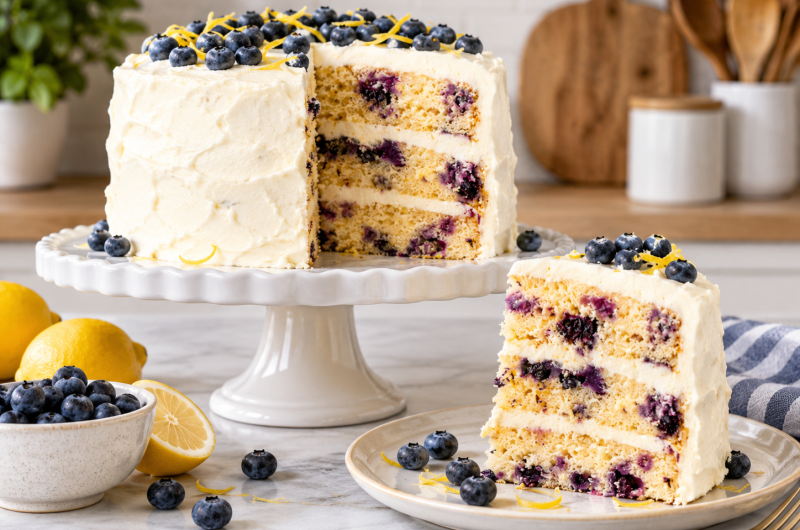
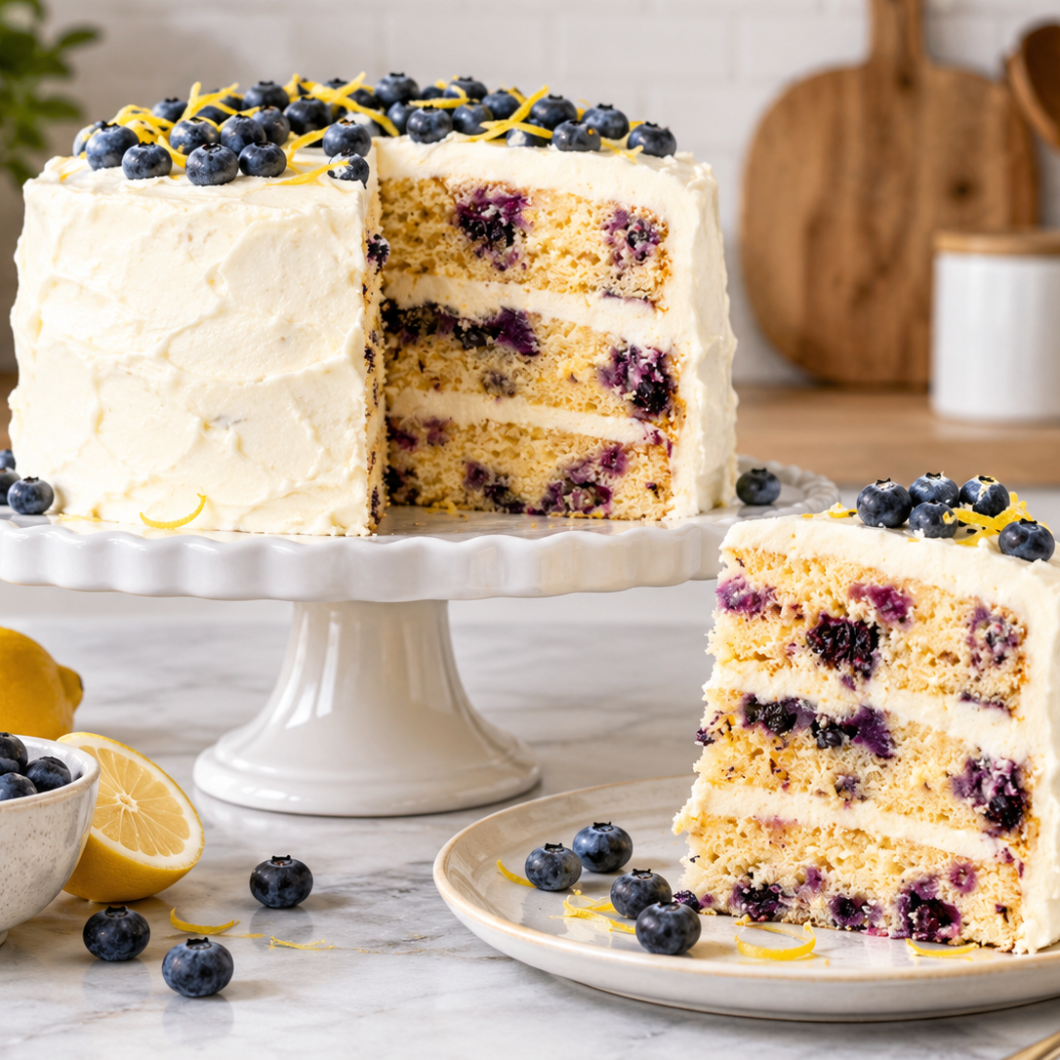
Lemon Blueberry Layer Cake is a bright, fresh, and beautifully moist dessert that combines the tangy flavor of fresh lemon with juicy blueberries and a smooth cream cheese frosting. The cake has a tender crumb, plenty of citrus flavor, and berries throughout each slice.
It is an excellent choice for spring celebrations, Easter gatherings, birthdays, afternoon tea, or any occasion when you want a homemade layer cake that feels special without being overly complicated.
Why You’ll Love This Lemon Blueberry Cake
This lemon blueberry cake brings together several flavors and textures that work especially well together. Fresh lemon juice and lemon zest give the cake a lively citrus taste, while blueberries add natural sweetness and little bursts of fruity flavor.
The cream cheese frosting adds a creamy, slightly tangy finish that balances the sweetness of the cake. Each layer stays soft and moist, making this an inviting dessert for both casual family meals and larger celebrations.
The cake batter is designed to produce a lighter texture while still holding enough structure for three substantial layers. Butter provides richness and flavor, while vegetable, canola, or avocado oil contributes additional moisture. Buttermilk also helps create a tender crumb, and the combination of baking powder and baking soda supports a good rise. Together, these ingredients create a cake that is soft without becoming overly heavy.
What Makes This Cake Light and Moist
Butter and Oil Work Together
Using both softened butter and oil gives this lemon blueberry layer cake a useful balance of flavor and texture. Butter contributes the rich taste associated with traditional homemade cakes, while oil helps keep the crumb moist. The combination is particularly helpful in a cake containing ingredients such as buttermilk, eggs, flour, and blueberries, which can otherwise create a heavier batter.
Buttermilk Adds Tenderness
Buttermilk is an important part of the cake because it helps keep the finished layers moist and tender. Its slight acidity also works with the baking soda in the batter. If you do not have buttermilk, the original recipe notes that whole milk can be used without another substitution because the lemon juice and brown sugar provide enough acidity for the baking soda to react.
Fresh Lemon Creates Better Flavor
Fresh lemon juice and lemon zest are essential for achieving the bright citrus flavor that makes this cake stand out. The zest contains fragrant citrus oils, while the juice adds acidity and a fresh lemon taste. For the best result, zest the lemons before cutting them open and juicing them. You will need several lemons to reach the required amount of juice and zest.
Choosing the Right Blueberries
Fresh blueberries are recommended for this recipe because they generally release less excess moisture than frozen berries. Too much moisture can affect the texture of a cake and make the crumb heavier. Fresh blueberries also hold their shape nicely during baking, giving the finished cake attractive pockets of fruit throughout the layers.
The blueberries are tossed with a tablespoon of all-purpose flour before being folded into the batter. This simple step helps distribute the berries through the thick cake mixture. Because the batter is fairly substantial, the blueberries are less likely to sink toward the bottom of the cake. Gently folding them in also helps prevent the berries from breaking apart.
Preparing the Cake Pans
Use Three 8-Inch Round Pans
Three 8-inch round cake pans are recommended for creating the tall, generous layers shown in the original recipe. The smaller diameter gives the batter enough depth to create substantial cake layers. You can use 9-inch pans if necessary, but the layers will be thinner and the finished cake will not have the same height.
Proper pan preparation is also important when making a layered cake. Lightly grease each pan, place a parchment paper round inside, and grease the parchment as well. This creates a reliable nonstick surface and makes it much easier to remove the cooled cakes without damaging their edges or bottoms.
How to Make the Lemon Blueberry Cake
Start With the Oven and Cake Pans
Begin by preheating the oven to 350°F (177°C). Prepare three 8-inch round cake pans by greasing them, adding parchment paper rounds, and lightly greasing the parchment. Preparing the pans before mixing the batter allows you to transfer the finished batter directly into the pans without unnecessary waiting.
Cream the Butter and Sugars
Beat the softened butter until smooth and creamy. Add both the granulated sugar and packed light brown sugar, then continue beating until the mixture is well combined. The brown sugar adds moisture and a deeper sweetness, while granulated sugar provides a clean sweetness and helps maintain the desired cake texture.
Add the oil and continue mixing until the mixture becomes light and creamy. Then add the room-temperature eggs and vanilla extract. Mix until everything is fully incorporated, scraping the sides and bottom of the bowl as needed. Room-temperature eggs blend more easily into the mixture and can help reduce the temptation to over-mix the batter later.
Combine the Dry Ingredients
In a separate bowl, whisk together the all-purpose flour, baking powder, baking soda, and salt. Keeping the dry ingredients together first helps distribute the leavening agents throughout the flour before they are added to the wet mixture. This contributes to more even baking and helps prevent pockets of baking powder or baking soda.
Add the dry ingredients to the wet mixture and mix briefly on low speed. Add the buttermilk, lemon zest, and lemon juice, mixing only until the ingredients are combined. The batter will be thick, which is exactly what helps support the blueberries as they bake.
Fold in the Blueberries
Toss the fresh blueberries with the tablespoon of all-purpose flour. Gently fold them into the cake batter, taking care not to over-mix. The goal is to distribute the berries evenly while keeping the batter tender. Excessive mixing can develop the flour and result in a tougher cake, so stop as soon as the ingredients are combined.
Baking the Cake Layers
Divide the batter evenly among the three prepared cake pans. Spread the batter gently so the layers have an even thickness. Place the pans in the preheated oven and bake for approximately 22 to 26 minutes, checking for doneness with a toothpick inserted into the center.
When the toothpick comes out clean, remove the cakes from the oven. Allow them to cool completely in their pans before attempting to assemble the layer cake. Cooling is especially important because warm cake layers are delicate and can break when moved or covered with frosting.
Making the Cream Cheese Frosting
Create a Smooth Frosting
The cream cheese frosting gives this lemon blueberry cake its creamy, tangy finish. Use softened full-fat brick cream cheese and softened butter for the smoothest texture. Beat the cream cheese and butter together until there are no visible lumps, giving the mixture enough time to become creamy.
Add the confectioners’ sugar, heavy cream, vanilla extract, and a pinch of salt while the mixer is running on low speed. Once the ingredients are incorporated, increase the mixer speed and beat the frosting until it becomes smooth and creamy. The finished frosting should be soft enough to spread easily over the cake layers.
Assembling the Layer Cake
Once the cake layers are completely cool, use a large serrated knife to carefully trim a thin amount from the tops if necessary. Creating flat surfaces makes the stacked cake more stable and gives the finished dessert a cleaner appearance.
Place the first cake layer on a cake stand or serving plate. Spread an even layer of cream cheese frosting over the top. Add the second cake layer and repeat the process, then place the third layer on top. Cover the top and sides with the remaining frosting, keeping the finish relatively light because the recipe is designed to provide enough frosting for a simple coating rather than an extremely thick layer.
Decorating Lemon Blueberry Cake
This cake can be decorated in a simple, natural style. Fresh blueberries make an easy topping and reinforce the flavor of the cake. Lemon zest or thin lemon slices can add additional color and citrus character. Depending on the occasion, you can also add edible flowers or another simple garnish.
A light decoration works particularly well because the lemon and blueberry combination already gives the cake a fresh and colorful appearance. The cream cheese frosting provides a clean background for berries and citrus garnishes, making the dessert attractive without requiring complicated decorating techniques.
Refrigerating Before Serving
After assembling the cake, refrigerate it for at least 45 minutes before slicing. This chilling period helps the frosting firm up and gives the stacked layers greater stability. Cutting the cake immediately after frosting can cause the layers to shift or fall apart, especially if the cake is very soft.
For clean slices, use a sharp knife and wipe it between cuts when necessary. Allowing the cake to sit briefly at room temperature before serving can also soften the frosting and bring out the richness of the cake.
Storage and Make-Ahead Instructions
Refrigerating the Finished Cake
Store leftover lemon blueberry layer cake tightly covered in the refrigerator for up to five days. A cake carrier is useful when storing or transporting the finished cake because it protects the frosting and helps prevent the cake from absorbing odors from other foods in the refrigerator.
Preparing the Cake Ahead
The cake layers and frosting can be prepared one day ahead. Keep the baked cake layers tightly covered at room temperature, while the prepared frosting should be refrigerated in an airtight container. Bring the frosting back toward room temperature before spreading it over the cake because chilled cream cheese frosting can become quite firm.
Freezing the Cake
The original recipe notes that frosted or unfrosted cake layers can be frozen for up to two months. Thaw the cake overnight in the refrigerator and allow it to come toward room temperature before serving if preferred. This makes the recipe useful when preparing dessert ahead of a birthday, holiday meal, or special gathering.
Helpful Notes for the Best Results
Use Room-Temperature Ingredients
Room-temperature eggs, butter, cream cheese, and other appropriate ingredients generally blend more smoothly. The original recipe specifically recommends room-temperature eggs because they incorporate quickly and easily into the batter, helping reduce the risk of over-mixing.
Choose Brick-Style Cream Cheese
For the frosting, use full-fat brick-style cream cheese rather than cream cheese spread. Brick-style cream cheese provides the thicker consistency needed for a layer cake frosting and helps the finished cake hold its shape.
Heavy Cream Gives a Creamier Frosting
Heavy cream with at least 30% milk fat produces a particularly creamy frosting. Milk can be used if necessary, although the original recipe notes that heavy cream gives the frosting its creamiest texture.
Avoid Over-Mixing the Batter
Once the flour, buttermilk, lemon juice, and zest are incorporated, mix only until combined. The batter should remain thick, and the blueberries should be folded in gently. Over-mixing can affect the tenderness of the finished cake.
Recipe Variations and Baking Options
Using Raspberries
Fresh raspberries can replace the blueberries using the same amount. As with the blueberries, toss the raspberries with flour before gently folding them into the batter. This creates a slightly different berry flavor while preserving the lemon-forward character of the dessert.
Making a Sheet Cake
The batter can also be baked as a sheet cake. It can be spread into a 12×17-inch half sheet or jelly roll pan and baked for about 20 minutes, or until cooked through. The batter also works in a 9×13-inch cake pan, where the baking time is approximately 30 to 35 minutes.
Frequently Asked Questions Converted to Notes
How Many Lemons Are Needed?
You need 1/2 cup of fresh lemon juice and 2 tablespoons of lemon zest. Depending on their size and juiciness, approximately three to four medium or large lemons should provide enough juice. Zest the lemons before juicing them so you can easily collect the required amount of zest.
Can 9-Inch Cake Pans Be Used?
Yes. Three 8-inch round pans are recommended for tall, thick layers, but 9-inch pans can be used when needed. The resulting cake layers will be thinner and the completed cake will be shorter.
Can Blueberries Be Replaced With Raspberries?
Yes. Raspberries can be substituted for blueberries in the same quantity. Toss them with flour before folding them into the batter, just as you would with the blueberries.
Lemon Blueberry Layer Cake Desserts
 Recipe by admin
A moist and tender lemon blueberry layer cake made with fresh lemon juice, lemon zest, juicy blueberries, and a smooth cream cheese frosting.
12
servings35
minutes25
minutes1
hourIngredients
- Lemon Blueberry Cake
1/2 cup (8 Tbsp; 113g) unsalted butter, softened to room temperature
1 and 1/4 cups (250g) granulated sugar
1/2 cup (100g) packed light brown sugar
6 Tablespoons (90ml) vegetable oil, canola oil, or avocado oil
4 large eggs, at room temperature
1 Tablespoon pure vanilla extract
3 cups (375g) all-purpose flour (spooned & leveled)
2 teaspoons baking powder
1/2 teaspoon baking soda
1/2 teaspoon salt
3/4 cup (180ml) buttermilk, at room temperature
2 Tablespoons lemon zest
1/2 cup (120ml) lemon juice (3–4 lemons), at room temperature
1 and 1/2 cups (210g) fresh blueberries
1 Tablespoon all-purpose flour
- Cream Cheese Frosting
8 ounces (226g) full-fat brick cream cheese, softened to room temperature
1/2 cup (8 Tbsp; 113g) unsalted butter, softened to room temperature
3 and 1/2 cups (420g) confectioners’ sugar
1 Tablespoon (15ml) heavy cream
1 teaspoon pure vanilla extract
Pinch of salt
Directions
- Preheat the oven to 350°F (177°C). Grease three 8-inch round cake pans, line the bottoms with parchment paper rounds, and lightly grease the parchment.
- Beat the softened butter with a handheld or stand mixer until smooth and creamy. Add the granulated sugar and brown sugar and beat until well combined.
- Add the oil and continue mixing until the mixture becomes light and creamy. Add the eggs and vanilla extract and mix until completely incorporated, scraping the sides and bottom of the bowl when needed.
- In a separate bowl, whisk together the all-purpose flour, baking powder, baking soda, and salt.
- Add the dry ingredients to the wet mixture. Mix briefly on low speed, then add the buttermilk, lemon zest, and lemon juice. Mix only until the ingredients are combined.
- Toss the fresh blueberries with 1 tablespoon of all-purpose flour. Gently fold the coated blueberries into the thick batter without over-mixing.
- Divide the batter evenly between the three prepared cake pans. Bake for approximately 22–26 minutes, or until a toothpick inserted into the center comes out clean.
- Remove the cakes from the oven and allow them to cool completely in the pans before assembling.
- To prepare the frosting, beat the softened cream cheese and butter together on medium speed until smooth and free of lumps.
- Add the confectioners’ sugar, heavy cream, vanilla extract, and salt while mixing on low speed. Increase the mixer to high and beat for approximately 3 minutes until creamy.
- Trim a thin layer from the tops of the cooled cakes with a large serrated knife if necessary to create flat surfaces.
- Place the first cake layer on a cake stand. Spread cream cheese frosting evenly over the top. Add the second cake layer and repeat, then place the third layer on top.
- Frost the top and sides of the cake with the remaining cream cheese frosting. Decorate with fresh blueberries, lemon zest, lemon slices, or another desired garnish.
- Refrigerate the assembled cake for at least 45 minutes before slicing so the layers and frosting can firm up.
- Cover leftover cake tightly and refrigerate for up to 5 days.
Notes
- Fresh blueberries are recommended because frozen berries can release additional moisture and affect the cake texture.
- Fresh lemon juice and zest provide the strongest citrus flavor.
- Room-temperature eggs are recommended for easier incorporation into the batter.
- Whole milk can be used instead of buttermilk if necessary.
- Use brick-style cream cheese rather than cream cheese spread for the frosting.
- Heavy cream produces the creamiest frosting, although milk can be used when necessary.
- The cake can be prepared one day ahead. Keep the cake layers covered at room temperature and refrigerate the frosting in an airtight container.
- Frosted or unfrosted cake can be frozen for up to 2 months. Thaw overnight in the refrigerator.
- Raspberries can replace blueberries using the same quantity.
- For a sheet cake, use a 12×17-inch pan and bake for about 20 minutes, or use a 9×13-inch pan and bake for approximately 30–35 minutes.
- For the best texture, avoid over-mixing the batter after adding the flour.
- Refrigerating the finished layer cake for at least 45 minutes before slicing helps keep the layers stable.