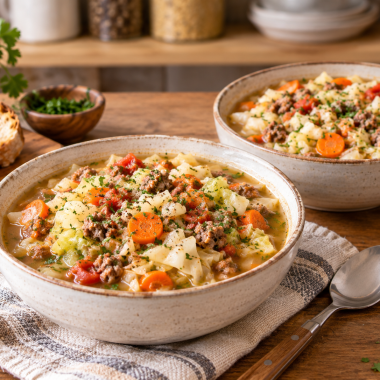
Creamy Pumpkin Lentil Soup is a hearty vegetable soup that brings together pumpkin, lentils, eggplant, carrots, spinach, tomatoes, and a touch of cream in one comforting bowl. The combination creates a soup that feels rich and satisfying without requiring complicated cooking techniques.
Finished with a spoonful of green pesto, this pumpkin lentil soup has a fresh, savory flavor that makes it especially appealing during cooler weather. It is also an easy option when you want a homemade dinner that can be prepared in about 40 minutes.
The beauty of this creamy pumpkin soup is the way several simple ingredients work together. Pumpkin provides a naturally sweet and earthy base, while lentils make the soup more substantial. Eggplant adds another layer of texture, carrots bring gentle sweetness, and spinach gives the finished dish a fresh vegetable element.
Pureed tomatoes contribute acidity and depth, while cream rounds everything out with a smooth consistency. A little green pesto on top adds a bright herbal note that cuts through the richness and makes every spoonful more interesting.
Why This Pumpkin Lentil Soup Works So Well
A hearty combination of vegetables and lentils
This is more than a basic pumpkin soup because the lentils and vegetables give it plenty of body. Yellow lentils, sometimes called blond lentils, or red lentils can be used here, making it easy to work with what you already have in the pantry. As the lentils cook in the tomato and broth mixture, they absorb the surrounding flavors and help create a naturally hearty texture. The pumpkin, carrots, and eggplant also soften during cooking, giving the soup a satisfying consistency.
Cream creates a smooth finish
The addition of cream near the end of cooking changes the character of the soup. Rather than being blended into a completely smooth purée, the cream coats the vegetables and lentils, creating a rich and silky broth while allowing the individual ingredients to remain noticeable. This makes the recipe particularly useful for people who enjoy creamy soups but still want some texture in every bite. If preferred, the vegetables can also be cooked until very tender for a softer, more blended result.
What Makes It an Easy Weeknight Soup
One of the biggest advantages of this creamy pumpkin lentil soup is its straightforward preparation. There is no need to roast the pumpkin separately or prepare several complicated components. The vegetables are diced, the aromatics are cooked in olive oil and butter, and the remaining ingredients are added directly to the pot. Once everything reaches a boil, the soup simmers until the lentils and vegetables are tender. Cream and spinach are stirred in at the end, keeping the final stages of cooking quick and simple.
Preparing all the vegetables before turning on the stove makes the process even easier. Dice the onion, carrots, pumpkin, and eggplant, then mince the garlic and keep everything ready beside the cooking pot. This small amount of preparation helps the recipe move smoothly because the vegetables are added in stages. Since the soup cooks in one large pot, there is also less washing up afterward, making it a practical choice for a busy evening.
Choosing the Pumpkin
Hokkaido pumpkin is a convenient choice
The original recipe uses unpeeled Hokkaido pumpkin, which is particularly convenient because its skin becomes tender during cooking. The pumpkin should still be diced into manageable pieces so it cooks evenly with the other vegetables. Its naturally sweet flavor pairs especially well with the savory broth, tomatoes, garlic, and lentils. If you are preparing the pumpkin yourself, take care when cutting it because firm winter squash can be difficult to slice.
Pre-cut pumpkin can also make this recipe faster to prepare. This is a useful option when you want homemade pumpkin soup without spending extra time peeling and chopping a whole squash. Since the pumpkin is cooked directly in the soup, the important thing is to cut the pieces into reasonably similar sizes. That helps them soften at roughly the same rate and prevents some pieces from becoming very soft while others remain firm.
Lentils Bring Hearty Texture
Yellow or red lentils both work
The recipe calls for yellow or red lentils, giving you some flexibility depending on what is available. Lentils are especially useful in vegetable soups because they cook relatively quickly and add a hearty quality without requiring a separate cooking process. They also absorb the flavors of the tomatoes, broth, garlic, and vegetables as they simmer, allowing the finished soup to taste well developed despite its relatively short cooking time.
When adding the lentils, rinse them according to your usual preparation method and make sure any unwanted debris is removed. They are then added directly to the pot with the pureed tomatoes and vegetable broth. As the mixture simmers, the lentils soften and become part of the soup’s texture. Red lentils tend to soften readily, while yellow lentils can provide a slightly more distinct texture depending on how long they cook.
Building the Flavor
Start with onion, garlic, and carrots
The first stage of cooking establishes the savory base of the soup. Olive oil and unsalted butter are heated together over medium heat before the onion, garlic, and carrots are added. Cooking these vegetables for a few minutes allows their flavors to develop before the pumpkin and eggplant go into the pot. This simple step gives the finished soup more depth than adding every ingredient at the same time.
Once the pumpkin and eggplant are added, salt and coarsely ground black pepper season the vegetables from the beginning. Cooking them briefly before adding the liquid helps the flavors combine and gives the vegetables a chance to begin softening. There is no need to brown them heavily; the goal is simply to warm and soften the vegetables while building a flavorful base for the broth.
Tomatoes and Broth Create the Soup Base
Pureed tomatoes and vegetable broth form the liquid foundation of this pumpkin lentil soup. The tomatoes add a gentle acidity that balances the sweetness of the pumpkin and carrots, while the broth provides the savory liquid needed for the lentils and vegetables to cook. Vegetable broth keeps the recipe vegetarian as written, although the original ingredient list also allows chicken broth as an alternative.
Once the lentils, tomatoes, and broth are added, bring the mixture to a boil. Cover the pot and reduce the heat to medium-low. Letting the soup simmer for around 20 minutes gives the vegetables and lentils time to become tender while allowing the flavors to meld. Keeping the pot covered during this stage helps maintain the liquid level and creates a steady cooking environment.
Adding Cream and Spinach
The final five minutes make a difference
Cream and spinach are added after the main simmering stage. This timing keeps the spinach fresh and vibrant while allowing the cream to blend into the broth without being exposed to a long period of cooking. Once both are stirred in, the soup simmers uncovered for another five minutes. During this time, the spinach wilts and the cream creates the smooth, rich character associated with a creamy pumpkin soup.
Taste the soup once the final simmer is complete. Because broth and pesto can vary in saltiness, the amount of seasoning needed at the end may differ slightly. Add additional salt or black pepper if necessary. This final taste is important because it lets you balance the soup before serving rather than relying entirely on the initial seasoning.
Chunky or Smoother: Choose Your Texture
One appealing feature of this recipe is that it does not require blending. The pumpkin, eggplant, carrots, lentils, and spinach can remain visible, giving the soup a chunky, rustic texture. This style works particularly well when you enjoy being able to identify the vegetables in each spoonful. It also saves the extra step of transferring hot soup to a blender.
If you prefer a smoother soup, some of the cooked vegetables can be blended to create a softer consistency while leaving part of the mixture chunky. This gives you a middle ground between a completely smooth pumpkin soup and a rustic vegetable-and-lentil soup. The cream will still provide richness, while the blended pumpkin contributes an especially silky texture.
Simple Ways to Change the Recipe
Swap spinach for kale
Spinach is stirred into the soup toward the end, but kale can be used when you want a heartier leafy green. Kale generally has a firmer texture, so it may need a little more time to soften depending on how finely it is chopped. This substitution keeps the overall character of the recipe while giving the soup a slightly more robust vegetable component.
Use zucchini instead of eggplant
Zucchini is another easy vegetable substitution if eggplant is not available or if you prefer its lighter texture. The zucchini can be diced in a similar way and added during the same stage as the pumpkin. Because zucchini cooks fairly quickly, avoid cutting it too small if you want it to retain some texture in the finished soup.
Choose pre-cut pumpkin
Using pre-cut pumpkin is one of the simplest ways to reduce preparation time. It is particularly helpful when cooking on a busy weeknight because cutting a whole pumpkin or squash can take longer than expected. Once the pumpkin is ready to use, the rest of the recipe follows the same straightforward cooking process.
Making a Dairy-Free Version
Coconut milk can replace the cream
For a dairy-free variation, coconut milk can be used in place of the cream. This changes the flavor slightly by introducing a subtle coconut character, but it still provides the creamy consistency that makes this soup so comforting. If you make this substitution, keep the rest of the ingredient list the same so the pumpkin, lentils, tomatoes, vegetables, and pesto remain the main flavors.
The original recipe uses both olive oil and unsalted butter at the beginning, so a completely dairy-free version would also require attention to the butter. If maintaining the original recipe exactly, use the listed ingredients as provided. For a dairy-free adaptation, the butter can be replaced with an appropriate dairy-free cooking alternative, while the cream can be replaced with coconut milk.
The Role of Green Pesto
Green pesto is used as a finishing touch rather than being cooked into the soup. This is a useful technique because pesto retains its fresh herbal character when added at serving time. A small spoonful on top introduces a concentrated burst of flavor against the creamy pumpkin and lentil base. It also gives the finished soup an attractive contrast of color.
Although pesto is not essential to the cooking process, it contributes a noticeable finishing note. If you are serving the soup to guests, adding a little pesto just before serving can make an otherwise simple bowl of soup look more polished. It is best treated as a topping so each person can control how much they want.
What to Serve With Pumpkin Lentil Soup
This creamy pumpkin lentil soup is substantial enough to serve as a light main meal, especially because it contains lentils and several vegetables. A slice of crusty bread can be served alongside it for dipping into the creamy broth. Toasted bread, warm rolls, or a simple side salad can also complement the soup without competing with its rich pumpkin flavor.
For a more filling dinner, serve the soup as part of a larger meal with a fresh vegetable side or a simple grain-based accompaniment. The soup is already flavorful, so side dishes with straightforward seasoning tend to work best. If you are serving it for lunch, a bowl of this soup with bread can make a convenient and satisfying meal without requiring several separate dishes.
Notes for the Best Results
Cut the vegetables evenly
Try to keep the pumpkin, carrots, and eggplant pieces reasonably similar in size. Even pieces cook more consistently, which helps prevent some vegetables from becoming mushy while others remain firm. The soup is forgiving, but even cutting makes the finished texture noticeably better.
Do not rush the simmering stage
The 20-minute covered simmer is important because it allows the lentils and vegetables to cook through and gives the broth time to develop flavor. Keep the heat at medium-low after bringing the soup to a boil. A gentle simmer is preferable to aggressive boiling, particularly when cooking lentils and tender vegetables.
Taste before serving
Seasoning should always be checked at the end. Vegetable broth, chicken broth, pesto, and canned or prepared tomato products can have different salt levels, so the exact amount needed may vary. Taste the finished soup after the cream and spinach have been incorporated, then adjust the salt and black pepper as needed.
Frequently Considered Questions
Can I make this soup without blending it?
Yes. This recipe is designed to work without blending, and keeping the vegetables and lentils intact creates a hearty, rustic texture. If you prefer a smoother consistency, you can partially blend the soup instead. This gives you a creamy base while retaining some pieces of pumpkin, eggplant, carrots, and lentils.
Can I use red lentils instead of yellow lentils?
Yes. The recipe specifically allows yellow or red lentils. Both can work well in the soup, although they may produce slightly different textures as they cook. Red lentils generally soften more readily, which can make the soup feel thicker, while yellow lentils may retain a little more structure depending on cooking time.
Can I prepare the soup ahead of time?
This soup can be prepared in advance and gently reheated when needed. If you know you will be making it ahead, store it properly and reheat it over moderate heat rather than boiling it aggressively. The texture may thicken as it sits because of the lentils, so a small amount of additional broth can be useful when reheating if the soup becomes thicker than desired.
Is pesto necessary?
No, pesto is not required for the soup itself to work. However, it adds a fresh herbal flavor and a colorful finishing touch. If you enjoy pesto, it is worth adding a small spoonful to each serving. If you prefer the straightforward pumpkin and lentil flavors, the soup can be enjoyed without it.

Healthy Creamy Pumpkin Lentil Soup
 Recipe by admin
Creamy pumpkin lentil soup with eggplant and a swirl of green pesto.
4
servings10
minutes30
minutes422
kcal40
minutesIngredients
1 tbsp olive oil
1 tbsp unsalted butter
1 onion – diced
2 garlic cloves – minced
2 carrots – peeled and diced
1.1 pounds pumpkin – unpeeled Hokkaido pumpkin, diced
1 eggplant – diced
1 tsp salt
1 tsp coarsely ground black pepper
½ cup lentils – yellow or red
1 cup pureed tomatoes
4 cups vegetable broth – or chicken broth
1 cup cream 20% fat
1 cup spinach
green pesto – for topping
Directions
- Dice the pumpkin, carrots, eggplant, and onion. Mince the garlic cloves and have all the vegetables prepared before beginning the cooking process.
- Heat the olive oil and unsalted butter in a large pot over medium heat. Add the diced carrots, onion, and minced garlic. Cook for 3 minutes, stirring occasionally.
- Add the diced pumpkin and eggplant to the pot. Season with salt and coarsely ground black pepper. Cook for another 3 minutes, stirring so the vegetables are evenly coated and begin to soften.
- Stir in the lentils, pureed tomatoes, and vegetable broth or chicken broth. Mix everything together and bring the soup to a boil.
- Cover the pot, reduce the heat to medium-low, and simmer for 20 minutes. Continue cooking until the vegetables and lentils are tender.
- Stir the cream and spinach into the soup. Leave the pot uncovered and simmer for another 5 minutes, allowing the spinach to wilt and the cream to blend into the broth.
- Taste the soup and adjust the salt and black pepper if needed. Ladle into bowls and finish each serving with green pesto.
Nutrition Facts
- Calories: 422kcal
- Fat: 26g
- Carbohydrates: 42g
- Fiber: 13g
- Sugar: 14g
- Protein: 11g