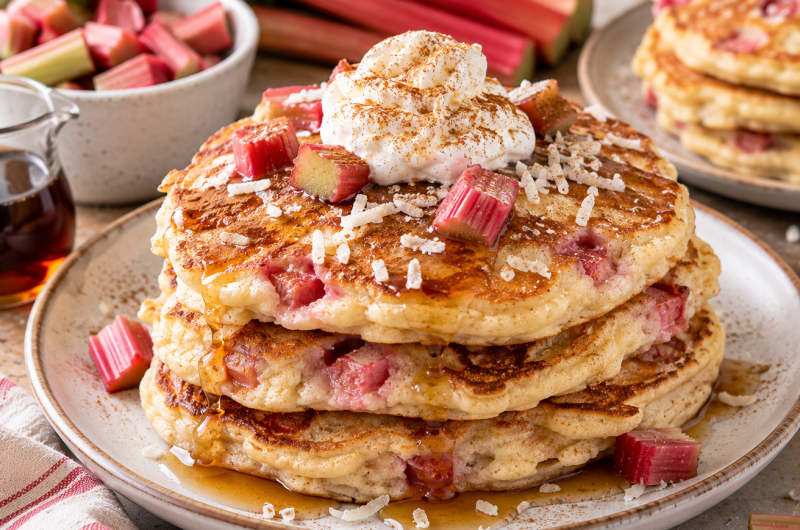
Easy Rhubarb Pancakes are soft, fluffy breakfast pancakes filled with tart rhubarb and warm cinnamon, with a subtle coconut flavor from coconut extract and unsweetened coconut flakes. They are an excellent way to turn rhubarb into something different from the usual pies, cakes, and crumbles. Best of all, the rhubarb does not require lengthy stewing before it is added to the pancake batter, helping keep the total preparation time to approximately 20 minutes.
These homemade rhubarb pancakes combine a familiar pancake base with an interesting mixture of fruit and flavorings. All-purpose flour and baking powder provide the structure and lift, while milk, egg, and melted butter create a tender batter. Cinnamon brings warmth, vanilla adds sweetness to the aroma, and coconut provides a mild tropical note that works surprisingly well with rhubarb’s naturally tart character. The finished pancakes can be served hot for breakfast or brunch.
What Makes These Rhubarb Pancakes Different?
Rhubarb is commonly used in sweet baked desserts, but it can also add plenty of character to homemade pancakes. Instead of preparing a separate rhubarb compote or sauce, this recipe adds the fruit directly to the batter after a very short preparation step. This distributes pieces of rhubarb throughout the pancakes, allowing its tart flavor to appear in each serving.
Another distinctive feature is the cinnamon-coconut combination. The recipe contains one teaspoon of cinnamon, one-quarter teaspoon of coconut extract, and two to three tablespoons of unsweetened coconut flakes. These ingredients provide more complexity than a standard fruit pancake while still allowing rhubarb to remain noticeable. Vanilla extract rounds out the flavor without requiring a complicated spice mixture.
Fresh or Frozen Rhubarb
The recipe can be made with either fresh or frozen rhubarb, but the amounts and preparation are different. When using frozen rhubarb, the original recipe calls for two cups. Microwave the frozen rhubarb for one minute and 30 seconds, then drain it before adding it to the batter. This quick step softens the fruit without requiring traditional stovetop stewing.
When using fresh rhubarb, the recipe specifies one and a half cups instead of two cups. Add two teaspoons of water when preparing the fresh rhubarb according to the source instructions. Maintaining these quantities is important because fresh and frozen rhubarb behave differently. The recipe card therefore preserves both measurements exactly instead of treating them as interchangeable cup-for-cup options.
Why Rhubarb Works in Pancakes
Rhubarb has a naturally tart flavor that provides a refreshing contrast to the sweeter pancake batter. The recipe includes one-half cup of granulated white sugar, but the fruit still contributes enough sharpness to keep the finished pancakes from tasting simply sweet. This makes rhubarb especially suitable for pancakes that may later be served with sweet toppings.
The fruit also softens as the pancakes cook, creating tender pieces within the crumb. Because the rhubarb is mixed directly into the batter, there is no need to prepare a separate fruit filling. This makes the recipe relatively quick while still providing a noticeable rhubarb flavor throughout each large pancake.
Preparing the Rhubarb
Begin with the rhubarb because it needs to be ready before the batter is completed. For the frozen option, place two cups of frozen rhubarb in the microwave and cook it for one minute and 30 seconds. Drain it after heating so unnecessary liquid does not enter the pancake batter.
For fresh rhubarb, use the specified one and a half cups and add two teaspoons of water during preparation. The goal is to prepare the fruit quickly rather than cooking it into a smooth sauce. Pieces of rhubarb should remain recognizable because they will finish cooking after they are incorporated into the batter and portioned onto the hot skillet.
Preparing the Skillet or Griddle
Heat a skillet or griddle over medium heat for approximately three minutes before cooking the pancakes. Proper preheating is important because pancake batter should begin cooking soon after it reaches the surface. A pan that is not warm enough may cause the batter to spread excessively and can make it harder to develop an evenly golden exterior.
The original instructions note that a non-stick skillet does not necessarily require additional cooking spray. If the cooking surface is not non-stick, it may need appropriate preparation to prevent sticking. Keep the heat around medium while cooking and pay attention to the pancake surface rather than relying only on an exact cooking time.
Combining the Dry Ingredients
In a large mixing bowl, combine one and one-third cups all-purpose flour, three teaspoons baking powder, one teaspoon cinnamon, one-quarter teaspoon salt, one-half cup granulated white sugar, and two to three tablespoons unsweetened coconut flakes. Mix these dry ingredients well before adding any liquid.
Combining them separately helps distribute the baking powder, cinnamon, salt, sugar, and coconut throughout the flour. This is particularly important for baking powder because it provides much of the lift that creates the fluffy pancake texture. Even distribution also prevents one pancake from receiving noticeably more cinnamon, coconut, or salt than another.
Mixing the Wet Ingredients
In a separate medium bowl, whisk together one egg, one and a half cups milk, three tablespoons melted butter, one-half teaspoon vanilla extract, and one-quarter teaspoon coconut extract. The butter should be measured after melting, as specified in the original recipe.
Whisking the wet ingredients separately makes it easier to distribute the egg, butter, milk, and extracts before they meet the flour. Vanilla provides a familiar sweet aroma, while coconut extract reinforces the flavor of the coconut flakes. Once the wet mixture is uniform, make a well in the center of the prepared dry ingredients.
Combining Wet and Dry Mixtures
Pour the wet mixture into the well created in the dry ingredients. Stir quickly until the ingredients are just combined. The batter should still contain some lumps, and that is completely acceptable for this recipe. It is more important to avoid excessive stirring than to force the batter into a perfectly smooth consistency.
Overmixing pancake batter can encourage too much gluten development in the flour, resulting in pancakes that are firmer or denser than intended. Stop stirring once there are no major pockets of completely dry flour. The remaining small lumps will generally disappear or become unnoticeable during cooking.
Adding Rhubarb to Pancake Batter
Once the wet and dry ingredients have been combined, add the prepared rhubarb to the pancake batter. Mix gently until the fruit is distributed throughout. Avoid vigorously beating the mixture at this point because the batter has already been combined and only needs enough movement to spread the rhubarb reasonably evenly.
Rhubarb pieces can make the batter look more textured than standard pancake batter, which is expected. Try to include some fruit in each portion when transferring batter to the skillet. This gives the finished pancakes a more consistent rhubarb flavor and prevents the final pancake from containing most of the fruit left at the bottom of the bowl.
How Much Batter to Use Per Pancake
The original recipe uses approximately two-thirds of a cup of batter for each pancake. This creates relatively large pancakes, approximately eight inches in size, and the recipe produces about five pancakes. Using a measuring cup is helpful because consistent portions are more likely to cook at a similar rate.
Pour the batter onto the preheated skillet or griddle without pressing or spreading it aggressively. Allow the heat to begin setting the underside naturally. Because these are large pancakes containing pieces of rhubarb, give them enough time to cook before attempting to flip them.
Knowing When to Flip the Pancakes
Cook the first side for approximately three minutes over medium heat. Watch the surface of the pancake as it cooks. Bubbles should begin forming, while the underside should develop a golden-brown appearance. These visual cues are more useful than flipping based solely on the clock.
Wait until the pancake has enough structure to be turned cleanly. Flipping too early can cause a large pancake to break, especially when pieces of rhubarb are distributed throughout it. Slide a broad spatula underneath, lift carefully, and turn the pancake in one controlled movement once the underside is properly golden.
Cooking the Second Side
After flipping, cook the second side for approximately three additional minutes or until it becomes golden brown and the center is cooked. The exact time may vary slightly depending on the skillet, stove, pancake thickness, and temperature, so use both timing and appearance as guides.
Continue the same process with the remaining batter. Try to maintain a consistent pan temperature between batches. If the skillet becomes progressively hotter, later pancakes can brown too quickly on the outside before the centers have enough time to cook. Adjust the heat slightly if necessary while keeping the cooking method consistent.
How to Keep Rhubarb Pancakes Fluffy
Three teaspoons of baking powder provide substantial leavening for the one and one-third cups of all-purpose flour in this recipe. For the baking powder to do its job effectively, use a fresh product that has not been sitting open far beyond its useful period. The batter should also be cooked reasonably soon after mixing.
Equally important is gentle mixing. Once the wet ingredients are poured into the flour mixture, stir only until combined. A lumpy batter is preferable to one that has been aggressively beaten until perfectly smooth. This simple technique helps preserve a softer pancake texture and requires no additional ingredients or complicated preparation.
Cinnamon and Coconut Flavor
Cinnamon and coconut give these pancakes a flavor profile that distinguishes them from ordinary rhubarb pancakes. One teaspoon of cinnamon provides warmth without overwhelming the fruit, while coconut extract adds concentrated coconut aroma. Unsweetened coconut flakes contribute both flavor and a small amount of texture throughout the pancakes.
Vanilla extract connects these flavors by adding a familiar background note. Together, vanilla, cinnamon, and coconut soften the sharp character of rhubarb without hiding it. The result is a pancake with several layers of flavor rather than simply a sweet batter containing fruit.
Why Melted Butter Is Important
The recipe uses three tablespoons of melted butter, measured after melting. Butter contributes richness, moisture, and flavor to the pancake batter. Because it is melted, it can be whisked directly into the milk, egg, and extracts and distributed throughout the mixture more easily than solid butter.
Use the full original quantity to preserve the intended texture and flavor. If the melted butter is extremely hot, allow it to cool somewhat before whisking it with the egg and milk. The goal is for the ingredients to combine smoothly without exposing the egg to excessive heat.
Serving Easy Rhubarb Pancakes
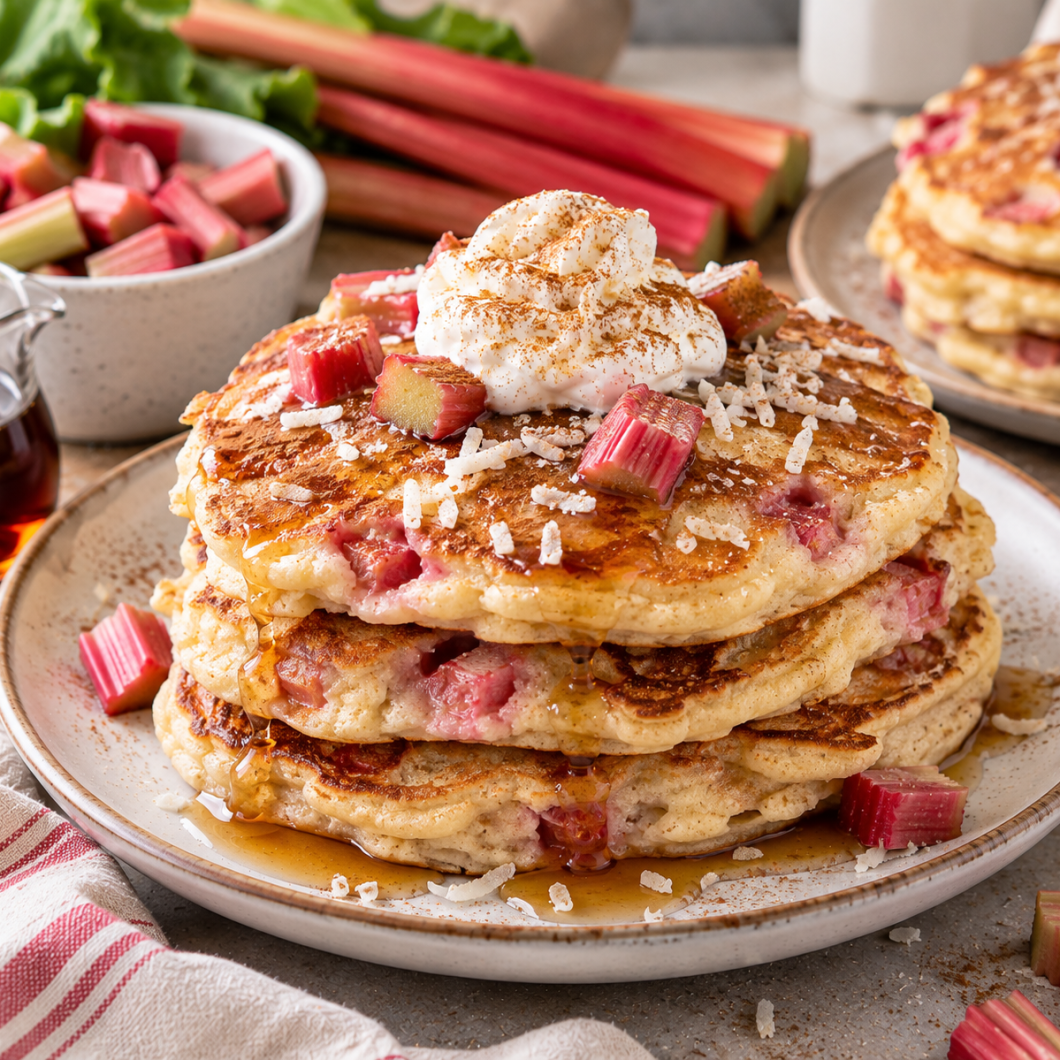
Serve the pancakes hot for the softest and fluffiest texture. The original recipe suggests optional garnishes such as whipped cream, syrup, cinnamon, coconut, and rhubarb. These toppings are not required ingredients, so they remain optional serving suggestions rather than being added to the main ingredient list.
Because the batter already contains sugar, cinnamon, coconut, and fruit, the pancakes have flavor even without elaborate toppings. A topping can be selected according to preference, but remember that syrups, whipped cream, and other additions will change the nutritional profile beyond the values supplied for the basic pancake recipe.
Can Rhubarb Pancakes Be Made Ahead?
These pancakes can be prepared ahead when a quick breakfast is needed later. Cook them completely, allow them to cool appropriately, and store them in a suitable covered container. Keeping individual pancakes separated can make it easier to remove only the number needed for reheating.
Reheated pancakes may not have exactly the same exterior texture as pancakes served directly from the skillet, but they can still make a convenient breakfast. Gentle reheating is preferable to excessive heat, which can dry out the pancakes. Preparing them ahead can be particularly useful when rhubarb is available and you want to turn it into several ready-to-eat breakfast portions.
Can Rhubarb Pancakes Be Frozen?
Cooked rhubarb pancakes can also be frozen for longer storage. Allow the pancakes to cool before freezing so unnecessary steam is not trapped around them. Separating individual pancakes with suitable freezer-safe material can prevent them from sticking together and allows single portions to be removed more easily.
When ready to eat, reheat until warmed through. Freezing is particularly convenient because this recipe makes large pancakes, and not every household will necessarily eat the complete batch at once. It also provides a way to prepare a rhubarb breakfast in advance during the season when fresh rhubarb is readily available.
Ingredient Variations Mentioned in the Original Recipe
The original recipe provides several substitution ideas, including different types of milk and dairy-free alternatives. These ideas can be useful when adapting the pancakes for individual preferences, but changing ingredients may also alter consistency, flavor, and nutritional information. For that reason, the core recipe card below retains the original ingredient formulation rather than incorporating substitutions.
The source also suggests that coconut extract can be omitted in favor of additional vanilla and that different toppings can be used. These are optional variations rather than part of the main recipe. Keeping them separate protects the original ingredient list and gives readers a clear distinction between the tested base recipe and possible adaptations.
Notes for Perfect Rhubarb Pancakes
Use fresh baking powder and accurately measure the flour and liquid ingredients. Preheat the skillet for approximately three minutes before adding the first portion of batter. Most importantly, avoid overmixing. Stir the wet and dry ingredients only until combined, even if the finished batter contains a few small lumps.
Use approximately two-thirds cup batter for each large pancake and wait until bubbles appear on the surface and the underside is golden before flipping. Cook the second side until golden and fully set. Serve the pancakes warm when possible, and distribute the rhubarb throughout the batter so each pancake contains some fruit.
Understanding the Nutritional Information
The supplied nutritional information lists approximately 541 calories per pancake, with 61 grams carbohydrates, 10 grams protein, 31 grams fat, 8 grams fiber, and 27 grams sugar. It also lists 25 grams saturated fat, 1 gram polyunsaturated fat, 3 grams monounsaturated fat, and 0.3 gram trans fat.
Additional reported values include approximately 54 milligrams cholesterol, 228 milligrams sodium, 733 milligrams potassium, 447 IU vitamin A, 4 milligrams vitamin C, 260 milligrams calcium, and 3 milligrams iron. These figures should be treated as estimates. Ingredient brands, exact pancake size, milk selection, coconut quantity, and optional toppings can all affect the final nutritional values.
Why These Easy Rhubarb Pancakes Work
Easy Rhubarb Pancakes offer a practical way to use rhubarb in a breakfast or brunch recipe rather than a traditional baked dessert. They combine tart fruit with cinnamon, vanilla, and coconut in a thick pancake batter that takes approximately 20 minutes from preparation to cooking. There is no need to make a separate rhubarb sauce or spend a long time stewing the fruit beforehand.
For readers searching for easy rhubarb pancakes, fluffy rhubarb pancakes, fresh rhubarb breakfast recipes, frozen rhubarb pancakes, cinnamon rhubarb pancakes, coconut pancakes, or easy spring breakfast ideas, this recipe provides a distinctive option. The key techniques are simple: prepare the rhubarb, preheat the skillet, avoid overmixing the batter, wait for bubbles before flipping, and serve the pancakes while they are warm.
Rhubarb Pancakes
Soft and fluffy Rhubarb Pancakes made with cinnamon, vanilla, coconut, and tender pieces of rhubarb.
5
servings10
minutes10
minutes541
kcal20
minutesIngredients
1⅓ cups all-purpose flour
3 teaspoons baking powder
1 teaspoon cinnamon
¼ teaspoon salt
½ cup white granulated sugar
1 egg
1½ cups milk (1% milk used in the original recipe)
3 tablespoons melted butter, measured after melting
½ teaspoon vanilla extract
¼ teaspoon coconut extract
2–3 tablespoons unsweetened coconut flakes
2 cups frozen rhubarb
Directions
- Microwave 2 cups frozen rhubarb for 1 minute 30 seconds, then drain. If using fresh, use 1½ cups rhubarb with 2 teaspoons water.
- Preheat a non-stick skillet or griddle over medium heat for 3 minutes.
- Mix flour, baking powder, cinnamon, salt, sugar, and coconut flakes in a large bowl.
- In another bowl, whisk the egg, milk, melted butter, vanilla, and coconut extract.
- Make a well in the dry ingredients and pour in the wet mixture.
- Stir quickly just until combined. Leave a few lumps in the batter.
- Gently mix in the prepared rhubarb.
- Pour approximately ⅔ cup batter onto the hot skillet for each pancake.
- Cook for about 3 minutes, until bubbles appear and the underside is golden brown.
- Flip carefully and cook for approximately 3 more minutes until golden and cooked through.
- Repeat with the remaining batter.
- Serve hot.
Nutrition Facts
5 servings per container
- Amount Per ServingCalories541
- % Daily Value *
- Total Fat
31g
40%
- Total Carbohydrate
61g
23%
- Protein 10g 20%
* The % Daily Value tells you how much a nutrient in a serving of food contributes to a daily diet. 2,000 calories a day is used for general nutrition advice.