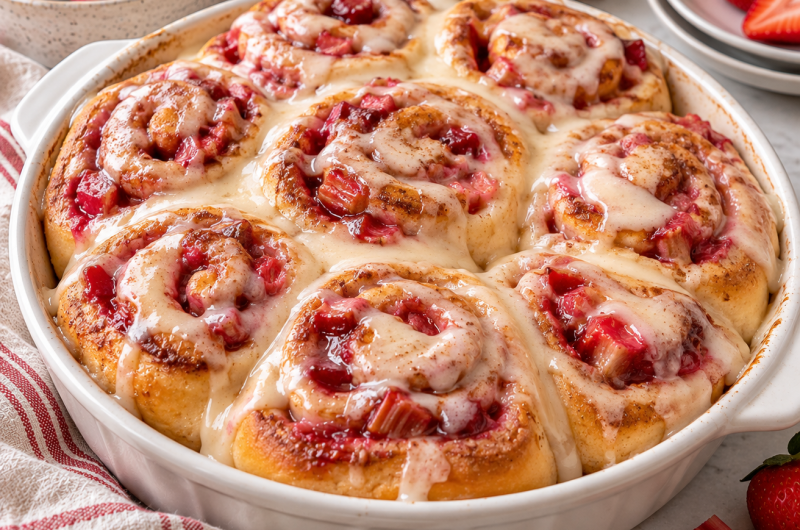
Strawberry Rhubarb Cinnamon Rolls combine soft, buttery brioche dough with a sweet-tart strawberry rhubarb filling, cinnamon sugar, and smooth cream cheese icing. Each roll has several layers of flavor: rich homemade brioche, juicy fruit compote, warm cinnamon, and a lightly sweet vanilla cream cheese topping. The combination creates an impressive homemade pastry that works equally well for breakfast, brunch, or dessert.
Unlike traditional cinnamon rolls made with a simpler yeast dough, these Strawberry Rhubarb Cinnamon Brioche Rolls begin with a rich brioche dough containing eggs and a generous amount of butter. The dough requires an overnight refrigerator rest, so this is best considered a make-ahead recipe rather than a same-morning preparation. The extra time develops a dough that is smooth, tender, buttery, and easy to roll once properly chilled.
What Makes Strawberry Rhubarb Cinnamon Rolls Special?
The defining feature of these homemade cinnamon rolls is the combination of strawberry and rhubarb layered over cinnamon sugar. Strawberries bring natural fruit sweetness, while rhubarb provides a pleasantly tart contrast. Instead of using a heavy fruit preserve, the recipe prepares a simple homemade compote using strawberries, rhubarb, turbinado sugar, cornstarch, salt, and lemon juice.
The fruit filling is spread over a cinnamon-sugar layer before the dough is rolled and sliced. As the rolls bake, the cinnamon, sugar, butter, and fruit flavors come together between the brioche spirals. A cream cheese icing is added only after the rolls have cooled slightly, providing a creamy finish without replacing the strawberry-rhubarb flavor as the main attraction.
Understanding the Brioche Dough
Brioche is an enriched yeast dough containing eggs and a relatively high proportion of butter. This recipe uses all-purpose flour, caster sugar, salt, three large eggs, warm milk, yeast, and unsalted butter. The finished dough is quite different from basic bread dough because the eggs and butter contribute richness, tenderness, and a soft interior.
The complete brioche dough recipe makes enough for two portions. According to the original instructions, only half of the prepared dough is used to make the nine Strawberry Rhubarb Cinnamon Rolls. The remaining half can be frozen for later use. This detail is important because using the entire dough recipe for nine rolls would significantly change their intended size and filling-to-dough ratio.
Working With Fresh or Dried Yeast
The brioche dough calls for 13 grams, or one tablespoon, of fresh yeast, with 6.5 grams dried yeast provided as the original alternative. The yeast is first dissolved in 30 grams, or two tablespoons, of warmed whole milk. The source also permits half-and-half cream in place of the whole milk when available.
The milk should be warm rather than hot, with the original recipe specifying a range of approximately 26°C to 32°C. This temperature provides a suitable environment for activating the yeast without exposing it to excessive heat. Stir the crumbled fresh yeast into the warm milk until it dissolves before incorporating it into the remaining dough ingredients.
Mixing the Brioche Dough
Add the all-purpose flour, caster sugar, and salt to the bowl of a stand mixer and combine them on low speed. Add the eggs one at a time, followed by the dissolved yeast mixture. Continue mixing on low until the ingredients have come together, stopping when necessary to scrape down the sides of the bowl.
At this stage, the dough has not yet developed its final smooth, glossy appearance. Brioche requires a relatively long mixing process because the butter is incorporated gradually and the dough needs enough time to develop strength. Following the mixing sequence patiently is important for creating the elastic structure needed to support the rich butter and eggs.
Adding Butter to Brioche Dough
The recipe uses 145 grams, or approximately two-thirds cup, of unsalted butter. The butter should be cubed and at room temperature, but it should not be excessively warm or greasy. Add it gradually while the mixer continues running at low speed, incorporating only a few cubes at a time.
Once all the butter has been added, increase the mixer to medium speed. Continue mixing until the dough becomes smooth and shiny and begins pulling away from the sides of the mixing bowl. According to the original instructions, this stage can take approximately 15 to 25 minutes and should not be rushed. Proper mixing is a major part of achieving the desired brioche texture.
The First Rise
Once the dough is smooth and properly developed, gently shape it into a ball and transfer it to a lightly oiled bowl. Cover the bowl and leave the dough at room temperature for approximately one hour, or until it has doubled in size.
The rise allows the yeast to begin developing the dough before its long refrigerated rest. Look at the volume rather than treating exactly one hour as the only indicator. Temperature can influence how quickly yeast dough rises. Once the dough has roughly doubled, gently punch it down before covering the bowl again and moving it to the refrigerator.
Why the Dough Rests Overnight
The brioche dough should be refrigerated overnight after its first rise. This is an important part of the recipe rather than an optional waiting period. Chilling gives the butter-rich dough time to firm, making it considerably easier to handle and roll the following day.
The overnight rest also makes the preparation more manageable because the most time-consuming dough work is completed a day before the rolls are assembled and baked. When ready to continue, remove the chilled dough from the refrigerator, transfer it to a lightly floured surface, and gently punch it down again before shaping.
Dividing the Brioche Dough
The complete brioche dough recipe makes twice the amount needed for this batch of Strawberry Rhubarb Cinnamon Rolls. After the overnight rest, divide the dough in half. Use one half to make the nine rolls and reserve the second half as directed in the original recipe.
The unused portion can be wrapped appropriately and frozen for up to one week. If working with previously frozen brioche dough, the source recommends allowing it to defrost overnight in the refrigerator before continuing. This makes it possible to complete the more involved dough preparation once while saving another portion for a future bake.
Making the Strawberry Rhubarb Filling
The homemade fruit filling requires one cup diced strawberries and one-half cup diced rhubarb. Combine these with one tablespoon raw cane or turbinado sugar, one-half teaspoon cornstarch, a dash of salt, and a splash of lemon juice in a saucepan.
Cook the mixture over medium heat, allowing it to simmer while stirring often. The strawberries and rhubarb soften and release their juices while the cornstarch helps the mixture thicken. Continue until the filling reaches a compote-like consistency rather than remaining watery. Once thickened, remove it from the heat and allow it to cool completely before spreading it over the brioche dough.
Why the Fruit Filling Must Cool
Cooling the strawberry rhubarb compote completely is important because warm filling can soften the butter-rich brioche dough and make rolling more difficult. A hot or overly loose filling can also escape from the dough as it is rolled, sliced, and transferred to the baking dish.
Prepare the filling early enough to give it adequate cooling time. The cornstarch helps thicken the released fruit juices, while the small amount of sugar balances rhubarb’s tart flavor without turning the filling into an excessively sweet jam. The lemon juice provides additional brightness, and the dash of salt helps balance the overall flavor.
Preparing the Cinnamon Sugar Mixture
The cinnamon layer uses one-quarter cup raw cane sugar, one-half teaspoon cinnamon, and three tablespoons melted unsalted butter. Mix these ingredients together in a small bowl and set the mixture aside until the brioche dough has been rolled into its rectangle.
This layer is important because the recipe is not simply a fruit-filled brioche roll. The cinnamon sugar sits directly against the dough, while the strawberry rhubarb filling is spread over it. The two layers create the distinctive flavor of Strawberry Rhubarb Cinnamon Rolls, combining familiar cinnamon-roll warmth with a brighter seasonal fruit filling.
Rolling the Brioche Dough
Place the half portion of chilled brioche dough on a lightly floured work surface. Roll it into a rectangle measuring approximately 16 by 9 inches. Try to maintain a reasonably even thickness so the finished rolls bake at a similar rate.
Chilled brioche is easier to handle because the butter inside the dough remains firm. Work steadily rather than leaving it in a warm kitchen for a long period. If the dough becomes excessively soft, rolling and cutting can become more difficult. Once the 16-by-9-inch rectangle is ready, the cinnamon and fruit layers can be added.
Layering Cinnamon and Strawberry Rhubarb Filling
Spread or sprinkle the prepared cinnamon sugar mixture evenly over the rolled brioche dough. Try to cover the surface consistently so each finished roll contains a similar amount of cinnamon, sugar, and butter.
Next, spread the completely cooled strawberry rhubarb filling over the cinnamon layer. Distribute it carefully without pressing too aggressively into the dough. Some messiness during rolling is normal because the filling contains soft fruit and juices. The important goal is to maintain an even enough layer that the strawberry-rhubarb mixture appears throughout the spiral after the dough is rolled and sliced.
Rolling the Dough Into a Log
Starting from the appropriate long edge, carefully roll the filled dough into a tight log. Work steadily and keep the roll reasonably even from one end to the other. The fruit filling can make this process slightly more delicate than preparing plain cinnamon rolls, so avoid squeezing the log so firmly that the filling is forced out.
A reasonably tight roll helps create defined spirals and prevents large empty spaces from forming inside the baked rolls. Once the log is complete, position it with the seam underneath if practical. It is then ready to be divided into the nine portions specified in the original recipe.
Cutting Nine Cinnamon Rolls
Use a bread knife to cut the filled brioche log into nine roll slices. A serrated knife can move through the soft dough without requiring as much downward pressure, helping preserve the spiral shape.
Try to make the nine portions reasonably equal so they rise and bake at a similar rate. Small variations are normal in homemade rolls and do not need to be corrected aggressively. The fruit filling may appear at the cut edges, which is expected. Transfer each roll carefully to the prepared baking dish while keeping the spiral facing upward.
Preparing the Baking Dish
Butter an 8-inch round or square baking dish as specified by the original recipe. Arrange all nine rolls inside, leaving them enough space to expand during the second rise. They may initially look relatively separate, but the dough becomes noticeably puffier as the yeast becomes active again.
Using the stated 8-inch pan keeps the rolls close enough to support one another as they rise and bake. This arrangement contributes to soft sides where the rolls meet, while the exposed upper surfaces develop a deeper golden color in the oven.
The Second Rise
After arranging the nine rolls in the buttered baking dish, set them aside to rise for approximately one hour. This second rise is essential because rolling, filling, and cutting have compressed the dough. The individual rolls need time to become light and puffy again before entering the oven.
The rolls should visibly expand during this period. Do not rush them into the oven simply because the dough completed a rise the previous day. The overnight refrigeration slows yeast activity, and the shaping process changes the dough structure. The final rise helps restore the light texture expected from freshly baked brioche.
Baking Strawberry Rhubarb Cinnamon Rolls
Preheat the oven to 350°F while the rolls complete their final rise. Once they are visibly puffed, place the baking dish into the preheated oven and bake for approximately 25 to 30 minutes.
The rolls should become golden brown and be cooked through in the center. Because brioche contains butter, eggs, and sugar, the exposed surface develops an attractive golden color as it bakes. Check the center rolls as well as those around the edges, since the middle of a closely packed pan can take slightly longer to cook completely.
Making the Cream Cheese Icing
The cream cheese icing requires one cup sifted powdered sugar, one-eighth cup milk, one-quarter teaspoon pure vanilla extract, and two ounces cream cheese at room temperature. Sifting the powdered sugar before mixing helps reduce lumps and creates a smoother finished icing.
Place the sifted powdered sugar in the bowl of a stand mixer, add the remaining icing ingredients, and whip until creamy and smooth. Room-temperature cream cheese combines more easily with the milk and sugar than very cold cream cheese. The finished icing should be smooth enough to spread over the rolls once they have cooled slightly.
When to Ice the Rolls
After baking, remove the rolls from the oven and place the baking dish on a rack. Allow them to cool slightly before adding the cream cheese icing. Applying the icing immediately to extremely hot rolls can cause it to melt rapidly and disappear into the pan rather than remaining visible across the tops.
The rolls do not need to become completely cold. A little warmth can soften the icing pleasantly while still allowing it to coat the brioche. Spread the prepared icing over the rolls according to preference, keeping the strawberry rhubarb spirals and golden baked surface visible if desired.
The Strawberry and Rhubarb Flavor Balance
Strawberry and rhubarb are often paired because their flavors naturally complement each other. Strawberries provide sweetness and familiar berry flavor, while rhubarb contributes a sharper, tangier quality. This recipe uses twice as much strawberry as rhubarb by volume, with one cup strawberries and one-half cup rhubarb.
Only one tablespoon of raw cane or turbinado sugar is added to the fruit filling. The finished rolls receive additional sweetness from the cinnamon sugar mixture and cream cheese icing, so the compote itself does not need to become heavily sweetened. This preserves the contrast between tart fruit and rich brioche.
Why Brioche Works for Cinnamon Rolls
Brioche is particularly suitable for these rolls because its rich, tender dough provides a soft foundation for the fruit and cinnamon filling. Three eggs and 145 grams of butter make the dough richer than standard cinnamon-roll dough, while the relatively small amount of caster sugar keeps the bread itself from becoming excessively sweet.
This means the sweetness can come primarily from the filling and icing. The brioche contributes buttery flavor and a soft, fluffy interior, while its exposed surface develops a delicate golden crust. The contrast between the baked exterior and tender inner spirals is especially appealing when the rolls are served slightly warm.
Make-Ahead Strawberry Rhubarb Cinnamon Rolls
This recipe naturally lends itself to advance preparation because the brioche dough must spend a night in the refrigerator. Prepare the dough on the first day, complete its initial one-hour rise, punch it down, cover it, and refrigerate it overnight.
The following day, prepare or finish cooling the strawberry rhubarb filling, divide the dough, roll one half into the required rectangle, add the fillings, form the rolls, and allow the second one-hour rise. This two-day approach means the actual baking day does not require making the entire brioche dough from beginning to end.
Storing the Brioche Dough
After the chilled dough has been punched down for the second time, the original instructions note that it can be wrapped appropriately and stored in the refrigerator for up to two days. The unused half can also be frozen for up to one week.
If using frozen brioche dough later, move it to the refrigerator and let it defrost overnight. Keeping the dough cold during thawing helps preserve its butter-rich structure and prepares it for rolling the following day. Once thawed, continue with the filling, shaping, rising, and baking process.
Storing Strawberry Rhubarb Cinnamon Rolls
The original recipe recommends storing the finished rolls in the refrigerator to keep them fresh. Because the rolls are topped with cream cheese icing, refrigerated storage is also the appropriate approach for leftovers.
Before serving refrigerated rolls, they can be warmed gently in the oven. A little warmth helps restore some of the soft brioche texture and makes the cinnamon and fruit aromas more noticeable. Avoid overheating iced rolls, since excessive heat can melt the cream cheese topping completely and may dry the brioche.
Notes for Better Brioche Cinnamon Rolls
Keep the butter at room temperature but not excessively warm when incorporating it into the brioche. Add the cubes gradually rather than adding all the butter at once. After the butter is incorporated, give the dough the full mixing time needed to become smooth, shiny, and able to pull away from the bowl.
Allow both rises enough time, and do not skip the overnight refrigeration. Cool the strawberry rhubarb filling completely before spreading it onto the dough. When forming the log, roll firmly enough to create defined spirals but not so tightly that the fruit filling is squeezed out. Finally, allow the baked rolls to cool slightly before adding the cream cheese icing.
Understanding the Recipe Timing
The listed active preparation time is approximately one hour and 30 minutes, while baking takes around 25 to 30 minutes. However, this does not represent the complete elapsed time from starting the brioche dough to eating the finished rolls.
The dough requires approximately one hour for its first rise followed by an overnight refrigerator rest. After shaping, the rolls need another rise of approximately one hour. For planning purposes, treat this as a two-day recipe. Make the brioche dough the day before you want to assemble and bake the Strawberry Rhubarb Cinnamon Rolls.
A Breakfast, Brunch, or Dessert Pastry
These rolls work naturally for breakfast and brunch because they follow the familiar cinnamon-roll format, but the fruit compote and cream cheese icing also make them suitable as a dessert. The recipe yields nine individual rolls, making it convenient for sharing at a family breakfast, brunch table, or casual gathering.
Serving them slightly warm allows the brioche to remain soft while highlighting the aroma of cinnamon, butter, strawberry, and rhubarb. Because the rolls already contain fruit filling and icing, they do not require an additional sauce or topping to feel complete.
Why This Strawberry Rhubarb Cinnamon Roll Recipe Works
Strawberry Rhubarb Cinnamon Rolls bring several classic baking elements together in one pastry. Rich brioche provides the buttery base, homemade strawberry rhubarb compote contributes sweet-tart fruit flavor, cinnamon sugar adds warmth, and vanilla cream cheese icing gives the finished rolls a smooth, creamy topping. Each component has a distinct role without overwhelming the others.
For readers searching for Strawberry Rhubarb Cinnamon Rolls, strawberry rhubarb brioche rolls, homemade cinnamon rolls with fruit, strawberry cinnamon rolls, rhubarb breakfast recipes, brioche cinnamon rolls, or spring brunch recipes, this recipe offers an attractive homemade option. The process requires patience, particularly during the overnight dough rest, but the method produces nine layered rolls with a soft interior, golden surface, fruit-filled spirals, and creamy finish.
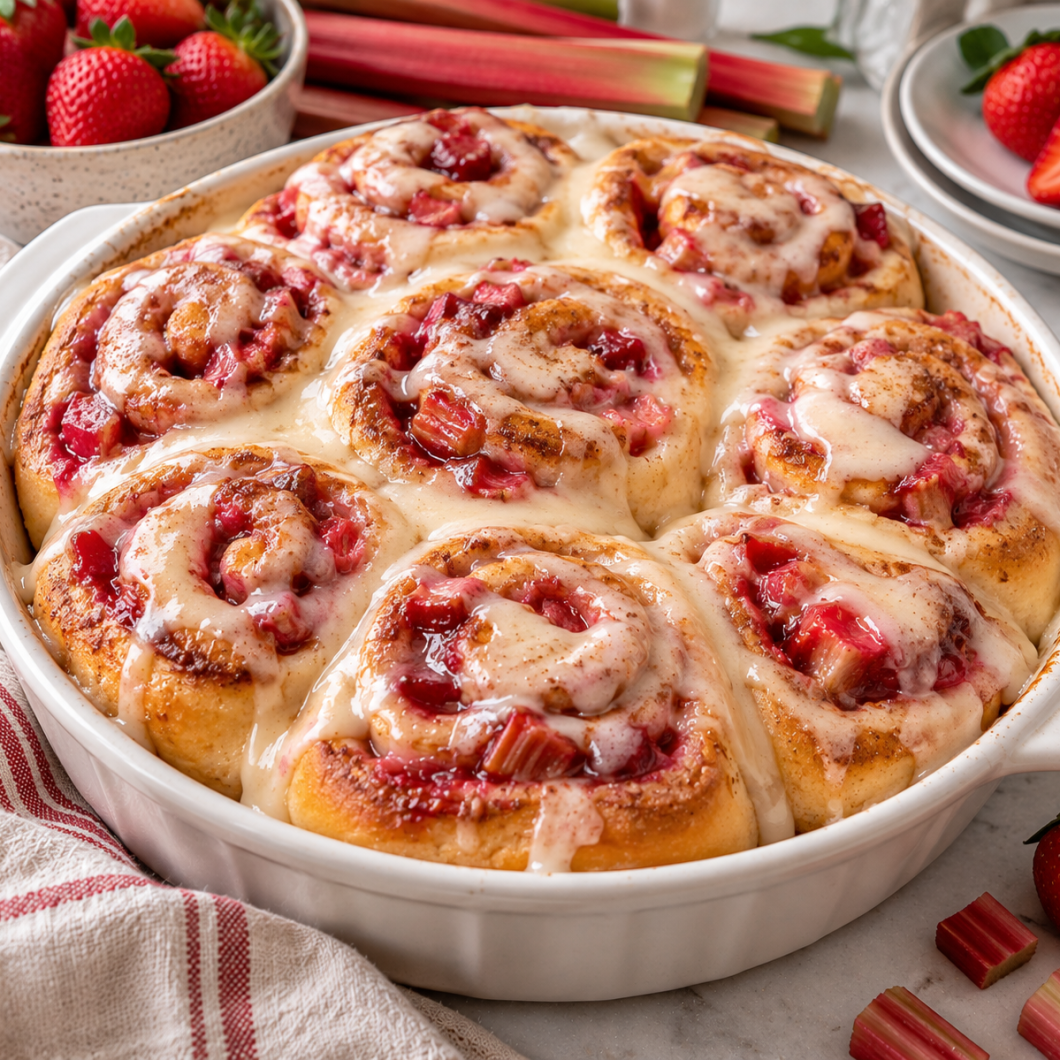
Strawberry Rhubarb Cinnamon Rolls
Soft and buttery brioche cinnamon rolls filled with homemade strawberry rhubarb compote and cinnamon sugar, then finished with smooth vanilla cream cheese icing. These sweet-tart rolls make an impressive breakfast, brunch pastry, or dessert.
9
servings1
hour30
minutes60
minutes60
minutes3
hours30
minutesIngredients
- Brioche Dough
13 g (1 tbsp) fresh yeast or 6.5 g dried yeast
30 g (2 tbsp) warm whole milk
250 g (1½ cups + 1 tbsp) all-purpose flour
30 g (2 tbsp) caster sugar
1 tsp salt
3 large eggs
145 g (⅔ cup) unsalted butter, softened and cubed
- Strawberry Rhubarb Filling
1 cup strawberries, diced
½ cup rhubarb, diced
1 tbsp raw cane or turbinado sugar
½ tsp cornstarch
Dash of salt
Splash of lemon juice
- Cinnamon Sugar
¼ cup raw cane sugar
½ tsp cinnamon
3 tbsp unsalted butter, melted
- Cream Cheese Icing
1 cup powdered sugar, sifted
⅛ cup milk
¼ tsp vanilla extract
2 oz cream cheese, softened
Directions
- Dissolve yeast in warm milk.
- Mix flour, sugar, and salt. Add eggs and yeast mixture.
- Gradually add butter. Mix 15–25 minutes until smooth and shiny.
- Cover and rise for 1 hour. Punch down and refrigerate overnight.
- Simmer all filling ingredients until thick. Cool completely.
- Mix cinnamon sugar ingredients in a small bowl.
- Divide dough in half. Use one half and roll into a 16 × 9-inch rectangle.
- Spread cinnamon mixture over dough, followed by fruit filling.
- Roll tightly and cut into 9 pieces.
- Place in a buttered 8-inch pan. Rise for 1 hour.
- Bake at 350°F for 25–30 minutes until golden.
- Whip icing ingredients until smooth.
- Cool rolls slightly and spread icing on top.
Nutrition Facts
- % Daily Value *
* The % Daily Value tells you how much a nutrient in a serving of food contributes to a daily diet. 2,000 calories a day is used for general nutrition advice.