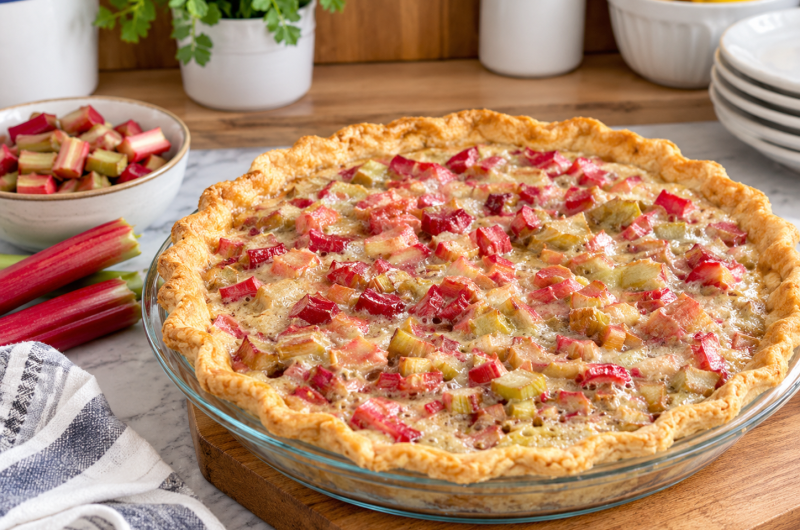
Old Fashioned Rhubarb Pie is a classic homemade dessert made with fresh tart rhubarb, a lightly sweet custard-style filling, and a flaky unbaked pie crust. The combination is simple but wonderfully balanced. Rhubarb brings a naturally sharp, tangy flavor, while granulated sugar softens its bite and creates a pleasant sweet-tart filling.
Once baked, the eggs, milk, flour, and salt form a delicate custard that surrounds the rhubarb without overpowering its distinctive flavor. This traditional rhubarb pie is an excellent choice when you want a comforting dessert that feels homemade, familiar, and easy to prepare.
Why This Classic Rhubarb Pie Works
The appeal of this old fashioned rhubarb pie comes from its uncomplicated ingredients and straightforward preparation. There is no need for complicated fillings, special equipment, or elaborate decorating techniques.
Fresh diced rhubarb is combined with sugar and placed directly into the pie crust before a simple custard mixture is poured over the top. During baking, the rhubarb softens and releases its juices while the egg-and-milk mixture sets around it, producing a tender filling with a creamy texture and bright fruit flavor.
A Traditional Sweet-Tart Flavor
Rhubarb has a naturally sour taste that makes it particularly useful in desserts where sweetness needs a little contrast. Instead of trying to hide its tartness, this recipe allows rhubarb to remain the main flavor. The sugar provides enough sweetness to make the pie enjoyable while still allowing the characteristic flavor of rhubarb to shine.
The result is a dessert that tastes different from heavily sweet fruit pies and has the refreshing balance that makes traditional rhubarb desserts so popular.
Choosing Fresh Rhubarb
Fresh rhubarb is the star of this recipe, so selecting good stalks can make a noticeable difference in the finished pie. Look for firm stalks that feel crisp rather than soft or limp. The color can vary naturally, so bright red stalks are not required for a flavorful pie. What matters most is freshness and firmness.
Remove the leaves before preparing the rhubarb, as the stalks are the portion used in this recipe. Slice the stalks into pieces approximately one-quarter inch thick so they soften evenly during baking.
Why the Cutting Size Matters
Cutting the rhubarb into fairly small, even pieces helps the filling cook consistently. Very large pieces may remain firm while the custard is already set, whereas very thin pieces can break down more quickly. A quarter-inch slice gives the rhubarb enough structure to remain recognizable while becoming tender inside the pie. Consistent pieces also help distribute the rhubarb throughout the filling, ensuring that each slice contains a good balance of fruit and custard.
Preparing the Pie Crust
This recipe uses one 9-inch unbaked pie crust, which provides the base for the rhubarb and custard filling. The crust does not need to be baked separately before adding the filling. Simply make sure the crust is properly positioned in the pie dish and ready to receive the prepared rhubarb. Keeping the process simple makes this recipe especially approachable for anyone who wants to try making a traditional fruit pie without adding extra preparation steps.
Keeping the Crust Ready for Filling
Before adding the rhubarb, check that the crust is evenly arranged in the pie dish and that there are no large tears or thin areas. The filling is added directly to the unbaked crust, so a reasonably even crust helps support the custard while it cooks. If using a prepared pie crust, keep it chilled until you are ready to fill it. A cool crust can also be easier to handle and shape before baking.
Making the Rhubarb Filling
The first filling step is very simple: combine the diced rhubarb with granulated sugar. This mixture is then spread into the unbaked pie crust. Coating the rhubarb with sugar before it goes into the oven helps distribute sweetness throughout the fruit. It also begins drawing moisture from the rhubarb, which becomes part of the flavorful filling as the pie bakes. Since the rhubarb is the central ingredient, spreading it evenly across the crust helps create consistent slices later.
Adjusting the Sweetness
The recipe includes 1 1/4 cups of granulated sugar, with the option to adjust the amount up or down by 1/4 cup according to preferred sweetness. This is useful because rhubarb can vary in tartness depending on its freshness and variety. Those who enjoy a stronger tang may prefer the lower end, while anyone who likes a sweeter dessert can use the full amount. Keeping the sugar adjustment within the suggested range helps maintain the intended texture and balance of the pie.
Making the Simple Custard
The custard-style filling requires only cold eggs, cold whole milk, all-purpose flour, and salt. These ingredients are whisked together until combined and then poured over the sugared rhubarb. The eggs help the filling set as it bakes, while the milk gives it a softer, creamy quality. The flour provides structure, helping the mixture thicken around the rhubarb. A small amount of salt rounds out the flavors and prevents the sweetness from tasting flat.
Whisking the Mixture Properly
The custard does not require complicated preparation, but whisking the ingredients together thoroughly is important. Make sure the eggs, milk, flour, and salt are evenly combined before pouring the mixture into the pie. This helps prevent pockets of flour from remaining in the custard and distributes the ingredients throughout the filling. There is no need to overwork the mixture; a smooth, well-combined consistency is all that is needed before it is added to the rhubarb.
Baking the Rhubarb Pie
The oven should be preheated to 375°F before the pie is placed inside. Once the rhubarb has been arranged in the crust and the custard has been poured over it, the pie is baked for approximately 50 to 55 minutes. The exact baking time can vary slightly between ovens, so the most important indication is the condition of the filling. The custard should be set rather than visibly liquid when the pie is ready to come out of the oven.
Knowing When the Pie Is Done
A properly baked rhubarb custard pie should have a set filling while still maintaining a tender texture. Avoid relying only on the color of the crust because the filling itself is the more important indicator. If the center remains obviously loose and liquid, it needs additional baking time. Once the filling has set, remove the pie from the oven and allow it to cool completely before slicing. This cooling period is essential because the custard continues to firm as it cools.
Why Cooling the Pie Matters
One of the most important steps in this easy rhubarb pie recipe happens after baking. Although it can be tempting to cut into a warm pie immediately, allowing it to cool completely gives the custard time to finish setting. Cutting too early can cause the filling to spread and make the slices difficult to serve neatly. The recipe includes an additional two-hour cooling period, which gives the pie enough time to become firm enough for clean slices.
Getting Cleaner Slices
For attractive slices, allow the pie to cool completely before cutting. A sharp knife can then be used to divide the pie into eight portions. Because the filling contains both tender rhubarb and a custard-style mixture, gentle cutting helps preserve the layers and keeps the filling from being pushed out of the crust. Patience after baking makes a noticeable difference in the final presentation and texture.
How to Serve Old Fashioned Rhubarb Pie
This traditional rhubarb pie can be served on its own, but it is especially good with whipped cream or vanilla ice cream. The cool, creamy topping provides a pleasant contrast to the tart rhubarb and sweet custard. Vanilla ice cream also adds richness while slowly melting over a slice of the cooled pie. Whipped cream offers a lighter option that complements the filling without making the dessert feel too heavy.
A Simple Dessert for Any Occasion
Because the recipe does not require complicated decoration, it works well for family dinners, casual gatherings, seasonal celebrations, and weekend baking. The rustic appearance is part of its charm. Each slice shows the soft rhubarb suspended in the pale custard filling, surrounded by the baked pie crust. It is the type of dessert that feels traditional without requiring an advanced baking technique.
Tips for Making the Best Rhubarb Custard Pie
Use Evenly Diced Rhubarb
Cutting the rhubarb into similar-sized pieces helps the fruit cook at the same rate. The suggested quarter-inch thickness is especially useful because it allows the rhubarb to become tender during the baking period without completely disappearing into the custard. Even pieces also help distribute the fruit more consistently throughout the pie, giving every serving a similar amount of rhubarb and filling.
Keep the Ingredients as Listed
The ingredient balance is important because each component has a specific purpose. The rhubarb provides acidity and texture, sugar balances the tartness, eggs help set the custard, milk contributes moisture and creaminess, flour adds structure, and salt enhances the overall flavor. Keeping these proportions intact helps preserve the classic character of the recipe rather than turning it into a completely different style of pie.
Do Not Rush the Cooling Stage
Cooling is not simply a waiting period; it is part of the preparation. The custard needs time to firm after leaving the oven. If the pie is sliced while very warm, the filling may not hold its shape properly. Letting it cool completely produces a more stable texture and makes serving much easier. This is particularly important when you want neat slices for a dessert table or family meal.
Notes for This Rhubarb Pie Recipe
Can the Sugar Be Adjusted?
Yes. The original recipe allows the granulated sugar to be adjusted by 1/4 cup in either direction according to personal preference. Since rhubarb is naturally tart, the amount of sugar has a noticeable effect on the finished flavor. For a more pronounced rhubarb taste, use less sugar within the suggested range. For a sweeter pie, use the full amount specified in the recipe.
How Long Does the Pie Need to Cool?
The total recipe time includes approximately two hours of additional cooling. Although the actual baking time is only about 50 to 55 minutes, the pie should not be sliced immediately after it leaves the oven. Complete cooling allows the custard filling to firm and makes the pie easier to cut and serve.
What Makes This an Old Fashioned Rhubarb Pie?
This recipe keeps the preparation traditional and uncomplicated. It combines fresh rhubarb with sugar and a basic egg-and-milk custard inside a standard pie crust. There are no complicated flavor combinations or elaborate toppings required. The result is a straightforward homemade dessert that highlights the distinctive sweet-tart character of rhubarb.
Why You’ll Want to Make This Recipe
Old Fashioned Rhubarb Pie is a wonderful example of how a small group of familiar ingredients can create a memorable dessert. The tart rhubarb, sweet sugar, creamy custard, and baked crust work together without competing for attention. It is approachable enough for newer bakers while still offering the nostalgic flavor that experienced home cooks often look for in a classic pie recipe.
A Simple Seasonal Dessert
When fresh rhubarb is available, this recipe is an easy way to turn it into a comforting baked dessert. The preparation involves only a few straightforward steps, and the filling comes together quickly. After baking and cooling, the finished pie can be served with whipped cream or vanilla ice cream for a classic presentation. Its simple ingredients and familiar flavor make it a reliable choice whenever you want an old fashioned homemade pie.
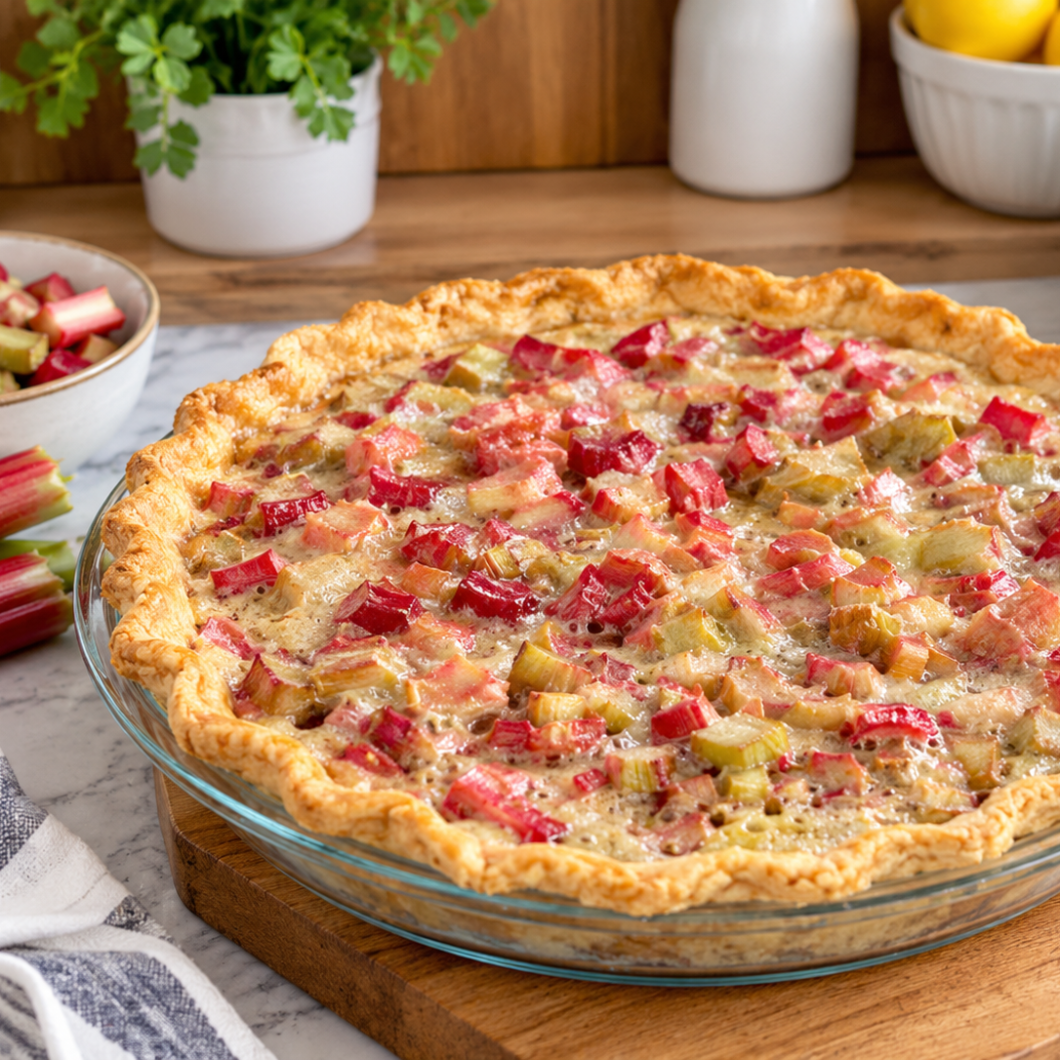
Homemade Old-Fashioned Rhubarb Pie – A Sweet and Tangy Dessert Classic
 Recipe by admin
A classic rhubarb custard pie made with fresh diced rhubarb, a sweet egg-and-milk filling, and a 9-inch unbaked pie crust.
8
servings15
minutes50
minutes182
kcal120
minutes3
hours5
minutesIngredients
1 9 inch pie crust, unbaked
5 cups diced rhubarb, cut 1/4 inch thick
1 1/4 cup granulated sugar, you can adjusted it up or down 1/4 cup to your preferred sweetness
2 eggs, cold
5/8 cup cold whole milk or 1/2 cup plus 2 tablespoons milk
1/4 cup all purpose flour
1/8 teaspoon salt
Directions
- Preheat the oven to 375°F.
- Combine the diced rhubarb and granulated sugar in a bowl.
- Spread the sweetened rhubarb evenly into the unbaked 9-inch pie crust.
- In another bowl, whisk together the cold eggs, cold whole milk, all-purpose flour, and salt until well combined.
- Pour the custard mixture evenly over the rhubarb in the pie crust.
- Place the pie in the preheated oven and bake at 375°F for 50–55 minutes, or until the filling is set.
- Remove the pie from the oven and allow it to cool completely.
- Once cooled, slice into 8 portions and serve with whipped cream or vanilla ice cream if desired.
Nutrition Facts
- Calories: 182kcal
- Fat: 7g
- Carbohydrates: 25g
- Fiber: 2g
- Sugar: 9g
- Protein: 5g